Save Money On Your Medicare Supplement by Comparing Rates Each Year

One of the most rewarding parts of my job is helping my clients save money on their Medicare Supplement (Medigap) insurance premiums. Most of the time, I can usually save individual clients at least $30 to $50 per month ($360 to $600 per year) on their premiums. Occasionally, I have saved them as much as $1,000 to $1,200 per year on their premiums!

medigap

I don’t mean to come across as bragging, because I’m not. However, I am very happy and excited because this past week I was able to save one of my clients (a husband and wife on a fixed income) over $5,300 per year on their Medicare Supplement premiums!  I was able to do this just by simply switching them to the same exact plan that they had, but with a different carrier!

They had Plan G with another company for quite a few years, and they were very happy with the company and their coverage. Their insurance rates were very low when they originally took out their plans, and the company always paid their claims promptly and without a problem, just as most Medicare Supplement insurance companies do. However, over time, their rates crept up, slowly but steadily. Until this past week when they called me, they didn’t realize that they were literally paying thousands of dollars more for their insurance than they should be!

Most people shop around every year or two and compare rates on their auto and homeowner’s insurance. Medicare Supplements are no different. If you have a Medicare Supplement plan, it is critically important that you shop around every year and compare rates between various companies because insurance rates vary significantly from one carrier to the next for the same identical plan and coverage. For example…

For a 72 year old female living in the 92056 zip code, the current Plan F rates range from $164.06 per month to $245.50 per month! That is a difference of $81.44 per month or $977.28 per year more for the same exact insurance coverage!

Attained Age

In California, Medicare Supplement insurance premiums are based on attained age. This means that as you get older, your rates usually continue to go up every year. Many companies start off at the “younger” ages (65 to 70) with very competitive rates, but over time, the rates continue to go up. Every company is different, and some companies raise their rates a lot more than others.

If you become complacent and don’t shop around every year to compare rates, you are probably paying hundreds or even thousands of dollars more per year on your insurance premiums than you should be!

California Birthday Rule

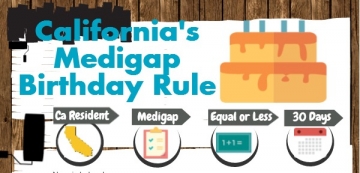
In California, there is a law called the California Birthday Rule. This law allows anyone with a Medicare Supplement to switch to another insurance carrier every year within 30 days of their birthday (before or after), REGARDLESS OF THEIR HEALTH and without medical underwriting, if another insurance carrier is offering the same plan, such as Plan F, at a lower rate. During the annual 30-day open enrollment period, you are also guaranteed the right to switch to a “lesser” plan, such as from Plan F to Plan G, etc.
CA Birthday Rule

If you have a Medicare Supplement plan, you are guaranteed the right to shop around every year within 30 days of your birthday to save money on your insurance premiums. During this period, you cannot be turned down for coverage, regardless of your health.

You Can Apply for Medicare Supplement Plans All Year Long

Unlike Medicare Advantage plans that have an Annual Enrollment Period (AEP) from October 15th to December 7th every year for a January 1st effective date, you can apply for Medicare Supplement plans all year long. The only difference is that if you apply using the California Birthday Rule within 30 days of your birthday, you do not have to answer any of the health questions on the application, and you cannot be turned down for coverage due to health conditions.

If you apply for a Medicare Supplement plan any time of the year other than during your annual 30-day open enrollment period, you will have to answer the health questions on the application, and if you have certain health conditions, you could be turned down for coverage. If you are in relatively good health, you should not have any problem qualifying for a Medicare Supplement plan.

Guaranteed Issue Situations In California

In California, there are certain circumstances when you would qualify for a Medicare Supplement due to a guaranteed issue situation.

CA Bear

If you can answer YES to any of the following questions, you may be eligible for guaranteed issue:

  1. Has your employer-sponsored retiree plan that is supplementing Medicare involuntarily terminated?
  2. Has your employer-sponsored retiree plan stopped providing Medicare supplement benefits or the Medicare Part B 20% coinsurance for services?
  3. Have you lost eligibility for an employer-sponsored retiree plan due to divorce or death of a spouse or family member?
  4. Has your Medicare Advantage plan increased your premium or co-payments by 15% or more, reduced your benefits, or terminated its relationship with your medical provider who was treating you?
  5. Have you moved out of the area of your MA plan or Program for All-Inclusive Care for the Elderly (PACE) organization?
  6. Has your MA plan, Medicare SELECT Plan, PACE provider or any other health plan under contract with Medicare: (a) committed fraud; (b) ended or lost its contract with Medicare; (c) misrepresented the plan you bought, or (d) failed to meet its contractual obligations to Medicare beneficiaries, as determined by the federal government?
  7. Did you join a MA plan or PACE organization when you first became eligible for Medicare at age 65, and you want to switch to a Medicare Supplement policy during your first 12 months in the MA plan or PACE organization?
  8. Have you switched from a Medicare Supplement policy to a MA plan, PACE organization, Medicare SELECT plan, or any other health care organization contracting with Medicare, for the first time since becoming eligible for Medicare within the past 12 months?
  9. Has your MA plan left your area, and if so, did your MA plan benefits end within the past 123 days?

NOTE: Many people with Medicare Advantage plans who have serious health issues can still qualify for a guaranteed issue Medicare Supplement plan. See item #4 above.

What Insurance Carriers Do I Work With?

As a licensed independent insurance agent, I work with ALL the major insurance carriers in California. Most importantly, I WORK FOR YOU, not a particular insurance company! I’m also licensed in Arizona, Colorado, Nevada, and Washington state. Here are some, but not all, of the Medicare Supplement insurance carriers that I work with:

  • Aetna
  • Anthem Blue Cross
  • Blue Shield of California
  • Cigna
  • Health Net
  • Humana
  • Individual Assurance Company (IAC)
  • Mutual of Omaha
  • Oxford
  • Stonebridge
  • Transamerica
  • UnitedHealthcare (AARP)
  • United of Omaha

Let Me Do the Shopping For You!

While it is unusual for me to be able to save most of my clients over $5,300 per year on their annual insurance premiums like I did this past week, it is not unusual for me to give someone a free, no obligation quote and save them anywhere from $300 to $500 per year on their Medicare Supplement premiums. That happens quite frequently.

As an independent insurance agent, I have access to insurance quote engines and other information that is not available to the public. You should take advantage of my knowledge and experience and let me do the shopping for you to save you money on your insurance premiums.

grocery-shopping-cartIf you have a Medicare Supplement plan, please contact me for a free, no obligation quote. More than likely, I will save you hundreds of dollars on your Medicare Supplement insurance premiums.

As one of my clients, I will contact you every year, about a month before your birthday, and I will let you know what the best rates are at that time. You always have the option to either keep your current plan, or you can take advantage of the California Birthday Rule and change carriers if another company is offering better rates.

Either way, I strive to build trust and relationships with my clients. I will not do a magic act and disappear after you have your new policy, 😉 and you will always have the peace of mind knowing that you are not paying hundreds or even thousands of dollars more than you should be for your Medicare Supplement insurance.

If you have any questions, or if you or anyone that you know would like a free Medicare Supplement quote, please contact me at (760) 652-6060 or toll-free at (866) 718-1600. You can also reach me by email at Ron@RonLewisInsurance.com. Your questions and feedback are always welcome!

How to Use the Medicare.gov Website to Purchase a Prescription Drug Plan

The Medicare open enrollment period just started, and it goes from October 15th through December 7th. During this period, you can choose a Prescription Drug Plan (PDP) that will begin on January 1st, 2016. Many people are confused because they don’t know how to shop around for a PDP. You don’t have to be an “expert” or a rocket scientist to purchase your own PDP. The purpose of this blog is to help you save money on your insurance premiums and find a PDP that is right for you.

IMPORTANT If you decide not to join a Medicare drug plan when you’re first eligible, and you don’t have other creditable prescription drug coverage, and you don’t get Extra Help, you’ll likely pay a late enrollment penalty if you join a plan later.

Medicare SimplifiedAccessing the Medicare.gov Website

If you have access to a computer and the Internet, shopping around for a PDP is really quite easy. If you’re ready to begin, follow these steps:

1.)  Navigate to the Medicare.gov website.

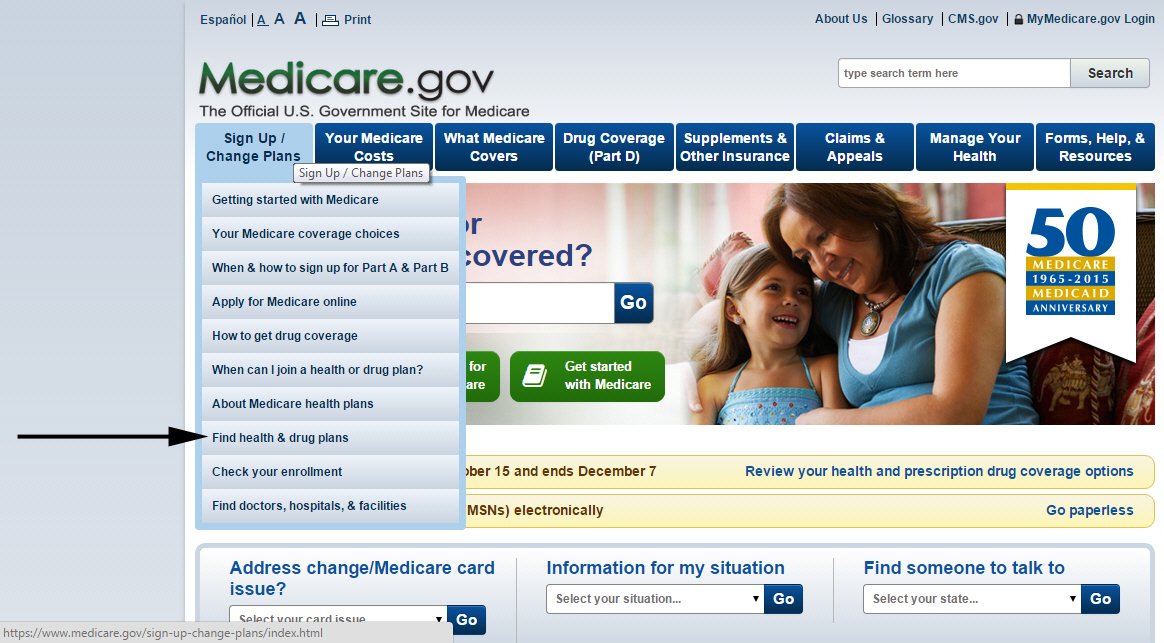
PDP1-0003x2.)  Under the blue tab at the top left-side of page that says Sign Up/Change Plans, click Find health & drug plans.

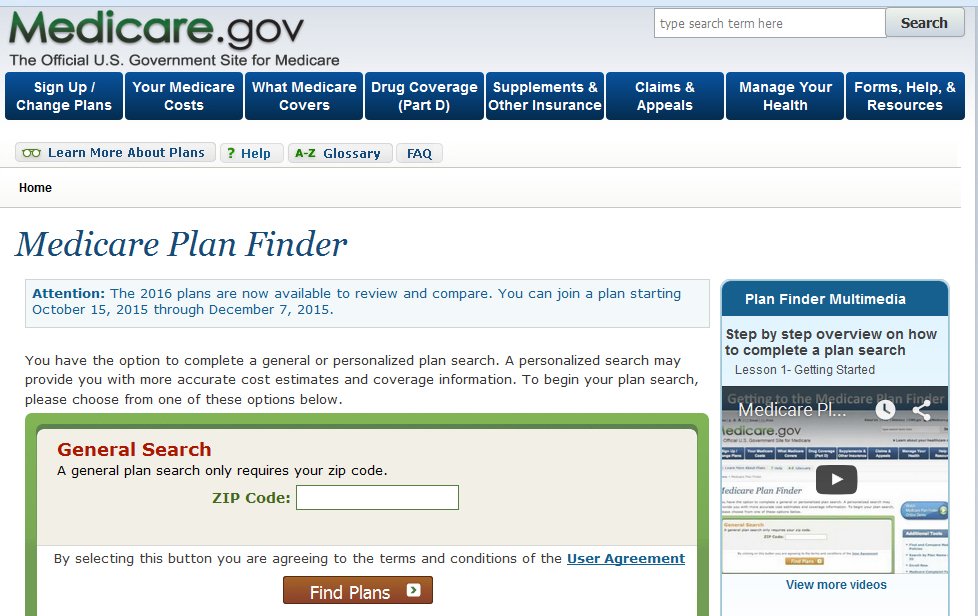
PDP1-0004xThe Medicare Plan Finder page displays.

PDP3-0001x3.)  In the General Search section, enter your zip code and click Find Plans. The Step 1 of 4 page displays.

NOTE If a survey window displays, close it and continue.

PDP1-0007x4.)  In the first section, select Original Medicare, and in the second section, select I don’t get any Extra Help. After that, click Continue to Plan Results. The Step 2 of 4 window displays.

NOTE You can choose other options that are more appropriate for your situation.

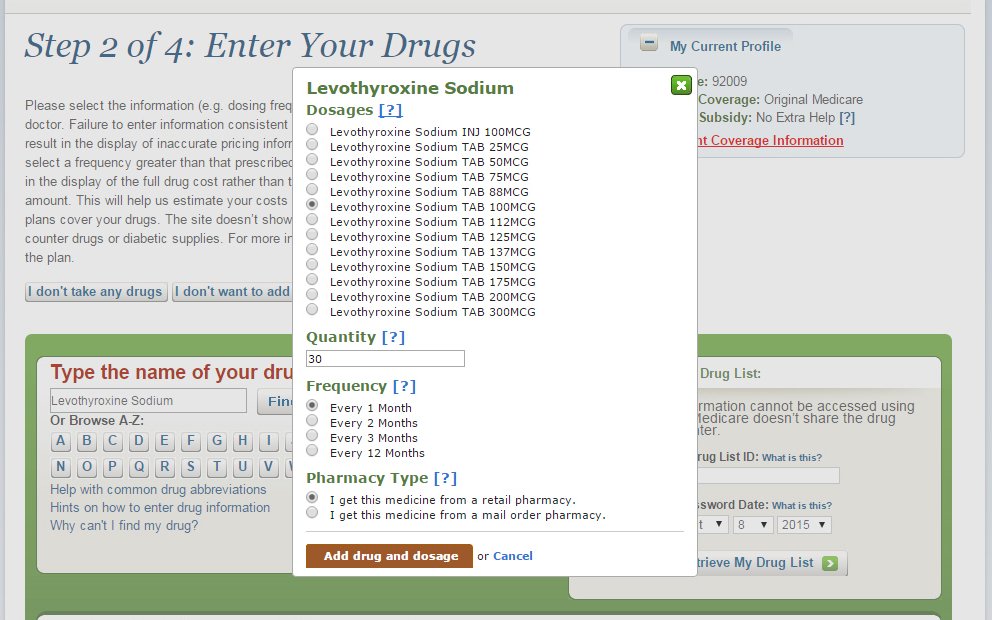
PDP1-0009x5.)  Enter your prescriptions in the text box and choose the appropriate dosages for each. A window, similar to the following, displays.

PDP1-0010x6.)  After you select the appropriate prescription dose, click Add drug and dosage.

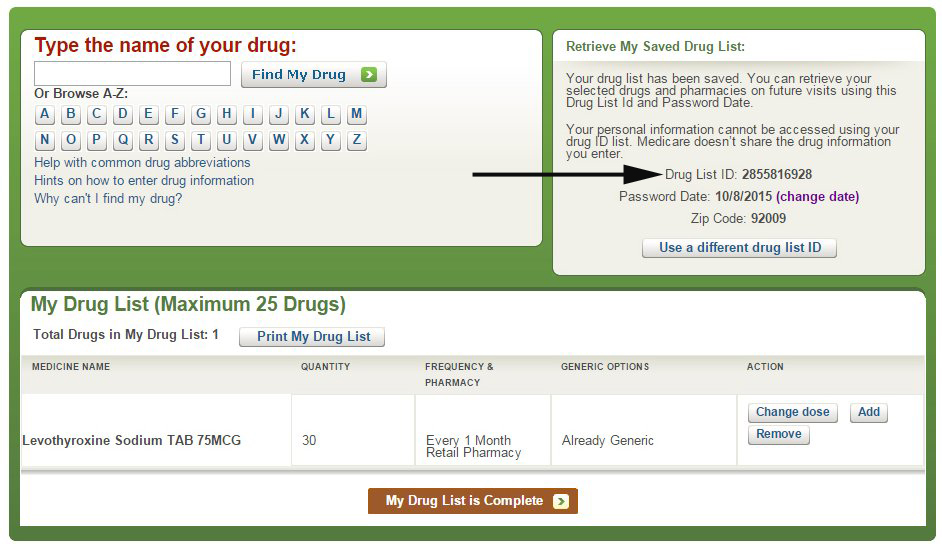
NOTE: Continue adding your prescriptions until your prescription drug list is complete. You can add up to 25 prescriptions, and you can see your list in the lower part of the window. You can also choose “mail order pharmacy” to have your prescriptions mailed to you. In some instances, it is more cost effective to do that. If you select “mail order pharmacy,” information for both retail pharmacies and mail order options will display.

7.)  Write down the Drug List ID number AND the Password Date on a separate piece of paper.

NOTE The prescriptions, dosages, etc. that you entered are saved, and you can enter this number and the date later on to retrieve your prescription information instead of reentering it again.

Medigap PDP Window2x8.)  Click My Drug List is Complete when your drug list is complete. The Step 3 of 4 window displays.

PDP1-0014x9.)  Click Add Pharmacy to add up to two pharmacies, and then click Continue to Plan Results. The Step 4 of 4 window displays.

NOTE You can click the drop-down menu at the top of the page to select from more pharmacies near your zip code.

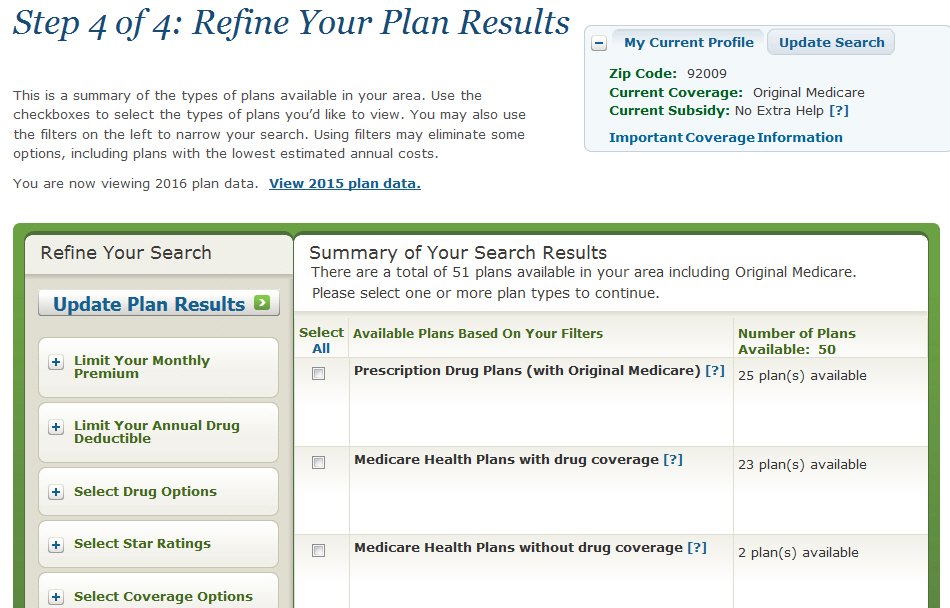
PDP3-0002x10.)  Click the check box next to Prescription Drug Plans (with Original Medicare), and then click Continue to Plan Results. The Your Plan Results window displays.

PDP1-0019NOTE By default, the prescription drug plans are sorted from the lowest to highest estimated annual retail drug cost. In the Plan Results window, click View All to see all the plans.

Understanding the Plan Results Window

After you access the Plan Results window, you are ready to evaluate and compare prescription drug plans and decide which plan is best for you.

There are different variables to take into consideration when choosing a PDP. Here are some of the more important ones:

  • Are drugs on the formulary?
  • Drug restrictions
  • Estimated annual drug costs
  • Annual drug deductible
  • Monthly premium
  • Overall star rating of the company

Are Drugs on the Formulary?

If a drug is not on the PDP formulary, that means that the plan does not offer coverage for that specific drug, and you should continue looking at other plans.

Drug Restrictions

If there are drug restrictions, the plan may have certain coverage restrictions (including quantity limits, prior authorization, etc.) on a prescription drug. Although your prescription may have limitations, these limits may not necessarily adversely affect you, and the plan may still meet your needs. For example, if you take 30 pills a month and the plan will cover a maximum of 60 per month, that would not impact you, and the plan is still worth considering.

Estimated Annual Costs

This is an estimate of the average amount you might expect to pay each year for your prescription drug coverage. This estimate includes the following costs:

  • Monthly premiums
  • Annual deductible
  • Drug copayments/coinsurance
  • Drug costs not covered by prescription drug insurance

If you entered your drugs into the Medicare Plan Finder, then this estimate includes the cost of those drugs.

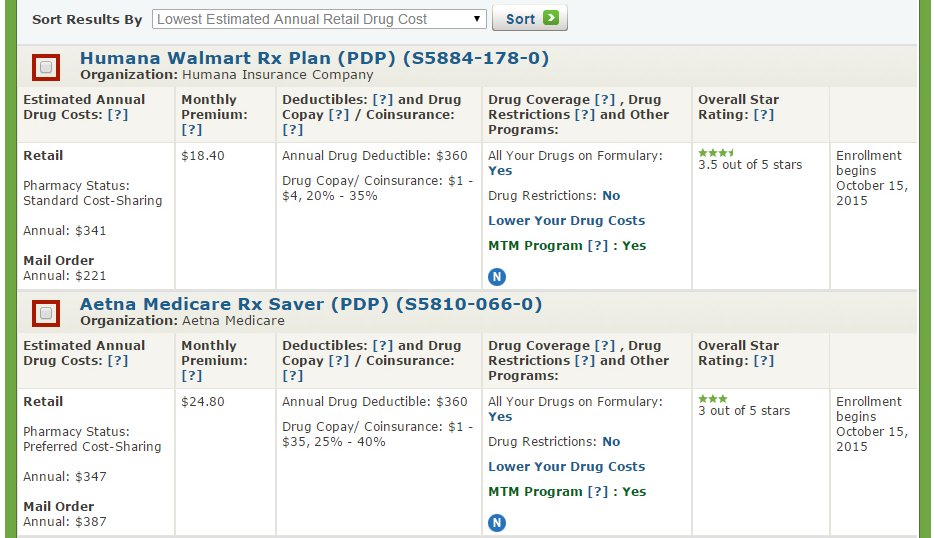
IMPORTANT If your prescriptions are covered by the plan’s formulary and there are no major drug restrictions on the plan, this is the critical piece of information you need to determine which plan you select because it factors in all your premiums, deductibles, co-payments, and miscellaneous drug costs for the entire year. I don’t really factor in the various co-payments of each prescription; the estimated annual costs tell you approximately how much you will spend during the entire year.

Compare the estimated total annual pharmacy and mail order costs between the different plans to determine which plan offers you the best deal for the entire year!

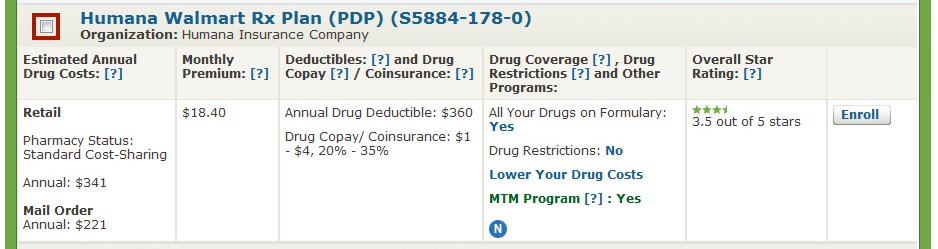
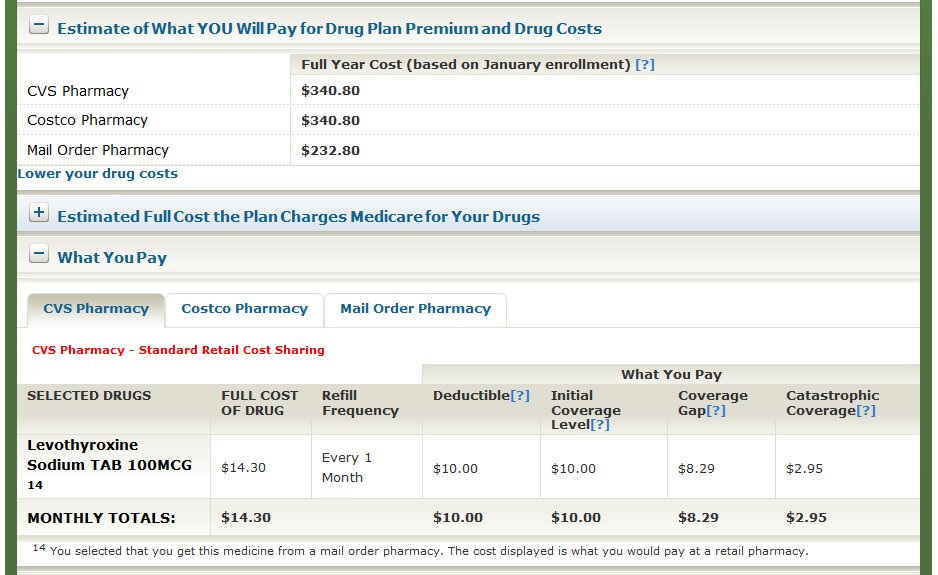
PDP1-0019xNOTE In the previous example, the total retail annual costs for Humana are approximately $341 compared to $221 for the mail order costs. For Aetna, the total retail costs are approximately $347 compared to $387 for the mail order costs. Therefore, in this example, the most cost-effective option is to purchase the Humana PDP and use their mail order service.

If you selected “I don’t take any drugs,” then this amount includes only the cost of the monthly premiums that you would pay for the plan and it does not include any drug costs. If you selected “I don’t want to add drugs now,” then this estimate includes the average drug costs for people with Medicare and may differ depending on your age and health status.

Annual Drug Deductible

Some plans have no annual deductible and others have a maximum annual deductible up to $360 per year. Again, use the estimated annual costs to determine the value of the plan, not just the deductibles, the co-payments, etc.

Monthly Premium

The lowest monthly premium (and deductible) does not necessarily mean that you will be saving the most money. Again, compare the estimated annual drug cost to determine which plan is the most cost effective.

Overall Star Rating of the Company

For plans covering drug services, the overall score for quality of those services covers many different topics that fall into four categories:

  • Drug plan customer service: Includes how well the plan handles member appeals.
  • Member complaints and changes in the drug plan’s performance: Includes how often Medicare found problems with the plan and how often members had problems with the plan. Includes how much the plan’s performance has improved (if at all) over time.
  • Member experience with plan’s drug services: Includes ratings of member satisfaction with the plan.
  • Drug safety and accuracy of drug pricing: Includes how accurate the plan’s pricing information is and how often members with certain medical conditions are prescribed drugs in a way that is safer and clinically recommended for their condition.

If the plan has a low star rating, I would not recommend signing up for it.

Drilling Down a Little Deeper on the Medicare.gov Website

To get more information about a specific plan, click on the name of the plan, which is a hypertext link. In the following example, click Humana Walmart Rx Plan (PDP).

Medigap2-0002a

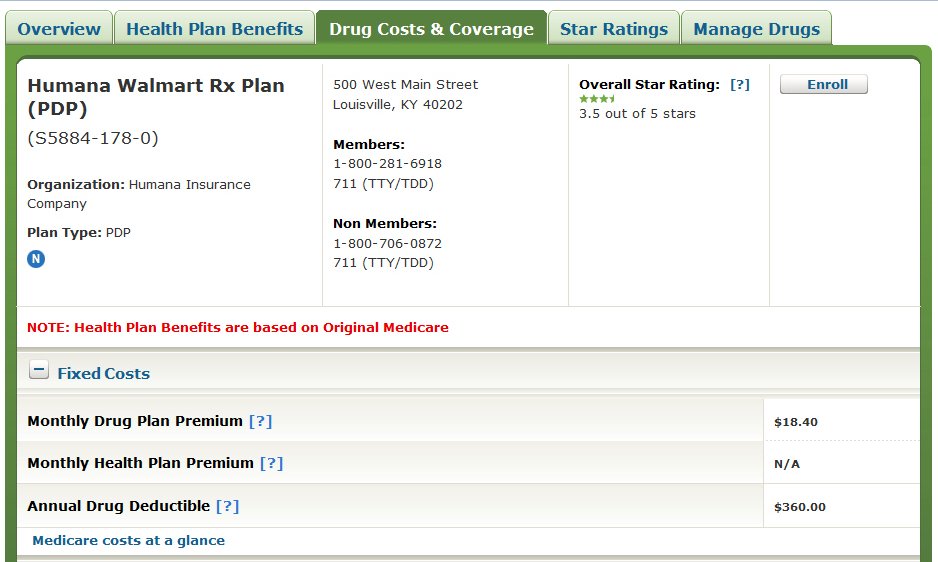
After you click the name of the plan, a window, similar to the following, displays.

Medigap2-0003a

The previous window shows the phone numbers, for members and non-members.

NOTE  If you have questions about the plan or wish to enroll, you would call the phone number for non-members. For more information, see “Signing Up for a PDP Plan” below.

Medigap2-0006a

The previous window shows the estimated monthly totals for prescriptions at CVS Pharmacy.

Medigap2-0007a

The previous window shows the estimated monthly cost (premium and deductible) for prescriptions at CVS Pharmacy.

Medigap2-0008a

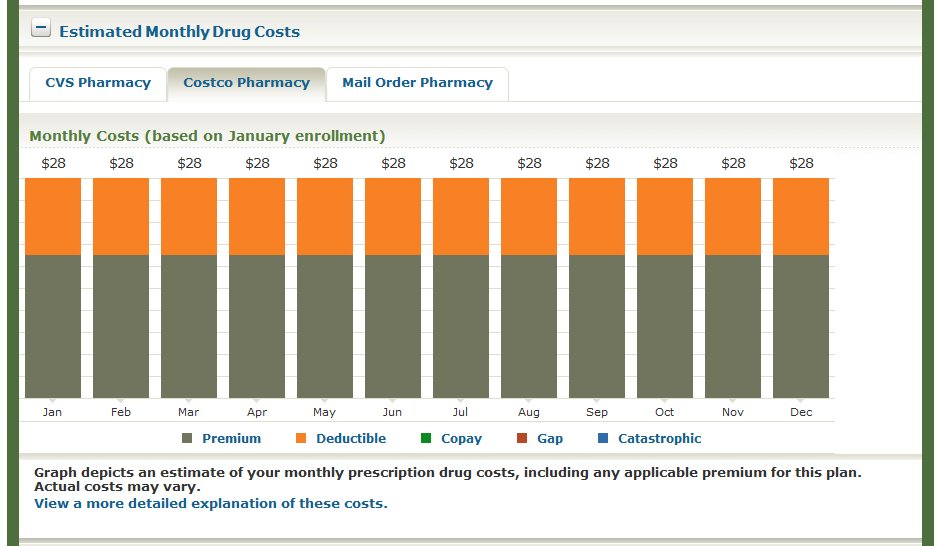
The previous window shows the estimated monthly cost (premium and deductible) for prescriptions at Costco Pharmacy.

Medigap2-0009a

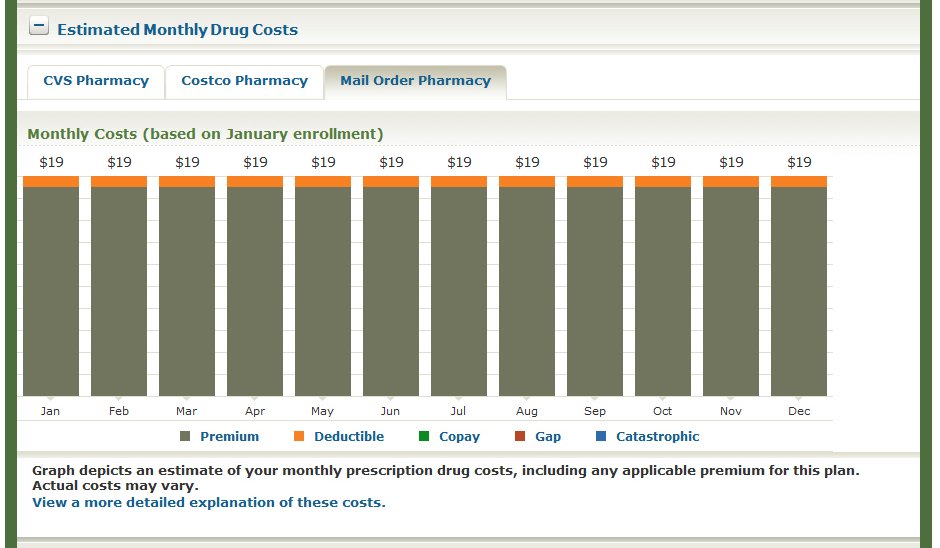
The previous window shows the estimated monthly cost (premium and deductible) for prescriptions through a mail order pharmacy.

Medigap2-0010a

The previous window shows drug coverage information, such as formulary status and Tier information, for the various prescriptions you entered on the Medicare.gov website.

Signing Up for a PDP Plan

After you have evaluated and compared several prescription drug plans, you are ready to sign up for a PDP on your own.

Follow these steps to sign up for a prescription drug plan:

1.)  From the Your Plan Details window, click on the hypertext name of the plan you are interested in. In the following example, click Humana Walmart Rx Plan (PDP).

Medigap2-0002a

After you click the name of the plan you are interested in, a window, similar to the following, displays.

Medigap2-0003a

2.) Call the toll-free number for non-members, and speak to a representative of the company.

IMPORTANT  If you have questions about the plan or wish to enroll, you would call the phone number for non-members. When you decide to enroll, call the plan and verify that your prescriptions are covered by the plan and that the estimated annual retail pharmacy or mail order drug costs are accurate. You want to make sure that you are interpreting and understanding the information correctly from the Medicare.gov website.

Conclusion

After you go to the Medicare.gov website and play around with it a little, you will find that signing up for a prescription drug plan is really quite easy.

NOTE  If you are having trouble signing up for a prescription drug plan or if you ever have Medicare questions or need help understanding information on the Medicare.gov website, call 1-800-MEDICARE. They are open 24 x 7, and most of the representatives are very helpful.

My primary specialty is Medicare Supplement insurance, but if you have any questions or comments, please feel free to contact me at RonLewisInsurance@yahoo.com.

Is the Affordable Care Act (ACA) Really Affordable?

Dear Mr. Lewis,

“A few weeks ago we notified you about upcoming changes due to the Affordable Care Act (ACA) and explained that your current Blue Shield medical plan will end December 31, 2013…”

These were the words I was dreading to hear! When I received our cancellation letter, I was very upset to learn that it was being cancelled at the end of 2013 because it was not “compliant” with the “Affordable Care Act” (ACA). Blue Shield of CA offered us another plan in its place that was “comparable” in coverage, but it really was not. The deductibles, co-payments, and out of pocket expenses on the “new” plan are significantly higher than the “old” plan, and the overall quality is inferior.

Besides our family, over six million Americans received cancellation letters from their insurance companies because of the ACA, and they have had their health insurance plans cancelled despite our president’s repeated promises, over and over again, that…

President Obama Contemplating Obamacare.

The First Time Our President Contemplated Obamacare.

“If you like your doctor, you will be able to keep your doctor, period.” “If you like your health care plan, you’ll be able to keep your health care plan, period. No one will take it away, no matter what.” and “I will sign a universal health care bill into law by the end of my first term as president that will cover every American and cut the cost of a typical family’s premium by up to $2,500 a year.” Blah, blah, blah…

Well, we had a health insurance plan with Blue Shield of California for many years. It was called the “Shield Savings 3500/7000 PPO” plan, and we were very happy with it, despite the fact that President Obama felt it was a “sub-standard” plan. Since we were repeatedly told that our premiums would be going down approximately $2,500 a year, I was trying to keep an open mind. However, that was not the case.

We were paying $975.60 per month for a family of 8, and that included dental and prescription drug coverage for all of us as well as relatively low co-payments and deductibles. I thought that our premium on the Shield Savings plan was a little steep, but when I found out what our new ACA premium was going to be, I almost fell over!

Despite the fact that “Dirty Harry” Reid accused me (and thousands of other Americans) of being a liar this past week because the information in this blog is allegedly “untrue,” our ACA premiums more than doubled! Because of the “Affordable Care Act,” the health insurance premiums for our family went from $975.60 per month to $1,995.48 per month!

"Dirty Harry" Reid

“Dirty Harry” Reid

And unlike our Shield Savings plan, the ACA health plan only included dental for three of our six kids and no one else! Our premium would be even higher if the other five people in our family selected dental insurance. On an annual basis, we were paying $11,707.20 per year for our Shield Savings plan ($975.60 x 12 = $11,707.20), but the annual premium for our new ACA health insurance plan is $23,945.76 per year ($1,995.48 x 12 = $23,945.76)! Is that supposed to be “affordable?” I think not!

By the way, our new $23,945.76 per year ACA plan that I’m referring to is a basic PPO “Bronze” level plan, which is the “cheapest” of the four ACA metallic plans. This is the “ACA-compliant plan” that Blue Shield recommended because they told us it was the most “comparable” to our Shield Savings plan. Here is the description of the basic PPO “Bronze” level plan that we received from Blue Shield of CA:

“With low premiums, a high deductible, and more out-of-pocket costs, our Basic plan is designed for people who want affordable coverage and protection in the event of a serious medical emergency. You’ll have the basics such as three doctor’s visits prior to meeting the deductible and preventive care services.”

Now I’m not sure about you, but I don’t consider $23,945.76 per year to be either a “low premium” or more “affordable!” And regarding the “three doctor’s visits” and the “preventative care,” it would be much more cost effective (cheaper) for me to keep the old plan and pay for these expenses myself.

Furthermore, our deductibles and out of pocket costs increased significantly under the ACA plan. On our Shield Savings plan, our calendar year medical deductible was $3,500 per insured or $7,000 per family. On the ACA plan, it is $4,500 per insured or $9,000 per family. Our calendar year out of pocket (OOP) maximum on the Shield Savings plan was $5,000 per insured and $10,000 per family. On the ACA plan, it is $6,350 per insured or $12,700 per family!

With office visits (primary care doctors and specialists) and urgent care visits, lab and X-rays on the Shield Savings plan, we paid NOTHING after meeting our deductible. On the ACA plan, we still have to pay 40% of these costs AFTER meeting our deductible! And the same is true with Outpatient surgery and Inpatient hospitalization!

With generic drugs and preferred brand drugs, we paid $10 per prescription for generic and $35 per prescription for brand name after meeting our deductible. On the ACA plan, we still have to pay 40% of these costs after the deductible! I won’t go on and on with these boring details, but I hope that you get the point that the new ACA Bronze plan is significantly more expensive than the Shield Savings plan that we had, and it’s even more expensive when you take the additional costs of co-payments and deductibles into consideration.

If a family should end up in a situation where they have to pay a $9,000 family medical deductible as well as $12,700 in out-of-pocket costs (in addition to their obscene (non-subsidized) ACA health insurance premiums), there is a good chance that they are still going to end up bankrupt! So what’s the point of having insurance??? “The only thing worse than going broke is going broke with insurance!”

I hope and pray that people will wake up and repeal Obamacare or defund it because it is bad legislation that is destroying the quality of our health care system as well as hurting our economy and killing jobs. Then again, if enough young and healthy people don’t sign up for it, I think there’s a good chance that it will implode on itself and self-destruct.

As Nancy Pelosi famously said “We have to pass the bill to find out what’s in it.” President Obama and his administration purposely and repeatedly misrepresented the truth about the ACA, and it was sold to the American people as a pack of lies. Now that we know “what’s in it,” the majority of Americans don’t want it!

Nancy Pelosi

Nancy Pelosi, a little mixed up, as usual.

I would be curious to hear of your ACA experiences, both good and bad.

Thanks!