
What Medicare Does NOT Cover: Understanding the Gaps in Your Coverage

Illustration of a puzzle with a missing piece representing what Medicare does not cover, including common coverage gaps.

Many people approaching age 65 are surprised to learn that Medicare does not cover every healthcare expense. While Medicare provides valuable health insurance protection, there are important gaps that can leave beneficiaries responsible for significant out-of-pocket costs.

Understanding what Medicare does not cover can help you make informed decisions about Medicare Supplement insurance and other types of coverage.

Long-Term Care

Illustration showing that Medicare generally does not cover long-term custodial care.

One of the biggest misconceptions about Medicare is that it covers long-term care.

Medicare may pay for a limited stay in a skilled nursing facility following a qualifying hospital stay, but it generally does not cover custodial care. Custodial care includes assistance with activities of daily living such as bathing, dressing, eating, and personal care when that is the primary need. The cost of long-term care can be substantial, making it important to plan ahead.

Routine Dental Care

Illustration showing that Medicare generally does not cover routine dental, vision, or hearing care.

Original Medicare generally does not cover routine dental services such as:

  • Regular cleanings
  • Dental exams
  • Fillings
  • Crowns
  • Dentures
  • Most tooth extractions

Because dental expenses can add up quickly, many beneficiaries choose to purchase separate, stand-alone, dental insurance. Many dentists offer their own dental plans, so you should also check with your dentist.

Routine Vision Care

Medicare does not typically cover routine eye exams for glasses or contact lenses.

Most beneficiaries are responsible for:

  • Eye exams for prescription glasses
  • Eyeglasses
  • Contact lenses
  • Lens upgrades

Medicare may cover certain medically necessary eye treatments and surgeries, but routine vision care is generally excluded.

Hearing Aids

Hearing loss is common among older adults, yet Medicare generally does not cover the following:

  • Hearing aids
  • Hearing aid fittings
  • Routine hearing exams for hearing aid purposes

Since hearing aids can cost thousands of dollars, many beneficiaries seek separate coverage or discount programs.

Medical Care Outside the United States

Illustration showing Medicare's limited foreign travel coverage and the need for prescription drug coverage through Medicare Part D.

Many people are surprised to learn that Medicare provides very limited coverage outside the United States.

Some Medicare Supplement plans include a foreign travel emergency benefit, but coverage is limited and subject to certain conditions. If you plan to travel internationally, purchasing a travel medical insurance policy is a wise decision.

Prescription Drug Costs

Original Medicare does not provide comprehensive prescription drug coverage.

Beneficiaries who want prescription drug coverage typically enroll in a Medicare Part D prescription drug plan (PDP) or choose a Medicare Advantage plan that includes drug coverage. Without prescription coverage, medication costs can become very expensive.

It’s also important to understand that Medicare beneficiaries who do not enroll in a Medicare PDP when they are first eligible for Medicare may face a late enrollment penalty if they decide to enroll later. This penalty is generally added to their Part D premium and can continue for as long as they have prescription drug coverage.

Even individuals who currently take few or no medications may want to consider enrolling in a low-cost Part D plan when first eligible in order to protect themselves from future penalties and ensure they have coverage in place if their prescription needs change. Some PDPs have a $0 monthly premium, but the best PDP depends on what medications someone takes.

California Health Insurance Counseling and Advocacy Program

In California (and other states) there is a volunteer organization called California Health Insurance Counseling and Advocacy Program (HICAP). They provide FREE prescription drug plan counseling. You can call them and set up an appointment to see someone at a local office or they may be able to answer your questions over the phone.

Here is their contact information:

California Health Insurance Counseling & Advocacy Program (HICAP)
https://www.shiphelp.org/ships/california/
800-434-0222

Most Cosmetic Procedures

Medicare generally does not cover procedures performed solely for cosmetic reasons, including elective surgeries intended to improve appearance rather than treat a medical condition.

Why Most People Choose Medicare Supplement Insurance

While Medicare Supplement insurance does not cover dental, vision, hearing aids, or long-term care, it can help pay many of the out-of-pocket costs left behind by Original Medicare (Parts A and B) such as deductibles, copayments, and coinsurance.

Original Medicare provides valuable coverage, but it does not cover all healthcare expenses. For many covered Part B services, beneficiaries are responsible for 20% of the Medicare-approved amount after meeting the Part B deductible. In addition, Original Medicare does not have a yearly out-of-pocket maximum for these costs, which can make healthcare expenses difficult to predict.

A Medicare Supplement plan helps reduce some of these out-of-pocket expenses and provides greater financial predictability. This added protection offers greater confidence when planning for future healthcare costs.

As an independent insurance agent, I help clients compare Medicare Supplement options from multiple insurance companies. Since Medicare Supplement plans with the same letter designation offer the same standardized benefits, comparing carriers can help identify differences in premiums, pricing stability, and customer service.

Final Thoughts

Medicare is an excellent health insurance program, but it was never designed to cover every healthcare expense. Understanding these coverage gaps can help you avoid unexpected costs and build a more complete healthcare strategy.

If you have questions about Medicare Supplement plans or would like to review your coverage options, feel free to contact me. I am always happy to help you understand your choices and find coverage that meets your needs.

About the Author

Ron Lewis, Independent Medicare Supplement Insurance Specialist, offering free Medicare consultations.
Ron Lewis is an Independent Medicare Supplement Insurance specialist helping Medicare beneficiaries review their coverage and options.

I’m an independent Medicare Supplement insurance specialist working with most of the major insurance carriers throughout California, Nevada, Arizona, and several other states.

I help people turning 65 coordinate their Medicare enrollment so their Medicare Supplement and prescription drug coverage begin at the same time as Medicare.

I also work with many people who already have Medicare Supplement plans and would like to review their options. In California, there is a law called the California Birthday Rule, which allows Medicare Supplement policyholders to change their plans each year during the 60 days following their birthday without answering health questions or going through medical underwriting. During this annual 60-day enrollment period, you cannot be turned down for coverage when changing to a Medicare Supplement plan with the same or fewer benefits.

I regularly help clients lower their Medicare Supplement premiums while keeping the same benefits and coverage.

Over the years, I have helped many clients save hundreds and sometimes even thousands of dollars on their annual premiums.

There is never a fee for my services because I am compensated by the insurance companies, not my clients. My goal is to help you find competitive premiums while providing dependable, personal service year after year.

If you’re turning 65 or already have a Medicare Supplement plan and would like to review your options, I’m happy to help.

Read what my clients have to say about working with me.

Contact Information

Ron Lewis
Independent Medicare Supplement Insurance Specialist

Cell: (760) 525-5769

Toll-Free: (866) 718-1600

Email: Ron@RonLewisInsurance.com

Website: www.MedigapShopper.com

Insurance Licenses

  • California: #0B33674
  • Nevada: #3822123
  • Arizona: #681166

This website is operated by a licensed insurance agent and is intended for educational purposes only. I am not affiliated with or endorsed by Medicare or any government agency.

How to Sign Up for Original Medicare (Part A and Part B)

Signing up for Medicare can seem like a confusing and daunting task, but it’s really not that bad. This article will hopefully answer any questions you have and make the Medicare maze easy to navigate.

What is Medicare?

Medicare is the federal health insurance program for:

  • People who are 65 or older
  • Certain younger people with disabilities
  • People with End-Stage Renal Disease (permanent kidney failure requiring dialysis or a transplant, sometimes called ESRD)

Who is Eligible For Medicare?

You are generally eligible for Medicare if you are 65 or older, a U.S. citizen or permanent legal resident, and have lived in the U.S. for at least five year

What Are the Four Parts of Medicare?

Medicare is composed of four parts:

  • Part A (Hospital insurance)
  • Part B (Medical insurance)
  • Part C (Medicare Advantage plans)
  • Part D (Prescription drug plans)

NOTE: Medicare Parts A and B are also referred to as “Original Medicare.”

What Does Medicare Part A Cover?

Part A covers things like inpatient hospital stays, home health care and some skilled nursing facility care.

What Does Medicare Part B Cover?

Part B covers things like doctor visits, outpatient services, X-rays and lab tests, and preventive screenings.

What Does Medicare Part C Cover?

Part C is also known as Medicare Advantage (MA). An MA plan is a Medicare-approved plan from a private company that offers an alternative (replacement) to Original Medicare (see note below) for your health and drug coverage. These “bundled” plans include Part A, Part B, and often Part D. In most cases, you must only use doctors who are in the plan’s network. Most MA plans are HMO’s and are restrictive and limit your options to what doctors, specialist, hospitals, and care facilities you can go to.

IMPORTANT: A much better option to Part C, in my opinion, is a Medicare Supplement plan, also known as “Medigap” because it picks up the gap in coverage not covered by Medicare. With a Medigap plan, there are NO networks, and you have much greater freedom of choice as to which doctors, specialists, care facilities, etc. that you go to. You can go to any doctor, specialist, care facility, etc. ANYWHERE in the US as long as they accept Medicare, and most do, about 93%.

What Does Medicare Part D Cover?

Part D covers the cost of prescription drugs (including many recommended shots or vaccines).

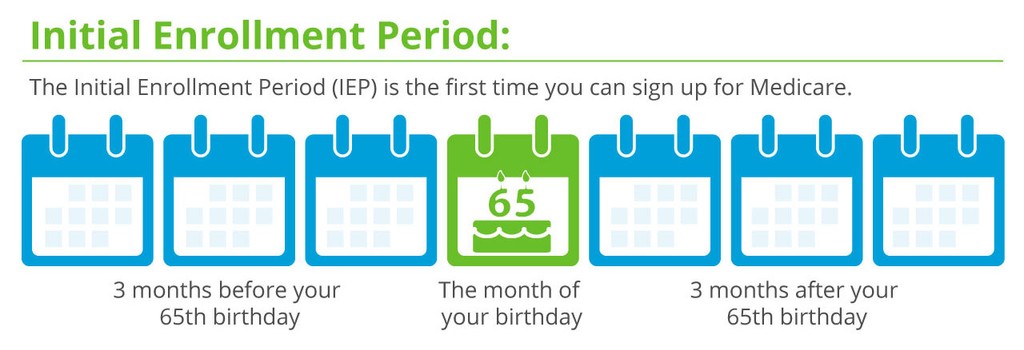
The Medicare Initial Enrollment Period (IEP)

If you are turning 65 and are eligible for Medicare, you can sign up for Original Medicare, aka Medicare Part A (Hospital insurance) and Part B (Medical insurance) during your Initial Enrollment Period (IEP), which typically starts three months before the month of your 65th birthday and ends three months after your birth month. For example, if your birthday is June 23rd, your IEP would begin on March 1st and end on September 30th of that year.

NOTE: Medicare normally begins on the 1st of the month of your 65th birthday. If you want your coverage to start then, you need to sign up for Medicare during the 3 months before the month of your birthday. Otherwise, your Medicare won’t start until sometime after your birthday month.

For most people, their Medicare normally begins on the 1st of the month of their 65th birthday. However, if your birthday is on the 1st of the month, your Medicare would begin on the 1st of the previous month. For example, if your birthday is June 1st, your Medicare would normally begin on May 1st.

NOTE: If your birthday is on the 1st of the month, your IEP begins and ends one month earlier as well. For example, if you turn 65 on June 1st, your IEP would begin on February 1st and end on August 31st.

Some People Are Automatically Enrolled in Medicare When They Turn 65 and Some Are Not

If you are currently receiving Social Security or Railroad Retirement Board benefits before you turn 65, you will normally be automatically enrolled in Medicare, and you’ll receive your Medicare card in the mail before your 65th birthday. You’ll still have an IEP, and during this seven-month window, you can still make Medicare coverage decisions such as signing up for a Medicare Supplement and a Prescription Drug Plan (PDP).

IMPORTANT: If you are not currently receiving Social Security or Railroad Retirement Board benefits before you turn 65, you’ll have to sign up for Medicare on your own. If that’s the case, be sure to write down your IEP dates on your calendar before you turn 65.

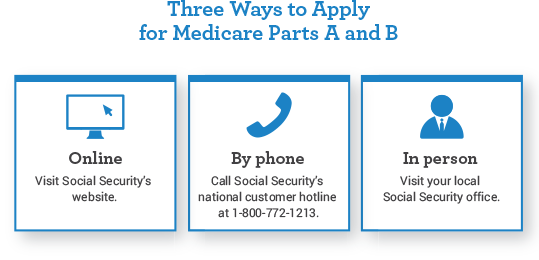
Three Ways to Sign Up for Medicare

There are the three different ways to sign up for Medicare:

  • You can apply for Medicare online at the Social Security Administration’s website (https://secure.ssa.gov/iClaim/rib).
  • You can call Social Security toll-free number at 1-800-772-1213 and sign up on the phone.
  • You can visit your local Social Security office.

I know that it doesn’t seem intuitive that you would contact Social Security to sign up for Medicare, but you do! When you apply for Medicare, you will need to provide personal and financial information including your name, Social Security number, birth date, income, etc.

After you apply for Medicare, you will receive a confirmation notice in the mail indicating whether your application has been approved, etc. If you have any questions or concerns about the Medicare enrollment process, you can contact Medicare directly at 1-800-MEDICARE (1-800-633-4227).

Do I Need to Enroll in Medicare If I’m Working After Age 65

For most people, Medicare Part A (Hospital insurance) is free because you or your spouse paid Medicare taxes long enough while working, generally at least 10 years. However, Part B (Medical insurance) is not free. There is a monthly premium for Part B, which is currently $164.90 each month for most people (or higher depending on your income).

You’ll pay a higher monthly premium for Part B if your modified adjusted gross income (MAGI), as reported on your IRS tax return from 2 years ago, is more than $97,000 in 2023 if you file an individual tax return or are married and file separately, or $194,000 if you are married and file a joint tax return. Please click here for more detailed information about the Part B premiums. Social Security will tell you if you have to pay a higher premium because of your income.

NOTE: If you are planning to continue working past age 65, you may be able to delay enrolling in Medicare Part B and avoid paying the Medicare Part B monthly premium. Since Medicare Part A is usually free, most people sign up for it even if they are working.

If you have “creditable” health coverage from your employer or are covered under a spouse’s employer plan, you may qualify for a Special Enrollment Period (SEP), and be able to delay enrolling in Part B without a penalty.

Medicare defines “creditable coverage” as coverage that is at least as good as what Medicare provides.

Here are some situations that will affect when you should begin your Medicare coverage:

  • If an employer has 20 or more employees, you can generally choose to delay Medicare enrollment, drop your employer coverage for Medicare, or have both Medicare and employer coverage.
  • If an employer has fewer than 20 employees, you will generally need to enroll in Medicare during your IEP.
  • If you have health coverage through a spouse’s employer, what you can do will depend on the employer’s rules. You may be able to delay signing up for Medicare or you may need to enroll at age 65.

IMPORTANT: When you are turning 65, if you aren’t sure if your employer plan provides creditable coverage, you should call Social Security to verify. Otherwise, you could end up paying a penalty.

What If I’m Coming Off An Employer Group Plan?

If you qualified to delay Medicare because you had creditable coverage from an employer, there is an 8-month Special Enrollment Period (SEP) for enrolling in Medicare Parts A and B.

IMPORTANT: Be careful because this SEP can be tricky. Although you have the entire 8 months to get Medicare Parts A & B, you only get the first 2 months to enroll in Part C or Part D without penalty. If you enroll after the two-month period, you’ll face late enrollment penalties for Part D (regardless of whether you end up with a stand-alone Part D plan or a Medicare Advantage plan that includes drug coverage).

What If I Don’t Enroll in Medicare On Time?

If you don’t sign up for Medicare Part A, Part B, or Part D on time, you will pay late enrollment penalties for life so make sure to sign up for Medicare coverage during your IEP unless you have other creditable coverage that’s comparable in value to Medicare, such as from an employer. Please click here for more detailed information.

It’s a good idea to start researching your Medicare options a few months before your 65th birthday to make sure you have enough time to enroll and choose the plan that’s right for you.

Original Medicare Will Not Cover All of Your Costs!

Original Medicare (Part A and Part B) does not cover 100% of your medical costs. Like most health insurance, Medicare generally comes with out-of-pocket (OOP) costs including co-payments, coinsurance, and deductibles. Medicare usually pays approximately 80% of allowable charges for covered services.

The Part A Deductible and Co-payments

If you’re a hospital inpatient, Medicare Part A generally covers your care for a limited time. A deductible or copay generally applies.

NOTE: The Part A deductible isn’t an annual deductible, it’s a “benefit period” deductible meaning there can be multiple Part A benefit periods and deductibles per calendar year. In 2023, the Part A deductible per benefit period is $1,600.

The Part A benefit period begins the day you go into a hospital or skilled nursing facility and ends when you have been out for 60 consecutive days in a row. It’s possible to have multiple benefit periods in a calendar year, and without a Medicare Supplement, you would have to pay the full deductible amount for each benefit period!

Most Medicare Supplements pay for all the Part A deductibles, co-payments, etc. With a Plan G Medicare Supplement, your only out-of-pocket cost for the entire year is the Part B deductible, which is currently $226 in 2023.

In 2023, after you pay the $1,600 Part A deductible for each benefit period, there are no hospital co-payments for the first 60 days, but there are co-payments if you are in a hospital for longer than 61 days. Most Medicare Supplements will cover all of these costs.

The Medicare Part B Deductible

In 2023, the Medicare Part B calendar year deductible is $226. Unlike Part A, the Part B deductible is payable only one time per calendar year.

What is the Maximum Out-of-Pocket Expense Limit Under Original Medicare?

Original Medicare (Part A and Part B) have no out-of-pocket maximum amount.

NOTE: A Plan G Medicare Supplement will pick up ALL Medicare-approved costs over and above the $226 Part B deductible!

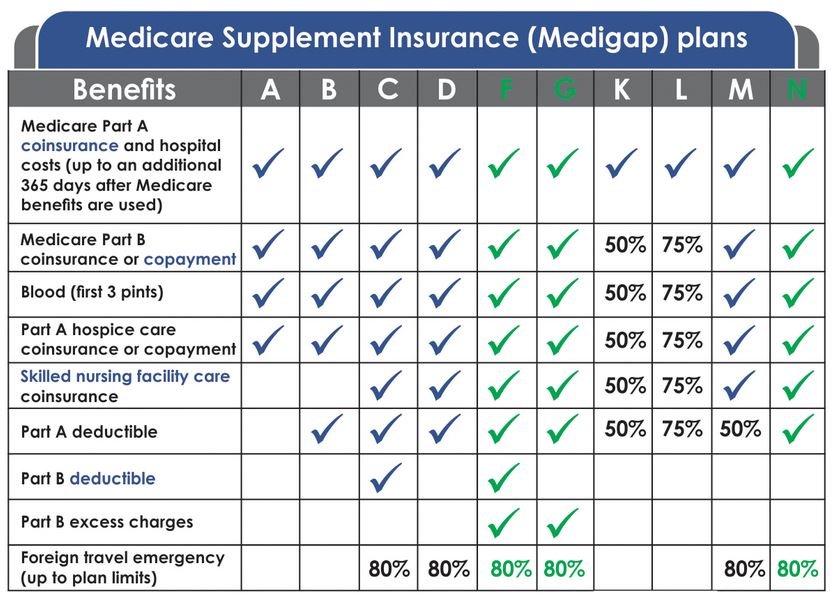
10 Standardized Medicare Supplement Plans to Choose From

Nationwide, there are 10 “standardized” Medicare Supplement plans to choose from, Plan A through Plan N. These plans are standardized meaning that Plan G is Plan G, Plan N is Plan N, etc. The coverage and benefits are exactly the same with every Plan G, Plan N, etc. making it easier to compare “apples with apples,” etc.

Although these plans are standardized, the rates are not standardized, so it is important to shop around and compare because the rates vary significantly between insurance carriers for the same identical plan and coverage.

Since there are co-payments, coinsurance, and deductibles and no out-of-pocket maximum with Original Medicare (Part A and Part B), most people get a Medicare Supplement plan in addition to Original Medicare to pay for most of these costs.

The Plan G Medicare Supplement is the Most Popular and Cost-Effective Plan

Of the 10 standardized Medicare Supplement plans, the three most popular plans are Plan F, Plan G, and Plan N. Of the three plans, Plan G is the best plan and most cost-effective because your only OOP cost for the entire year is the Medicare Part B deductible, which is $226 for all of 2023.

NOTE: The Part B deductible can change from year to year, but historically, it has never increased significantly. Once you meet this small annual deductible, you normally won’t have any other costs for the remainder of the year.

How Much Do Medicare Supplement Plans Cost?

In California, rates are based primarily on age and zip code, so Plan G will cost less for someone who is age 65 rather than age 85. For example, in the San Diego area (zip code 92024), the rates for age 65 range from $100 per month to $203 per month! For age 85 in the same zip code, the rates range from $221 per month to $395 per month!

The California Birthday Rule

In California, you can change your Medicare Supplement plan any time of the year, but you would normally have to be in relatively good health to do so because you will have to answer health questions and be medically underwritten. However, California is one of only a few states with a birthday rule called the California Birthday Rule.

Under this law, if you currently have a Medicare Supplement, you can apply for a new Medicare Supplement with “equal or fewer” benefits during the 60 days following your birthday each year, and you cannot be turned down for coverage. For example, if you have Plan G, you can switch to Plan G with any other insurance carrier, REGARDLESS OF YOUR HEALTH and without answering any health questions on the application.

NOTE: Only six states currently have a Medicare Supplement birthday rule including California, Idaho, Illinois, Louisiana, Nevada, and Oregon. Before 2022, only two states had a birthday rule.

It’s Important to Shop Around and Compare Medicare Supplement Rates Every Year!

Since there is such a large discrepancy in pricing and because Medicare Supplement rates are constantly changing as we get older, it’s important to take advantage of the California Birthday Rule and compare prices and shop around every year or two.

About Me

I hope that you have found this information to be interesting and informative. I’m an independent insurance agent with over 15 years of experience specializing in Medicare Supplement insurance, primarily in California. As an independent agent, I work with most of the major insurance carriers including Mutual of Omaha, Cigna, Blue Shield of CA, Anthem Blue Cross, Health Net, Aetna, etc. I have hundreds of clients, and I shop around for them every year around their birthday. Please click here to see some of my client testimonials.

If you have any questions, or if you know anyone that is turning 65 or starting Medicare, or if you would like for me to shop around for you, I’m happy to help, and there is no charge for my service!!! Please feel free to contact me! Also, please feel free to forward this blog on to anyone you know who may be interested.

Thank you!

Ron Lewis
CA agent #0B33674
NV agent #3822123

Ron@RonLewisInsurance.com
866.718.1600 (Toll-free)
760.525.5769 (Cell)
www.MedigapShopper.com