How the California Birthday Rule Can Save You Hundreds on Your Medigap Plan — Every Year

Introduction

If you’re a Medicare Supplement (Medigap) policyholder living in California, there’s a little-known benefit that could save you hundreds (or even thousands) of dollars a year and many people don’t even know that it exists. It’s called the California Birthday Rule, and it gives you the right to switch your Medigap plan every year around your birthday, REGARDLESS OF YOUR HEALTH!

IMPORTANT: You can change your Medicare Supplement any time of the year, but if you do it around your birthday, it’s a lot easier because you don’t have to answer any health questions, there’s no medical underwriting, and YOU CAN’T BE TURNED DOWN FOR COVERAGE!

Medigap Plans Are Standardized

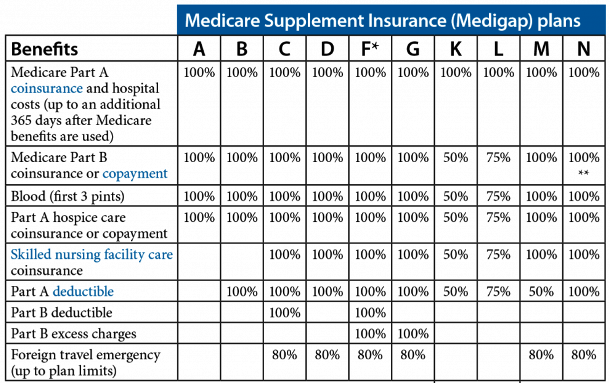
Nationwide, there are 10 standardized Medicare Supplement lettered plans to choose from, Plan A through Plan N. When I say “standardized,” that means that the coverage and benefits for every lettered plan are exactly the same regardless of what insurance carrier you sign up with. In other words, Plan G is Plan G, Plan N is Plan N, etc., regardless of what insurance carrier you are with. So it’s much easier to compare plans since every plan is exactly the same no matter which insurance carrier offers it.

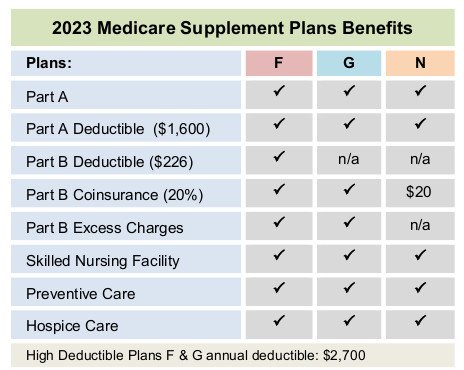
NOTE: Technically, there are actually 12 standardized Medigap plans to choose from because there are high-deductible versions of Plan F and Plan G. In 2025, you will pay a $2,870 deductible before your coverage for either of these plans would begin.
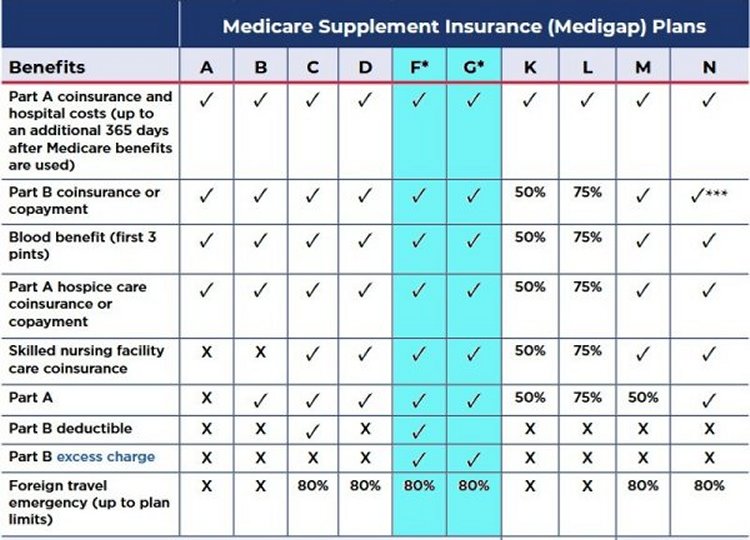
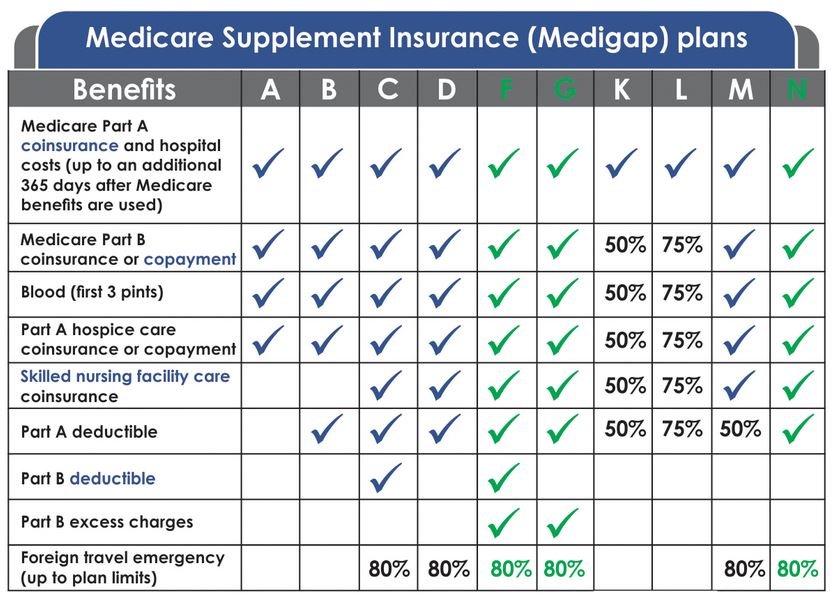
As you can see, the only difference between Plan F and Plan G is the Medicare Part B deductible.

Which Medigap Plan is Best?

For those who are turning 65 or starting Medicare today, the best and most comprehensive Medigap plan is Plan G, which pays for everything except for the Medicare Part B deductible. The current annual Part B deductible (in 2025) is $257. That amount can change from year to year, but historically, it hasn’t changed by much.

Medicare Access and CHIP Reauthorization Act of 2015

Due to the Medicare Access and CHIP Reauthorization Act of 2015 (MACRA), Medigap Plan C and Plan F were discontinued for new Medicare beneficiaries starting on January 1st, 2020. This legislation eliminated the availability of Medigap plans that cover the Medicare Part B deductible for individuals who became eligible for Medicare on or after that date. However, Plan C and Plan F are still available for people who were eligible for Medicare before 2020 or who already have one of those plans. They just aren’t available for those individuals that turned 65 or started Medicare on or after January 1st, 2020.

Let’s look at a common example of how switching under the Birthday Rule can save you money.

Why Plan G is More Popular Than Plan F

If you have a Plan F Medicare Supplement, you’re probably paying more than you need to. It’s usually much cheaper and more cost effective to switch to Plan G because both plans are identical in coverage except for the Medicare Part B deductible, which is $257 in 2025. Plan F covers that small deductible, while Plan G does not. That is the only difference between the two plans, yet the premiums for Plan F are usually significantly higher.

Even though Plan F covers that $257, it often costs $400–$1,000 more per year in premiums than Plan G, so in most cases, you’d save money by paying the lower monthly premium for Plan G and just covering that $257 deductible yourself.

IMPORTANT: If you can save more than $257 per year by switching from Plan F to Plan G, then Plan G is cheaper and more cost effective.

For example, if your Plan F premium is $250 per month and you can get Plan G for $200 per month, that’s a gross savings of $50 per month or $600 per year. If you pay the $257 on your own, your net savings will still be $343 per year ($600 – $257 = $343)! The Medicare Part B deductible is payable only one time per calendar year, so after you pay that small deductible, there is absolutely no difference between Plan F and Plan G for the remainder of the year!

NOTE: If you have Plan F and you switch to Plan G, if you’ve already met your $257 Part B deductible, you won’t pay it again until the following year since that small deductible is payable only one time per calendar year.

What Is the California Birthday Rule?

The California Birthday Rule is a special California state law that allows active Medigap policyholders in California to switch to a new Medigap plan with “equal or fewer” benefits every year around their birthday without medical underwriting during a 60-days following their birthday.

NOTE: In California, most carriers accept applications from 30 days before your birthday up to 60 days after your birthday, a 91-day window to switch Medigap plans without medical underwriting.

Most states don’t have a birthday rule, and if you develop a serious health condition, you could be stuck with your current health insurer and Medigap plan. But thanks to the California Birthday Rule, you have a guaranteed open enrollment period every year to shop around and save money on your premiums without worrying about being stuck or declined.

What Does Equal or Fewer Mean?

Again, under the birthday rule, you can switch to any Medigap plan that offers “equal or fewer” benefits than your current plan. In other words, you can switch from your current Medigap plan to any other Medigap plan that offers benefits that are the same or less comprehensive than what you currently have.

For example:

  • You cannot upgrade to a plan with more benefits (such as Plan N to Plan G).
  • You can switch to a plan with the same level of benefits (such as Plan G to another Plan G with a different carrier).
  • You can downgrade to a plan with fewer benefits (such as Plan F to Plan G, Plan G to Plan N, etc.).

This rule exists to prevent people from waiting until they are sick to “upgrade” to more generous coverage. However, it does give you freedom to shop around for lower prices on the same or lesser coverage without worrying about health questions or being declined.

Examples of “Equal or Fewer”

  • If you have Plan F, you can switch to Plan F with a different insurance carrier or to Plan G, Plan N, etc.
  • If you have Plan G, you can switch to Plan G with another insurance carrier or to Plan N, etc.
  • If you have Plan N, you can switch to Plan N with a different insurance carrier or to Plan A, etc.

Even if you’re not sure whether your current plan is the best deal, you can always switch to the same plan with a different insurance carrier during your birthday rule window, often saving hundreds and sometimes thousands of dollars per year without changing any of your benefits.

What States Have a Medigap Birthday Rule?

Today, more states are slowly adding their own birthday rules. Here is a current list of states that have a Medicare birthday rule:

  • California
  • Illinois
  • Idaho
  • Kentucky
  • Louisiana
  • Maryland
  • Nevada
  • Oklahoma
  • Oregon
  • Utah
  • Virginia
  • Wyoming

States with Year-Round Guaranteed Issue or Open Enrollment Rights

These states don’t have a Medicare birthday rule, but they offer year-round guaranteed issue or open enrollment periods without underwriting:

  • Connecticut
  • Maine
  • Missouri
  • New York
  • Washington

Do Most People Use the Birthday Rule?

Surprisingly, no! Many people don’t know this rule exists and they stay on overpriced Medigap plans for years thinking they’re stuck because of health issues, etc. If you take advantage of the birthday rule each year, you can keep your premiums under control and avoid being overcharged.

Rates Vary Significantly Between Insurance Carriers

As mentioned before, Medigap plans are “standardized” meaning that Plan G is Plan G, Plan N is Plan N, etc. The coverage and benefits for every Plan G, etc. are exactly the same regardless of what insurance carrier you are with. However, the rates between insurance carriers are not standardized. Every insurance carrier charges their own rates.

For example, right now in the 92024 zip code (San Diego), the Plan G rates for a 70 year old single female range from $217.78 to $319.79 per month! That’s a difference of $102.01 per month or $1,224.12 per year for the same identical plan and coverage!

NOTE: Several years ago, one of my clients, a husband and wife, moved to San Diego from Los Angeles. They were paying $809.00 per month for Plan G with United American, and I got them Plan G with Mutual of Omaha for $367.01 per month, which was a savings of $441.99 per month or $5,303.88 per year for the save identical plan and coverage! Rates are based primarily on age and zip code, and they are constantly changing. It‘s critically important to shop around every year!

How to Apply and Save Money!

To take advantage of the California birthday rule, you must do the following:

  • Live in California
  • Have an active Medigap plan
  • Switch to a Medigap plan with “equal or fewer” benefits
  • Apply during the 30 days before up to 60 days after your birthday
  • Email me at Ron@RonLewisInsurance.com or call me at 760.525.5769 (cell) or 866.718.1600 (toll-free) for a free quote or to switch plans

It only takes a few minutes to apply and there is never a charge for my service!

Conclusion

If you currently have a Medigap plan, you can change your plan every year around your birthday, REGARDLESS OF YOUR HEALTH! If you apply during your annual 60-day open enrollment period under the California Birthday Rule, YOU CANNOT BE TURNED DOWN FOR COVERAGE!

As an independent insurance agent specializing in Medicare Supplements, I work with all the major insurance carriers, not just one. (A “captive” insurance agent can only represent one insurance carrier.) I will do the shopping for you and find you the best rates, not just this year, but I shop around for all my clients every year around their birthday! The monthly premiums are exactly the same whether you let me do the shopping for you to save you money on your premiums or if you contact an insurance carrier directly! Please visit Client Testimonials to read what some of my clients have to say about me.

Call, text, or email me today, and I’ll help you review your options in just a few minutes with no pressure or obligation. Let me help you save hundreds, or even thousands of dollars, on the exact same Medigap plan you already have. Won’t that be a nice birthday present?

If you liked this blog and found it informative, please click the “Like” button, and please send me your questions, comments, or feedback! And please feel free to share this article with your friends!

Thank you!

Ron Lewis
Ron@RonLewisInsurance.com
www.MedigapShopper.com
(760) 525-5769 – Cell
(866) 718-1600 – Toll-free

The California Birthday Rule

If you are a California resident and you have a Medicare Supplement, aka a “Medigap” plan, I have good news for you! Under a law called the California Birthday Rule, you have 60 days of “open enrollment” following your birthday each year when you can change your Medigap plan, REGARDLESS OF YOUR HEALTH. During this period, there are no health questions to answer, no medical underwriting or waiting periods, and YOU CANNOT BE TURNED DOWN FOR COVERAGE! To qualify, the new plan must have “equal or fewer” benefits as your current policy.

For example, if you have Plan G, you can switch to Plan G with any other insurance carrier or you could switch to Plan N since Plan N has fewer benefits than Plan G. You just can’t switch from Plan N to Plan G, etc. under the birthday rule because Plan N has fewer benefits than Plan G.

NOTE: In California, most insurance carriers will let you apply during the 30 days before your birthday up to 60 days after your birthday, so in reality, you have a 90-day open enrollment period each year.

You can change your Medigap plan any time of the year, but if you do so around your birthday, it’s a lot easier because you don’t have to answer any health questions on the application and you can’t be turned down for coverage.

The Annual Election Period

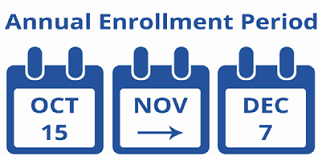
There is another open enrollment period called the Annual Election Period (AEP) that goes from October 15th through December 7th every year. This open enrollment period has nothing to do with Medigap plans. It’s only for people with Medicare Advantage (MA) plans and/or Prescription Drug Plans (PDPs). If someone has an MA plan or a PDP, the AEP is the time to shop around and change those plans. The new coverage would begin on January 1st of the following year.

During the AEP, you can always switch from a Medigap plan to an MA plan, but there is no guarantee that you can switch from an MA plan to a Medigap plan. If someone has an MA plan, they are guaranteed the right to switch back to Original Medicare, which is Medicare Part A (Hospital insurance) and Part B (Medical insurance). However, they are not guaranteed the right to get a Medigap plan unless they are in a special enrollment period (SEP) that allows them to do so.

For example, if someone had an MA plan for the first time and they have had it for less than one year, they would be in a SEP, and they could still get a Medigap plan. Otherwise, they would have to answer health questions, be medically underwritten, and they could be turned down for certain types of health conditions.

NOTE: Medicare Part A and Part B cover approximately 80% of medical and hospital costs, so most people will get a Medigap plan to pick up most of the remaining 20% of the costs that are not covered by Medicare.

Most States Don’t Have a Birthday Rule

Most states don’t have a birthday rule, so the California Birthday Rule is definitely very beneficial for California residents because if your health should change, or if your rates go up significantly, or if you are not happy with your plan or insurance carrier, etc., you can always change to a different plan or insurance carrier, REGARDLESS OF YOUR HEALTH, every year around your birthday. In contrast, for those living in a state without a birthday rule, you could be stuck with your current Medigap plan, insurance carrier, high monthly premium, etc.

NOTE: Some states have recently added their own version of a birthday rule such as Idaho, Illinois, Louisiana, Maryland, Nevada, and Oregon. Besides the birthday rule, other states offer guaranteed issue protections for changing Medigap plans including Connecticut, Maine, Massachusetts, Missouri, New York, Rhode Island, and Washington. Each of these states have their own rules and requirements for changing Medigap plans, which are beyond the scope of this article.

When is the Best Time to Apply For New Coverage Under the California Birthday Rule?

In California, Medigap rates are based primarily on your age and zip code. Other factors that can affect the rate is if you use tobacco products and whether you live alone or with someone else in the household. Under the California Birthday Rule, most insurance carriers base their rates on your age after your birthday, but a couple carriers base their rates on your age on the date your application is submitted and signed. This one year age difference can make a big difference in the rate so for this reason, I normally recommend checking Medigap rates during the 30 days before your birthday each year.

Under the birthday rule, the new effective date is usually the 1st of the month following your birthday. For example, if your birthday is June 3rd, the new effective date would normally be July 1st, etc.

IMPORTANT: I shop around for my clients every year around their birthday to take advantage of the California Birthday Rule. If you aren’t a client of mine, and you would like for me to shop for you too, please let me know. As an independent agent, I work with all the major insurance carriers, and there’s no charge for my service!

10 Standardized Plans To Choose From

Nationwide, there are 10 standardized Medigap plans to choose from with lettered names, Plan A through Plan N. The term “standardized” means that the coverage and benefits for every Plan F, Plan G, Plan N, etc. are exactly the same no matter what carrier you are with. In other words, Plan G with Anthem Blue Cross is exactly the same as Plan G with Blue Shield of California, etc. Plan G is Plan G, Plan N is Plan N, Plan F is Plan F, etc.

As of January 1st, 2020, Medigap plans purchased by individuals who are turning 65 or who are new to Medicare can no longer cover the Part B deductible, which is currently $240 in 2024. (That amount can change from year to year.) Because of this, Plan C and Plan F aren’t available to people who are new to Medicare on or after January 1st, 2020.

NOTE: If you turned 65 before January 1st 2020 or you were eligible for Medicare before then, you can still get Plan F and Plan C. Those plans just aren’t available for those individuals who turned 65 after January 1st, 2020, etc.

Medigap Plans Are Standardized but Medigap Premiums Are Not Standardized

Although the coverage and benefits for all Medigap plans are standardized, the premiums for these plans are not standardized, and the rates vary significantly from one insurance carrier to another for the same identical plan and coverage.

For example, for a 72 year old female living in Encinitas, CA in the 92024 zip code, Plan G rates currently range from $178 to $280 per month for the same exact plan and coverage! That’s a difference of $102 per month or $1,224 per year! Since the monthly premiums vary significantly between insurance carriers, it’s important to shop around periodically.

The Application Process

Today, almost all Medigap insurance carriers in California use online applications that the agent completes. I work with clients throughout California and in several different states, so it’s not necessary to meet in person. The application process is simple, and it usually takes less than 15 minutes to complete.

In addition to the application, under the California Birthday Rule, most insurance carriers require some kind of proof that you currently have a Medigap plan. A copy of your Medicare Supplement card or a recent bill showing which plan you currently have (Plan G, etc.) is sufficient. Once the application has been submitted, the entire application process normally takes a couple of days to a week to complete since there is no medical underwriting. Underwritten applications usually take longer. After you are approved, you should contact your current Medigap insurance carrier to let them know that you will be canceling your old policy when your new policy begins.

CAUTION – Some Insurance Carriers Are Better Than Others!

In addition to finding an insurance carrier with competitive rates, you also have to be careful to choose a good insurance carrier because not all carriers are the same. Although the coverage and benefits for Medicare Supplement plans are standardized and the same, not all insurance carriers are the same; some are better than others!

For example, some insurance carriers will give you a 12-month rate lock and some don’t. Some have better financial ratings than others. Some will give you up to a 12% household discount if you live with someone else in your household, and some don’t. Some have much better customer service than others. Some have call centers in the US and some are overseas. Some provide free gym memberships and some don’t, etc. Price is important, but there are also other factors to consider when choosing a Medigap plan.

For More Information

As an independent insurance agent, I work with the major insurance carriers in California, Nevada, Arizona, and Washington state. I’m not limited to one particular insurance carrier. I shop around for my clients, every year, to find them the best rates, and I’m happy to shop for you too!

If you have any questions about the California Birthday Rule, etc. or if you would like a free, no-obligation Medicare Supplement quote, please don’t hesitate to let me know. There is no charge for my services as I am compensated by the insurance carriers, not my clients!

My contact information is below, and please click here to check out what my clients have to say about me. If you feel that the information in this blog would be helpful to a friend or family member, please feel free to pass it on and please feel free to add your comments below!

Thank you!

Ron Lewis
CA agent #0B33674
NV agent #3822123

Ron@RonLewisInsurance.com
866.718.1600 (Toll-free)
760.525.5769 (Cell)
www.MedigapShopper.com

If You’re Losing Your Scripps Medicare Advantage Coverage… Don’t Panic!

Scripps Will No Longer Accept Medicare Advantage HMO Plans In 2024

Scripps recently began notifying about 32,000 Medicare beneficiaries that beginning on January 1st, 2024, the Scripps Clinic and Scripps Coastal medical groups will no longer accept Medicare Advantage (MA) HMO plans from carriers such as Anthem Blue Cross, Blue Shield of California, Health Net, UnitedHealthcare (UHc), etc. However, doctors from Scripps Clinic and Scripps Coastal will continue to accept Original Medicare Part A (Hospital insurance) and Part B (Medical insurance) as well as Medicare Supplement insurance, aka Medigap.

NOTE: Although Scripps will no longer accept MA HMO plans, I called and asked if they will accept MA PPO plans. I was told that individuals with MA PPO plans can still go to Scripps and see their doctors with those plans, BUT they will be billed as “out of network” instead of “in network” meaning that those individuals could have very high out-of-pocket costs if they continue going to Scripps with MA PPO plans.

If you have to pay out-of-network costs for your MA PPO plan, they are very expensive. In the 92024 zip code, there are 66 MA plans offered in 2024. Of those plans, 56 are HMO’s, and 10 are PPO’s, which are shown below. As you can see, the in-network and out-of-network costs are very expensive for all of the MA PPO plans.

In and Out of Network Costs for 2024 MA PPO Plans Offered In the 92024 (Encinitas) Zip Code:

AARP Medicare Advantage from UHC CA-0035 (PPO)
$9,550 In and Out-of-network
$4,500 In-network

Aetna Medicare Choice Plan (PPO)
$8,950 In and Out-of-network
$5,500 In-network

Aetna Medicare Core Plan (PPO)
$8,900 In and Out-of-network
$3,900 In-network

Aetna Medicare Eagle Plus Plan (PPO)
$9,500 In and Out-of-network
$6,700 In-network

Alignment Health AVA (PPO)
$8,950 In and Out-of-network
$3,900 In-network

Blue Shield Select (PPO)
$8,950 In and Out-of-network
$4,200 In-network

Humana USAA Honor (PPO)
$9,550 In and Out-of-network
$5,900 In-network

Humana USAA Honor with Rx (PPO)
$9,050 In and Out-of-network
$6,100 In-network

HumanaChoice H5525-076 (PPO)
$7,000 In and Out-of-network
$3,900 In-network

HumanaChoice H5525-077 (PPO)
$8,900 In and Out-of-network
$5,900 In-network

If you get seriously sick with one of these MA PPO plans, you can still end up with very high out-of-pocket costs, even if you stay in-network!

The Problem

More than half of the nation’s seniors have MA plans, but many hospitals and care facilities throughout the country are dropping MA plans altogether. Some of the most common reasons are because of excessive prior authorization denial rates and slow payments from insurers. Also, some MA insurers have faced allegations of billing fraud from the federal government, and they are being investigated by lawmakers over their high denial rates. Please click here to read “Kaiser Permanente Sued By Federal Government Over Alleged Medicare Fraud.”

According to Chris Van Gorder, president and CEO of Scripps Health, “It’s become a game of delay, deny and not pay. The health system is facing a loss of $75 million this year on the MA contracts, which will end Dec. 31 for patients covered by UnitedHealthcare, Anthem Blue Cross, Blue Shield of California, Centene’s Health Net and a few more smaller carriers. If other organizations are experiencing what we are, it’s going to be a short period of time before they start floundering or they get out of Medicare Advantage. I think we will see this trend continue and accelerate unless something changes.” For more information, please click here to read “Hospitals are dropping Medicare Advantage left and right” by Jakob Emerson.

Scripps Health released a statement explaining the reason for their decision. “Scripps has long served seniors and others in our community who are enrolled in Medicare and Medicare Advantage plans. Scripps and health systems across the country are facing unprecedented financial pressures. We are looking at all we do and, when necessary, making difficult decisions to ensure that we can continue to meet the needs of the community we serve. The revenue from Medicare Advantage plans is not sufficient to cover the cost of the patient care we provide.”

Understandably, many Scripps’ patients with MA plans are upset and panicking. If they keep their MA plans, they will no longer be able to keep the the same doctors and specialists they have been going to at Scripps, and they will have to go somewhere else and find new doctors. For those who are undergoing serious procedures such as cancer treatment, etc., this is not a viable option.

Scripps’ Patients Have Three Choices

If you are a Scripps patient with an MA plan, you have three choices for 2024:

  • You can keep your MA HMO plan (or switch to a different MA HMO plan), but if you do, you will not be able to go to Scripps Clinic or Scripps Coastal in 2024, and you must find new doctors.
  • You can keep your MA PPO plan (or switch from a MA HMO to a MA PPO plan, and continue going to Scripps and seeing your regular doctors, but you will incur very high out-of-pocket in-network and out-of-network costs.
  • The third and best option, in my opinion, is to switch back to Original Medicare (Part A and Part B) and get a Medicare Supplement plan.

With the third option, you can continue going to Scripps in 2024 and you can still go to the same doctors, specialists, etc. that you have been going to in the past. For those who are undergoing any serious medical procedures, such as cancer treatment, etc., you will continue in January 2024 with no changes or interruption in service or treatment.

When To Make These Changes

The time to make any of these changes is during the upcoming Annual Enrollment Period (AEP), which begins on October 15th and ends on December 7th every year.

If you want to keep your current MA plan, you don’t have to do anything (as long as it is still being offered in 2024). If you have an MA plan and want to switch to a different MA plan, you must do so during the AEP. You can also apply for or change your Prescription Drug Plan (PDP) or switch back to Original Medicare (Part A and Part B) during the AEP.

NOTE: If you have a Medicare Supplement, the AEP does NOT apply to you unless you want to enroll in or change your PDP. You can change your Medicare Supplement any time of the year.

The Solution

If you would like to continue seeing your doctors at Scripps in 2024, your only option is to drop your MA plan, switch back to Original Medicare, and get a Medicare Supplement. Normally, when you switch from an MA plan to a Medicare Supplement, you must answer health questions and go through medical underwriting. If you have a serious health condition such as cancer, etc., you will not be approved for coverage.

And Now For The Good News!

For all Scripps’ patients that have any kind of a Medicare Advantage plan (HMO or PPO), you can get a Medicare Supplement beginning on 1/1/24 to replace your MA plan REGARDLESS OF YOUR HEALTH! Because of this current situation with Scripps, you will be in a “Guaranteed Issue” situation meaning that you can get the best Medicare Supplement plan available, Plan G, without answering any health questions or being medically underwritten! As a Guaranteed Issue, YOU CANNOT BE TURNED DOWN FOR COVERAGE!

NOTE: With a Plan G Medicare Supplement, your only out-of-pocket cost for the entire calendar year is the Medicare Part B deductible, which will be $240 for all of 2024!

For example, with a Plan G Medicare Supplement, if you have multiple doctor visits, a couple of surgeries, and a hospital confinement in 2024, all you would pay is the $240 Part B deductible and that’s all! That’s a lot better and cheaper than the in-network and out-of-network maximums with MA plans!

Plus, with a Medicare Supplement, you can go to any doctor, specialist, care facility, hospital, etc. ANYWHERE in the US as long as they accept Medicare, and most do, about 93%. If you want to see a specialist, you can go directly to any specialist you want, anywhere in the country. With an MA plan, you must go to your primary care doctor first and get permission to see a specialist that’s in your local network, etc. You have much more freedom of choice with a Medicare Supplement than you do with an MA plan.

Other Guaranteed Issue Situations

There are other Guaranteed Issue situations that will qualify anyone with an MA plan to be able to bypass underwriting and get a Medicare Supplement as a guaranteed issue, REGARDLESS OF THEIR HEALTH. Regardless of your situation with Scripps, everyone with an MA plan should have received their Annual Notice of Change (ANOC) by now. The ANOC is a notice you receive from your Medicare Advantage or Prescription Drug Plan (PDP) every year in late September. The ANOC provides a summary of any changes in the plan’s costs and coverage that will take effect on January 1st of the following year.

If your MA plan did any of the following, you are in a guaranteed issue situation, which will allow you to get a Medicare Supplement, regardless of your health:

  • If your MA plan increased your premium or co-payments by 15% or more from this year to next year.
  • If your MA plan reduced any of your benefits next year from what they are this year.
  • If your MA plan terminated its relationship with your medical provider or the certification of the organization or plan has been terminated, such as Scripps.

Are Medicare Supplement Plans Expensive?

Many people are under the incorrect impression that Medicare Supplement plans are very expensive. I guess that’s kind of a relative question. In California, rates are based primarily on age and zip code, and rates normally go up as we get older.

Nationwide, there are 10 standardized Medicare Supplement plans to choose from, Plan A through Plan N. The term “standardized” means that coverage and benefits for every Plan G, Plan N, etc. are exactly the same, regardless of what insurance carrier you are with. In other words, Plan G is Plan G, Plan N is Plan N, etc. Although these plans and coverage are standardized (exactly the same), the rates are not standardized and prices vary significantly from one insurance carrier to another. For example, in the 92024 zip code (Encinitas), the Plan G rate for a 70 year old ranges from $158.29 per month with Cigna up to $262.04 per month with Humana!

As mentioned before, Plan G is the best Medicare Supplement plan offered today because your only out-of-pocket cost for the entire year is the Medicare Part B deductible, which will be $240 in 2024. As an independent agent, I work with all the major insurance carriers, and I shop around for my clients, every year, to find them the best rates as well as the best insurance carriers.

Do You Want to Change Your MA Plan to a Medicare Supplement Plan?

If you would like to switch from your MA plan to a Medicare Supplement in 2024, I can help you! Please call, text, or email me. My contact information is below. Please send me your birth date, zip code, and whether you live alone or if you have lived with someone else for longer than a year, and I can let you know what the best Medicare Supplement rates are for your age and zip code.

NOTE: Some carriers will give you a household discount (HHD), up to 12%, just for living with someone, even if they don’t have a plan. If this applies to you, please let me know their exact age.

If you’d like to apply for a Medicare Supplement, I can handle everything for you, and there is no charge for my service. If you have any questions or would like a no-obligation quote, please don’t hesitate to let me know.

Thank you!

Ron Lewis
CA agent #0B33674
NV agent #3822123

Ron@RonLewisInsurance.com
866.718.1600 (Toll-free)
760.525.5769 (Cell)
www.MedigapShopper.com

Choosing the Best Medicare Supplement Plan

If you are turning 65 or you are new to Medicare, it can be very confusing trying to figure out which Medicare Supplement plan (aka Medigap plan) is right for you. The purpose of this article is to answer your questions and to make the Medicare transition easier for you and a lot less stressful!

10 Standardized Medicare Supplement Plans To Choose From

Nationwide, there are 10 standardized Medigap plans to choose from, Plan A through Plan N. The term “standardized” means that the coverage and benefits for every Medigap plan are identical regardless of what carrier you sign up with. For example, Plan G is Plan G, Plan N is Plan N, Plan F is Plan F, etc.

Medigap Plans Are Standardized But Premiums Are Not Standardized

While the coverage and benefits for each of these plans are standardized, the monthly premiums are not standardized, and prices vary significantly between insurance carriers for the same identical plan and coverage. Other factors can affect the premiums such as your age, zip code, marital status, whether you use tobacco products, etc.

For example, in the 92024 zip code (Encinitas, CA), the Plan G rates for a 70 year old female range from $152 per month to $262 per month, which is a difference of $110 per month or $1,320 per year for the same identical plan and coverage! In California, rates usually go up every year as we get older. For this reason, it’s important to shop around every year to make sure you aren’t paying more than you should be! I periodically stay in touch with my clients, and I shop around for them every year around their birthday.

IMPORTANT: As an independent insurance agent, I work with the major insurance carriers, not one particular company. If you or someone you know has a Medigap plan, I’m happy to shop around for you, and there is no charge for my service!

The California Birthday Rule

In California, we have a law called the California Birthday Rule. This law applies to all California residents who already have a Medigap policy.

Under the birthday rule, you have an annual 90-day open enrollment period that begins 30 days before your birthday and ends 60 days after your birthday. During this period, you can switch to any other Medigap policy that has “equal or fewer” benefits.

For example, if you have Plan G with Carrier A, you can switch to Plan G with Carrier B, regardless of your health and without answering any health questions. There is no medical underwriting and you cannot be turned down for coverage! If you have Plan G, you can also switch to Plan N because Plan N has fewer benefits than Plan G.

If you have Plan N, you can switch to Plan N with another carrier, but you cannot switch to Plan G because Plan G has more benefits than Plan N, etc.

NOTE: You can change your Medigap plan any time of the year, but if you do so outside of your 90-day annual open enrollment period under the California Birthday Rule, you will have to answer health questions and be medically underwritten, and you can be turned down for certain health conditions.

The Three Best Medicare Supplement Plans

Although there are 10 standardized Medigap plans to choose from, Plan F, Plan G, and Plan N are the three best and most popular plans.

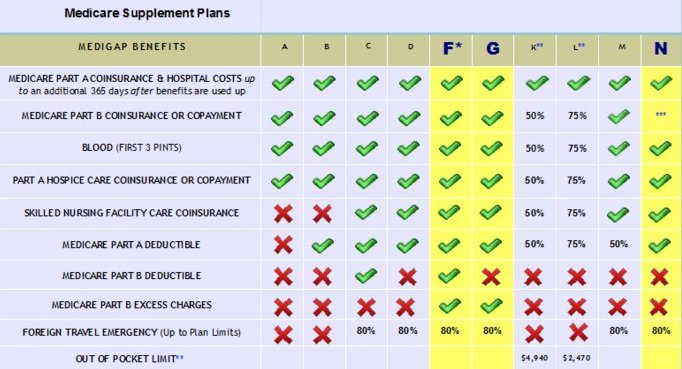
As you can see from the chart, Plan F provides the most comprehensive coverage. Plan G is identical to Plan F except it does not cover the Medicare Part B deductible. Plan N also does not cover the Part B deductible and there are co-payments for doctor visits, emergency room visits, and it does not cover Part B excess charges. Please continue reading for more detailed information.

Plan G Medicare Supplement

For those who are turning 65 on or after January 1st, 2020, Plan G is the best plan today because your only out-of-pocket (OOP) expense is the Medicare Part B deductible, which is currently $226 for all of 2023.

NOTE: That small deductible can change from year to year, but historically, it hasn’t changed significantly. In fact, the Part B deductible decreased from $233 in 2022 to $226 in 2023.

The Part B deductible zeros out every January and starts all over again. Once you meet that small annual deductible, you won’t have any other OOP costs for the remainder of the calendar for any Medicare-approved doctors visits, surgeries, hospitalizations, etc.

Plan F Medicare Supplement

Prior to January 1st, 2020, Plan F was considered to be the best Medicare Supplement plan because there were no deductibles, co-payments, or OOP costs. The only difference between Plan F and Plan G is the Medicare Part B deductible. Plan F pays for that small deductible, and Plan G doesn’t. That is the only difference between the two plans!

NOTE: For those individuals that had Plan F prior to January 1st, 2020, they can still keep their plan and switch to Plan F with other insurance carriers if they want, but Plan F isn’t available for individuals who started Medicare on or after January 1st 2020 because of the Medicare Access and CHIP Reauthorization Act (MACRA) of 2015.

Although Plan F covers the Medicare Part B deductible and Plan G doesn’t, the premiums for Plan F are significantly more than the premiums for Plan G, which is why most people with Plan F have switched to Plan G.

Most People With Plan F Have Switched to Plan G

Most people who had Plan F have switched to Plan G because in most cases, the premiums for Plan G are significantly less, and even if you have to pay the $226 Part B deductible, you still end up saving money by switching to Plan G!

For example, if someone has Plan F and their premium is $250 per month and they can get Plan G for $180 per month, that’s a gross savings of $70 per month or $840 per year! If you subtract the $226 Medicare Part B deductible, that’s still a net savings of $614 per year!

NOTE: If you have Plan F and you want to switch to Plan G, if you have already met your $226 Medicare Part B deductible for this year, you would not have to pay it again until the following year since the Part B deductible is payable only one time per calendar year.

Medicare Supplement Plan N

Plan N isn’t as popular as Plan G because there are more OOP costs, but the premiums are usually a little lower, but not significantly lower than the Plan G premiums. If you are in relatively good health and rarely go to the doctor, you may want to consider Plan N if you want lower monthly premiums and you are willing to incur more OOP costs. However, Plan G is a better option if you’re willing to pay slightly higher premiums for much better coverage than Plan N.

NOTE: If you are not in the best of health and you go to the doctor often, Plan N is not a good choice as you are required to pay co-payments for every office visit, and with all those payments, Plan G would normally be more cost effective.

With Plan N, you are responsible for paying the annual $226 Medicare Part B deductible (like you are with Plan G). You must also pay co-payments of up to $20 per doctor visit and co-payments of up to $50 for emergency room visits. However, if you are admitted to the hospital, the emergency room co-payment is waived.

Another difference between Plan N and Plan G is that Plan G covers the Medicare Part B “excess charges” and Plan N doesn’t. If your doctor doesn’t accept “Assignment” (the amount Medicare agrees to pay for a service), they may charge you up to an additional 15% of the bill. This fee is known as an excess charge.

Between Plan N and Plan G, I would recommend Plan G if the premiums aren’t significantly different and it’s not a financial burden to pay the Plan G premiums.

About Me

I hope that you have found this information to be interesting and informative. I’m an independent insurance agent with over 15 years of experience specializing in Medicare Supplement insurance, primarily in California.

As an independent agent, I work with the major insurance carriers including Mutual of Omaha, Cigna, Blue Shield of CA, Anthem Blue Cross, Health Net, Aetna, etc. I have hundreds of clients, and I shop around for them every year around their birthday to find them the best Medigap rates. Please click here to see some of my client testimonials.

If you have any questions, please don’t hesitate to contact me. If you have any friends that are turning 65 or that have Medicare Supplements, I’m happy to shop around for them, and there is no charge for my service!!! Also, please feel free to forward this blog on to anyone who may be interested!

Thank you!

Ron Lewis
CA agent #0B33674
NV agent #3822123

Ron@RonLewisInsurance.com
866.718.1600 (Toll-free)
760.525.5769 (Cell)
www.MedigapShopper.com

How to Sign Up for Original Medicare (Part A and Part B)

Signing up for Medicare can seem like a confusing and daunting task, but it’s really not that bad. This article will hopefully answer any questions you have and make the Medicare maze easy to navigate.

What is Medicare?

Medicare is the federal health insurance program for:

  • People who are 65 or older
  • Certain younger people with disabilities
  • People with End-Stage Renal Disease (permanent kidney failure requiring dialysis or a transplant, sometimes called ESRD)

Who is Eligible For Medicare?

You are generally eligible for Medicare if you are 65 or older, a U.S. citizen or permanent legal resident, and have lived in the U.S. for at least five year

What Are the Four Parts of Medicare?

Medicare is composed of four parts:

  • Part A (Hospital insurance)
  • Part B (Medical insurance)
  • Part C (Medicare Advantage plans)
  • Part D (Prescription drug plans)

NOTE: Medicare Parts A and B are also referred to as “Original Medicare.”

What Does Medicare Part A Cover?

Part A covers things like inpatient hospital stays, home health care and some skilled nursing facility care.

What Does Medicare Part B Cover?

Part B covers things like doctor visits, outpatient services, X-rays and lab tests, and preventive screenings.

What Does Medicare Part C Cover?

Part C is also known as Medicare Advantage (MA). An MA plan is a Medicare-approved plan from a private company that offers an alternative (replacement) to Original Medicare (see note below) for your health and drug coverage. These “bundled” plans include Part A, Part B, and often Part D. In most cases, you must only use doctors who are in the plan’s network. Most MA plans are HMO’s and are restrictive and limit your options to what doctors, specialist, hospitals, and care facilities you can go to.

IMPORTANT: A much better option to Part C, in my opinion, is a Medicare Supplement plan, also known as “Medigap” because it picks up the gap in coverage not covered by Medicare. With a Medigap plan, there are NO networks, and you have much greater freedom of choice as to which doctors, specialists, care facilities, etc. that you go to. You can go to any doctor, specialist, care facility, etc. ANYWHERE in the US as long as they accept Medicare, and most do, about 93%.

What Does Medicare Part D Cover?

Part D covers the cost of prescription drugs (including many recommended shots or vaccines).

The Medicare Initial Enrollment Period (IEP)

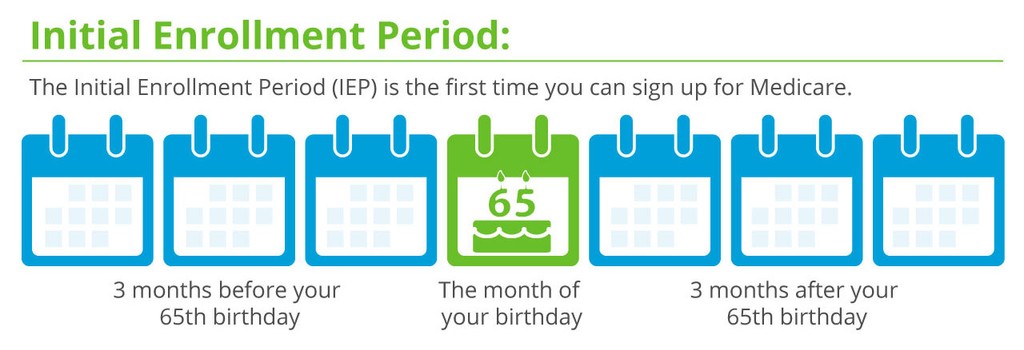
If you are turning 65 and are eligible for Medicare, you can sign up for Original Medicare, aka Medicare Part A (Hospital insurance) and Part B (Medical insurance) during your Initial Enrollment Period (IEP), which typically starts three months before the month of your 65th birthday and ends three months after your birth month. For example, if your birthday is June 23rd, your IEP would begin on March 1st and end on September 30th of that year.

NOTE: Medicare normally begins on the 1st of the month of your 65th birthday. If you want your coverage to start then, you need to sign up for Medicare during the 3 months before the month of your birthday. Otherwise, your Medicare won’t start until sometime after your birthday month.

For most people, their Medicare normally begins on the 1st of the month of their 65th birthday. However, if your birthday is on the 1st of the month, your Medicare would begin on the 1st of the previous month. For example, if your birthday is June 1st, your Medicare would normally begin on May 1st.

NOTE: If your birthday is on the 1st of the month, your IEP begins and ends one month earlier as well. For example, if you turn 65 on June 1st, your IEP would begin on February 1st and end on August 31st.

Some People Are Automatically Enrolled in Medicare When They Turn 65 and Some Are Not

If you are currently receiving Social Security or Railroad Retirement Board benefits before you turn 65, you will normally be automatically enrolled in Medicare, and you’ll receive your Medicare card in the mail before your 65th birthday. You’ll still have an IEP, and during this seven-month window, you can still make Medicare coverage decisions such as signing up for a Medicare Supplement and a Prescription Drug Plan (PDP).

IMPORTANT: If you are not currently receiving Social Security or Railroad Retirement Board benefits before you turn 65, you’ll have to sign up for Medicare on your own. If that’s the case, be sure to write down your IEP dates on your calendar before you turn 65.

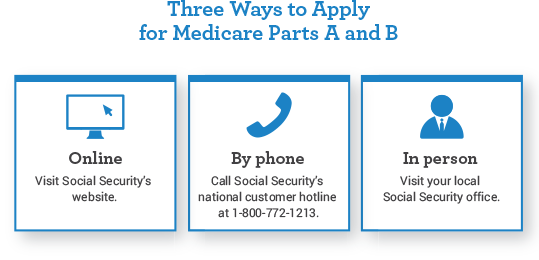
Three Ways to Sign Up for Medicare

There are the three different ways to sign up for Medicare:

  • You can apply for Medicare online at the Social Security Administration’s website (https://secure.ssa.gov/iClaim/rib).
  • You can call Social Security toll-free number at 1-800-772-1213 and sign up on the phone.
  • You can visit your local Social Security office.

I know that it doesn’t seem intuitive that you would contact Social Security to sign up for Medicare, but you do! When you apply for Medicare, you will need to provide personal and financial information including your name, Social Security number, birth date, income, etc.

After you apply for Medicare, you will receive a confirmation notice in the mail indicating whether your application has been approved, etc. If you have any questions or concerns about the Medicare enrollment process, you can contact Medicare directly at 1-800-MEDICARE (1-800-633-4227).

Do I Need to Enroll in Medicare If I’m Working After Age 65

For most people, Medicare Part A (Hospital insurance) is free because you or your spouse paid Medicare taxes long enough while working, generally at least 10 years. However, Part B (Medical insurance) is not free. There is a monthly premium for Part B, which is currently $164.90 each month for most people (or higher depending on your income).

You’ll pay a higher monthly premium for Part B if your modified adjusted gross income (MAGI), as reported on your IRS tax return from 2 years ago, is more than $97,000 in 2023 if you file an individual tax return or are married and file separately, or $194,000 if you are married and file a joint tax return. Please click here for more detailed information about the Part B premiums. Social Security will tell you if you have to pay a higher premium because of your income.

NOTE: If you are planning to continue working past age 65, you may be able to delay enrolling in Medicare Part B and avoid paying the Medicare Part B monthly premium. Since Medicare Part A is usually free, most people sign up for it even if they are working.

If you have “creditable” health coverage from your employer or are covered under a spouse’s employer plan, you may qualify for a Special Enrollment Period (SEP), and be able to delay enrolling in Part B without a penalty.

Medicare defines “creditable coverage” as coverage that is at least as good as what Medicare provides.

Here are some situations that will affect when you should begin your Medicare coverage:

  • If an employer has 20 or more employees, you can generally choose to delay Medicare enrollment, drop your employer coverage for Medicare, or have both Medicare and employer coverage.
  • If an employer has fewer than 20 employees, you will generally need to enroll in Medicare during your IEP.
  • If you have health coverage through a spouse’s employer, what you can do will depend on the employer’s rules. You may be able to delay signing up for Medicare or you may need to enroll at age 65.

IMPORTANT: When you are turning 65, if you aren’t sure if your employer plan provides creditable coverage, you should call Social Security to verify. Otherwise, you could end up paying a penalty.

What If I’m Coming Off An Employer Group Plan?

If you qualified to delay Medicare because you had creditable coverage from an employer, there is an 8-month Special Enrollment Period (SEP) for enrolling in Medicare Parts A and B.

IMPORTANT: Be careful because this SEP can be tricky. Although you have the entire 8 months to get Medicare Parts A & B, you only get the first 2 months to enroll in Part C or Part D without penalty. If you enroll after the two-month period, you’ll face late enrollment penalties for Part D (regardless of whether you end up with a stand-alone Part D plan or a Medicare Advantage plan that includes drug coverage).

What If I Don’t Enroll in Medicare On Time?

If you don’t sign up for Medicare Part A, Part B, or Part D on time, you will pay late enrollment penalties for life so make sure to sign up for Medicare coverage during your IEP unless you have other creditable coverage that’s comparable in value to Medicare, such as from an employer. Please click here for more detailed information.

It’s a good idea to start researching your Medicare options a few months before your 65th birthday to make sure you have enough time to enroll and choose the plan that’s right for you.

Original Medicare Will Not Cover All of Your Costs!

Original Medicare (Part A and Part B) does not cover 100% of your medical costs. Like most health insurance, Medicare generally comes with out-of-pocket (OOP) costs including co-payments, coinsurance, and deductibles. Medicare usually pays approximately 80% of allowable charges for covered services.

The Part A Deductible and Co-payments

If you’re a hospital inpatient, Medicare Part A generally covers your care for a limited time. A deductible or copay generally applies.

NOTE: The Part A deductible isn’t an annual deductible, it’s a “benefit period” deductible meaning there can be multiple Part A benefit periods and deductibles per calendar year. In 2023, the Part A deductible per benefit period is $1,600.

The Part A benefit period begins the day you go into a hospital or skilled nursing facility and ends when you have been out for 60 consecutive days in a row. It’s possible to have multiple benefit periods in a calendar year, and without a Medicare Supplement, you would have to pay the full deductible amount for each benefit period!

Most Medicare Supplements pay for all the Part A deductibles, co-payments, etc. With a Plan G Medicare Supplement, your only out-of-pocket cost for the entire year is the Part B deductible, which is currently $226 in 2023.

In 2023, after you pay the $1,600 Part A deductible for each benefit period, there are no hospital co-payments for the first 60 days, but there are co-payments if you are in a hospital for longer than 61 days. Most Medicare Supplements will cover all of these costs.

The Medicare Part B Deductible

In 2023, the Medicare Part B calendar year deductible is $226. Unlike Part A, the Part B deductible is payable only one time per calendar year.

What is the Maximum Out-of-Pocket Expense Limit Under Original Medicare?

Original Medicare (Part A and Part B) have no out-of-pocket maximum amount.

NOTE: A Plan G Medicare Supplement will pick up ALL Medicare-approved costs over and above the $226 Part B deductible!

10 Standardized Medicare Supplement Plans to Choose From

Nationwide, there are 10 “standardized” Medicare Supplement plans to choose from, Plan A through Plan N. These plans are standardized meaning that Plan G is Plan G, Plan N is Plan N, etc. The coverage and benefits are exactly the same with every Plan G, Plan N, etc. making it easier to compare “apples with apples,” etc.

Although these plans are standardized, the rates are not standardized, so it is important to shop around and compare because the rates vary significantly between insurance carriers for the same identical plan and coverage.

Since there are co-payments, coinsurance, and deductibles and no out-of-pocket maximum with Original Medicare (Part A and Part B), most people get a Medicare Supplement plan in addition to Original Medicare to pay for most of these costs.

The Plan G Medicare Supplement is the Most Popular and Cost-Effective Plan

Of the 10 standardized Medicare Supplement plans, the three most popular plans are Plan F, Plan G, and Plan N. Of the three plans, Plan G is the best plan and most cost-effective because your only OOP cost for the entire year is the Medicare Part B deductible, which is $226 for all of 2023.

NOTE: The Part B deductible can change from year to year, but historically, it has never increased significantly. Once you meet this small annual deductible, you normally won’t have any other costs for the remainder of the year.

How Much Do Medicare Supplement Plans Cost?

In California, rates are based primarily on age and zip code, so Plan G will cost less for someone who is age 65 rather than age 85. For example, in the San Diego area (zip code 92024), the rates for age 65 range from $100 per month to $203 per month! For age 85 in the same zip code, the rates range from $221 per month to $395 per month!

The California Birthday Rule

In California, you can change your Medicare Supplement plan any time of the year, but you would normally have to be in relatively good health to do so because you will have to answer health questions and be medically underwritten. However, California is one of only a few states with a birthday rule called the California Birthday Rule.

Under this law, if you currently have a Medicare Supplement, you can apply for a new Medicare Supplement with “equal or fewer” benefits during the 60 days following your birthday each year, and you cannot be turned down for coverage. For example, if you have Plan G, you can switch to Plan G with any other insurance carrier, REGARDLESS OF YOUR HEALTH and without answering any health questions on the application.

NOTE: Only six states currently have a Medicare Supplement birthday rule including California, Idaho, Illinois, Louisiana, Nevada, and Oregon. Before 2022, only two states had a birthday rule.

It’s Important to Shop Around and Compare Medicare Supplement Rates Every Year!

Since there is such a large discrepancy in pricing and because Medicare Supplement rates are constantly changing as we get older, it’s important to take advantage of the California Birthday Rule and compare prices and shop around every year or two.

About Me

I hope that you have found this information to be interesting and informative. I’m an independent insurance agent with over 15 years of experience specializing in Medicare Supplement insurance, primarily in California. As an independent agent, I work with most of the major insurance carriers including Mutual of Omaha, Cigna, Blue Shield of CA, Anthem Blue Cross, Health Net, Aetna, etc. I have hundreds of clients, and I shop around for them every year around their birthday. Please click here to see some of my client testimonials.

If you have any questions, or if you know anyone that is turning 65 or starting Medicare, or if you would like for me to shop around for you, I’m happy to help, and there is no charge for my service!!! Please feel free to contact me! Also, please feel free to forward this blog on to anyone you know who may be interested.

Thank you!

Ron Lewis
CA agent #0B33674
NV agent #3822123

Ron@RonLewisInsurance.com
866.718.1600 (Toll-free)
760.525.5769 (Cell)
www.MedigapShopper.com

Tips and Tricks to Save Money On Your Medicare Supplement

The purpose of this blog is to provide you with some tips and tricks that will help you save money on your Medicare Supplement insurance (aka Medigap), which is designed to cover most or all of the co-payments, deductibles, and co-insurance not covered by Medicare. This article primarily applies to individuals living in California. With that said, a lot of the information in this blog still applies to other states as well, so hopefully, you will find this information to be helpful regardless of where you live!

IMPORTANT: Don’t confuse Medicare Advantage (MA) plans, also known as Part C, with Medicare Supplement plans! The two plans are entirely different! This article does NOT apply to MA plans.

Some Key Differences Between Medicare Advantage and Medicare Supplement Plans

With a Medicare Supplement, you have much greater freedom of choice than an MA plan because you can go to ANY doctor, specialist, hospital, care facility, etc. in the US as long as they accept Medicare, and most do, about 93%. With MA plans, you are much more restricted and have less freedom because most MA plans are HMO’s and you can only go to doctors, specialists, hospitals, care facilities, etc. that are in your local geographic network, and you must see your primary care doctor first and then get a referral to see a specialist in your network! You cannot go directly to a specialist!

With MA plans, your annual co-payments and deductibles are significantly more expensive than traditional Medicare Supplement plans. In fact, depending on which MA plan you have, the maximum in-network out-of-pocket (OOP) costs can be as high as $8,300 in 2023! If you go out of network, you will pay even more!

With a Medicare Supplement Plan G, the most popular Medicare Supplement plan, your maximum OOP cost for all of 2023 is only $226, which is the Medicare Part B deductible. There are many other reasons why I always recommend Medicare Supplements over MA plans, but that is a separate topic, and it’s beyond the scope of this article.

10 Standardized Medicare Supplement Plans

Nationwide, there are 10 standardized Medicare Supplement plans to choose from, Plan A through Plan N. The term “standardized” means that the coverage and benefits are exactly the same with every Plan F, Plan G, Plan N, etc. In other words, Plan G is Plan G, Plan N is Plan N, etc. regardless of what carrier you are with, so it’s much easier to compare “apples with apples,” etc.

Although Medicare Supplement plans are standardized, the premium rates are not standardized, and they vary significantly from one insurance carrier to another!

The following chart shows the 10 standardized Medicare Supplement plans that are available throughout the US.

NOTE: As of January 1, 2020, Plans C, F and High Deductible F cannot be sold to those newly eligible for Medicare. Newly eligible is defined as anyone who: (a) attains age 65 on or after January 1, 2020, or (b) who first becomes eligible for Medicare benefits due to age, disability or end-stage renal disease on or after January 1, 2020. Those enrolled in Plans C, F and High Deductible F prior to January 1, 2020 may keep their plan. Those individuals who became eligible for Medicare prior to January 1, 2020 may keep or purchase Plans C, F and High Deductible F after December 31, 2019.

TIP: You should shop around and compare rates every year or two to save money on your premiums.

Which Medicare Supplement Plan Is Best?

Of the 10 standardized Medicare Supplement plans, Plan F, Plan G, and Plan N (in green) are the most popular plans. Of those three plans, Plan F is considered to be the best because you have no out-of-pocket costs. For that reason, Plan F is also the most expensive plan, and not the most popular plan.

NOTE: As mentioned above, Plan F is no longer available for those individuals who are newly eligible for Medicare on or after January 1st, 2020. Plan F is still available for those who were eligible for Medicare prior to January 1st, 2020. In addition to the plans in the chart, there is also a high-deductible Plan F and a high-deductible Plan G. The annual deductible for both plans is currently $2,700 in 2023.

Most people who started off with Plan F, including myself, have switched to Plan G. Both plans are identical in every way except Plan F pays for the Medicare Part B deductible (currently $226 for all of 2023) and Plan G doesn’t. That is the ONLY difference between the two plans! Once you meet that small deductible, there is no difference in the coverage or benefits between Plan F and Plan G! The only major difference between the two plans are the premiums; in most cases, the Plan G premiums are significantly lower than the Plan F premiums!

It’s kind of like your auto insurance or your homeowner’s insurance. You can have a zero deductible, like Plan F, or you can have a $500 deductible or a $1,000 deductible, etc. The overall coverage is the same, but you pay a lot more for a $0 deductible versus a $500 or $1,000 deductible.

TIP: If you can save more than $226 per year on your premiums by switching from Plan F to Plan G, Plan G ends up being more cost effective, and you should switch to Plan G to save money on your insurance premiums!

Again, with a Plan G Medicare Supplement, your maximum OOP cost for all of 2023 is the Part B deductible, which is $226 in 2023. For example, if you have multiple doctor visits during the year, have a couple of surgeries and are hospitalized, the most you would normally pay for all of 2023 is the $226 Part B deductible and that’s all! With a Medicare Advantage plan, your maximum in-network OOP costs can be as high as $8,300 in 2023! If you go out of network, your OOP costs will be even more!

The California Birthday Rule

In California, there is a law called the California Birthday Rule. If you have one of the 10 standardized Medicare Supplement plans, such as Plan F, Plan G, Plan N, etc. you are guaranteed the right to switch your insurance plan or insurance carrier during the 60 days following your birthday each year, REGARDLESS OF YOUR HEALTH, and without answering any health questions or medical underwriting.

During this 60-day open enrollment period, YOU CANNOT BE TURNED DOWN FOR COVERAGE as long as you switch to any other plan with “equal or fewer” benefits. For example, if you have Plan G, you can switch to Plan G with any other carrier. Or, you could switch to a lower plan, such as Plan N because Plan N has fewer benefits than Plan G, etc.

NOTE: Unlike MA plans or prescription drug plans, you can change your Medicare Supplement plan any time of the year, but if you do so around your birthday, it’s easier because you don’t have to answer any health questions, there is no underwriting, and you cannot be turned down for coverage!

Although the California Birthday Rule specifies that you can apply for coverage during the 60-day open enrollment period after your birthday each year, many insurance carriers will let you apply during the 30 days BEFORE your birthday up to 60 days AFTER your birthday meaning you really have a 90-day open enrollment period each year for your Medicare Supplement! Although the majority of insurance carriers base their rates on your age after your birthday, a couple of the insurance carriers that let you apply during the 30 days before your birthday base their rates on your age on the application date, so their rates will be less than if you apply after your birthday.

TIP: If you live in California and you have a Medicare Supplement, you can often save money on your premiums by applying for a new Medicare Supplement plan during the 30 days before your birthday rather than during the 60 days after your birthday.

Most states do not have a birthday rule or anything similar. In those states, if you have a Medicare Supplement plan and you want to switch to a different insurance carrier with a more competitively-priced plan, you must fill out an application, answer health questions, and be medically underwritten and approved. If you have serious health issues, you will not be able to change plans.

NOTE: There are currently six states that have a birthday rule including California, Idaho, Illinois, Louisiana, Nevada, and Oregon. Before 2022, only two states had a birthday rule.

Qualifying for the California Birthday Rule

To qualify for the California Birthday Rule, you must meet the following requirements:

  • Live in California
  • Currently have a Medicare Supplement plan
  • Switch to a plan with the same or fewer benefits
  • Apply during the 30 days before your birthday up to 60 days after your birthday

Guaranteed Rate Locks

When you sign up for a new Medicare Supplement plan, most insurance carriers will guarantee and lock your premium rate for the first 6 to12 months.

TIP: To avoid any unexpected rate increases, I normally recommend going with an insurance carrier that locks their rates for the first year, if possible.

After the initial guaranteed rate lock period expires, an insurance carrier can raise your rate at any time as long as they raise everyone’s rates. (You cannot be singled out.) Just like your auto and homeowner’s insurance, it’s important to shop around every year around your birthday because rates change and what is good this year may not be so good next year. For this reason, I shop around for my clients every year around their birthday.

New to Medicare? Get a $25 Per Month Discount For the First Year!

If you are turning 65 or if you will be new to Medicare Part B (Medical insurance), a couple of insurance carriers will give you a $25 per month “Welcome to Medicare” discount for the first 12 months! These rates are almost impossible to beat during the first year. After the first year, the $25 discount will end, but you can still switch to another carrier each year around your birthday if you want, regardless of your health and without answering any health questions on the application.

Would You Like a Free Gym Membership?

If you like to go to the gym, several insurance carriers offer “Silver Sneakers” and “Silver and Fit,” which are free gym memberships to local participating gyms such as 24-Hour Fitness, LA Fitness, etc.

TIP: If you are paying a monthly fee to belong to a gym, eliminate that fee by signing up for a Medicare Supplement with an insurance carrier that offers Silver Sneakers or Silver and Fit!

Medicare Supplements Are Standardized but Medicare Supplement Rates Are Not Standardized!

In California, most insurance carriers base their rates on your “attained age.” This means that Medicare Supplement rates usually increase as we get older. Although the 10 nationwide Medicare Supplement plans are “standardized,” meaning that the coverage and benefits are exactly the same for every Plan G, Plan N, etc., insurance premiums for these plans are not standardized, and the rates vary significantly from one insurance carrier to the next for the same identical plan and coverage!

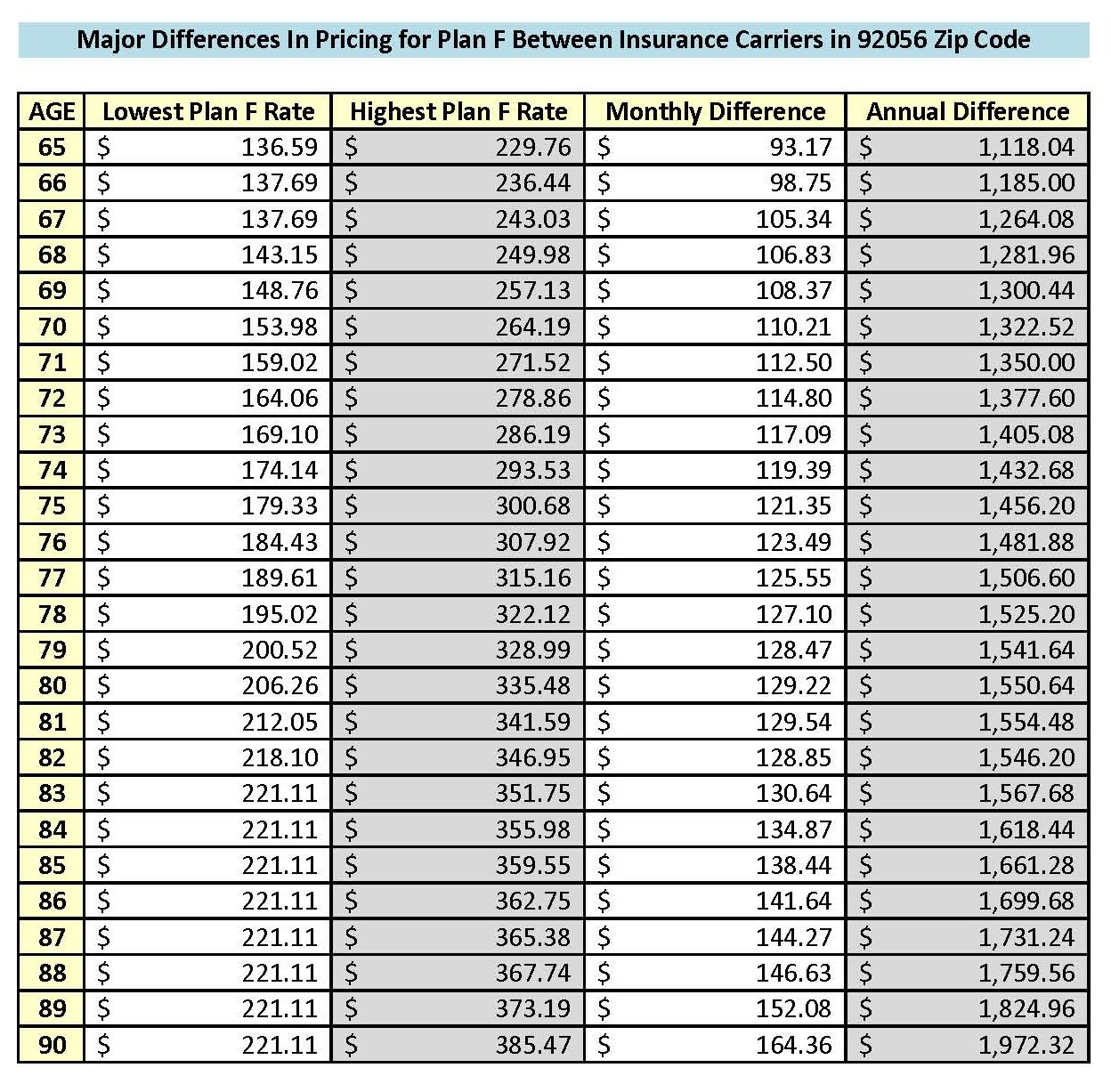
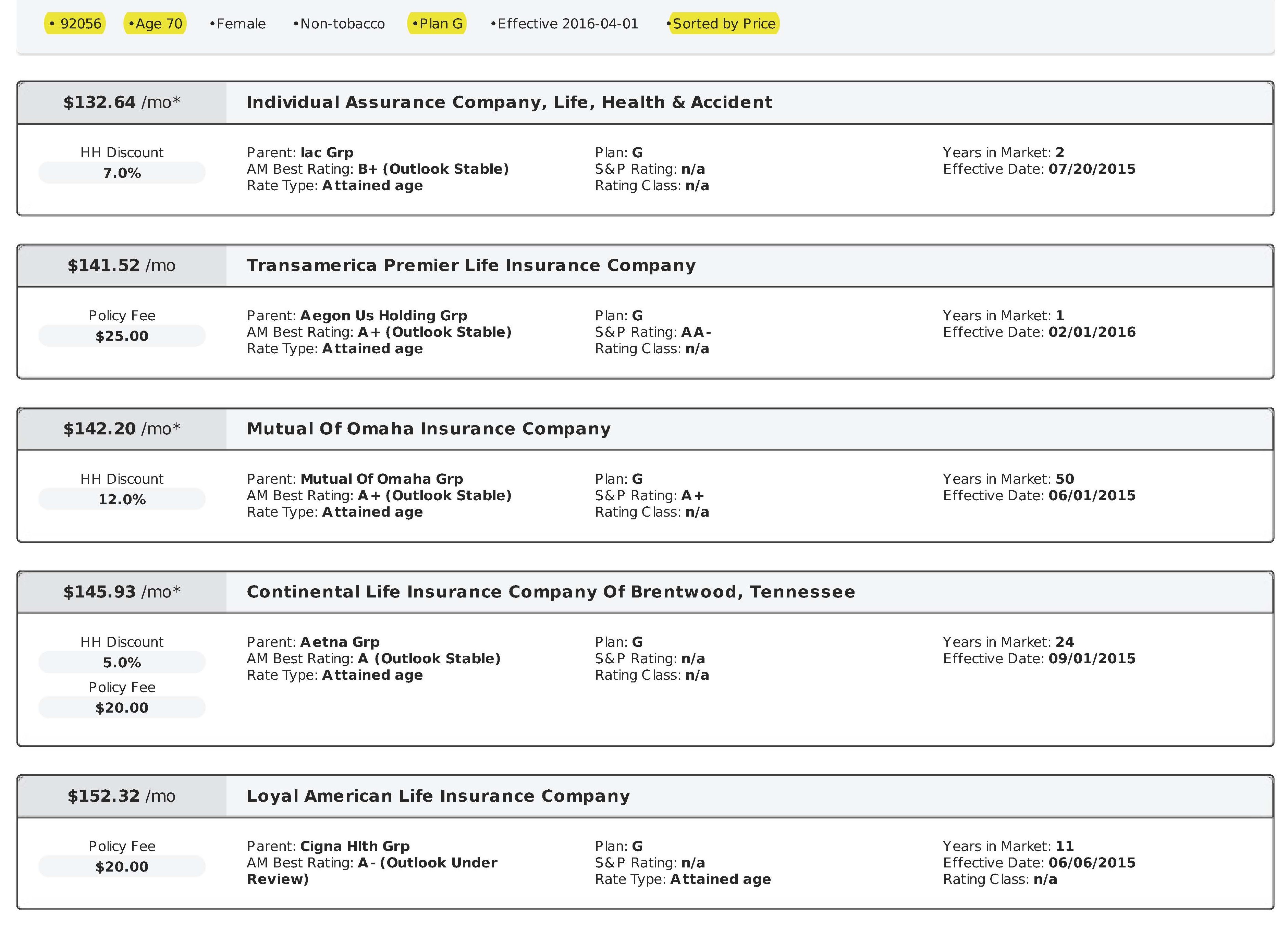
For example, for a 70 year old living in the 92056 zip code, the current Plan G Medicare Supplement premiums range from $158 to $243 per month! That is a difference of $85 per month or $1,020 per year for the same identical plan and coverage!

TIP: Periodically check your rates every year or two to make sure they are still competitively priced.

You Can Apply for Medicare Supplements All Year Long!

Unlike MA plans that have an Annual Enrollment Period (AEP) from October 15th to December 7th every year for a January 1st effective date, you can apply for Medicare Supplement plans all year long.

If you apply for a Medicare Supplement plan at any time of the year other than during your 60-day annual open enrollment period under the California Birthday Rule, you will have to answer the health questions on the application and be medically underwritten. If you have certain health conditions, you can be turned down for coverage. If you are in relatively good health, you should not have any problem qualifying for a new Medicare Supplement plan.

TIP: If you have a Medicare Supplement plan and you have a serious health condition, take advantage of the California Birthday Rule and apply around your birthday. It’s always easier to apply for a Medicare Supplement around your birthday since you don’t have to answer any health questions and you cannot be turned down for coverage!

Household Discounts

Some carriers give you a household discount (HHD) and others don’t. If you qualify for a HHD, some give more than others, from 5% to 12%! To qualify for a HHD, some carriers require both parties in the household to have a Medicare Supplement with the same company, and others only require that you live in the same household with another adult to qualify for the HHD. For example, if you have a roommate or live with someone that does not have a Medicare Supplement, you can still get a full HHD with certain carriers!

TIP: If you are married or you have lived with another adult in the house for at least one year, some companies will give you up to 12% HHD on your insurance premiums, even if your spouse, roommate, etc. doesn’t have a Medicare Supplement policy!

About Me

I hope that you have found this information to be interesting and informative. I’m an independent insurance agent with over 15 years of experience specializing in Medicare Supplement insurance, primarily in California. As an independent agent, I work with most of the major insurance carriers including Mutual of Omaha, Cigna, Blue Shield of CA, Anthem Blue Cross, Health Net, Aetna, etc. I have hundreds of clients, and I shop around for them every year around their birthday. Please click here to see some of my client testimonials.

FINAL TIP: If you have any questions, or if you know anyone that is turning 65 or starting Medicare, or if you would like for me to shop around for you, I’m happy to help, and there is no charge for my service!!! Please feel free to call me or send me an email! Also, please feel free to forward this blog to anyone you know who may be interested.

Thank you!

Ron Lewis
CA agent #0B33674
NV agent #3822123

Ron@RonLewisInsurance.com
866.718.1600 (Toll-free)
760.525.5769 (Cell)
www.MedigapShopper.com

2019 Medicare Deductibles, Coinsurance, and Out-Of-Pocket Limits

The new 2019 Medicare deductibles, coinsurance, and out-of-pocket limits were recently released, and they go into effect on January 1st, 2019.

January 2019

Medicare Part A (Hospital Insurance)

  • Part A Deductible: This deductible is increasing $24 to $1,364 per benefit period.
  • Part A Coinsurance: Inpatient Hospital Care (Days 61-90). Increasing $6 to $341 per day.
  • Lifetime Reserve Coinsurance: Inpatient Hospital Care (Days 91-150). Increasing $12 to $682 per day.
  • Skilled Nursing Facility (SNF) Coinsurance: (Days 21 through 100) Increasing $3 to $170.50 per day.

NOTE: A benefit period begins on the first day you receive service as an inpatient in a hospital and ends after you have been out of the hospital and not received skilled care in any other facility for 60 days in a row. This is not an annual deductible; there can be multiple benefit periods (up to six) in a calendar year!

Medicare Part B (Medical Insurance)

  • Part B Annual Deductible: Increasing $2 to $185 per year.

NOTE: For those of you with a Plan G Medicare Supplement (also known as Medigap because it picks up the gap in coverage not covered by Medicare), Plan G is identical to Plan F with the exception of the Part B deductible. Once this deductible has been met, Plan F and Plan G are exactly the same. If you are saving more than $185 per year on your premiums by switching from Plan F to Plan G, then Plan G ends up costing less than Plan F.

Medicare Supplement Plan-Specific Deductibles and Out-of-Pocket  Limits

  • High Deductible Plan F Annual Deductible: Increasing $60 to $2,300 per calendar year.
  • Plan K Annual Out-of-Pocket Limit: Increasing $320 to $5,560 per calendar year.
  • Plan L Annual Out-of-Pocket Limit: Increasing $160 to $2,780 per calendar year.

Part D Prescription Drug Plans

The new 2019 Part D deductible is $415 once a year.

How Do These Changes Affect My Medicare Supplement?

If you have a Medicare Supplement, your benefits are automatically adjusted every year to cover the new deductibles, co-payments, and coinsurance amounts in 2019.

Do You Have a Medicare Supplement Plan?

If you have a Medicare Supplement plan, contact me for a free quote! As an independent insurance agent, I work with all the major insurance carriers, and more than likely, I can save you hundreds of dollars on your Medicare Supplement premiums for the same exact plan and coverage!

If you have any questions or comments, please let me know!

Thanks!

Ron Lewis

Ron@RonLewisInsurance.com
www.MedigapExpress.com

Hello Medicare, and Goodbye Obamacare!

In several months from now, a good friend of mine will be turning 65 years old. While he is not anxious to get any older than he already is, he is happy about one thing… he will be getting off of Obamacare and onto Medicare!

65th-birthday-latex-balloons

My friend used to have a really good, low-deductible health insurance plan that was very affordable. But under Obamacare, all of that changed. The quality of his health insurance decreased significantly while his Affordable Care Act (ACA) premiums, co-payments, and deductibles increased dramatically. But fortunately, he now has maternity coverage, which is something that he never had before! Sorry about the sarcasm!

Pregnant man

When he goes onto Medicare, it will be just the opposite; the quality of his health insurance will increase significantly while the cost of his premiums, co-payments, co-insurance, and deductibles will all decrease!

Current Coverage

For example, he currently has a Bronze 60 ACA plan. The annual deductible is $4,800 per calendar year if he goes to “participating” providers and $9,000 per calendar year if he goes to “non-participating” providers! According to his health plan, “You must pay all the costs up to the deductible amount before this plan begins to pay for covered services you use. The integrated deductible applies to both medical and pharmacy services.” Therefore, the deductibles apply to prescription drug coverage as well.

Once the deductible is met, my friend must pay 40% of the remaining costs until he has reached the maximum out-of-pocket (OOP) cost, which is $6,550 per calendar year for “participating” providers and $9,650 per calendar year for “non-participating” providers.

NOTE: According to his current health insurance plan, OOP costs do not include “Premiums, balance-billed charges, some co-payments, charges in excess of specified benefit maximums, and health care this plan doesn’t cover.” So, total OOP costs are really much higher than $6,550 or $9,650 per calendar year when you factor in premiums and other miscellaneous costs.

The deductible and OOP costs start all over again every January. If he got really sick in the last six months of the year, there is a real possibility that he could reach his maximum OOP costs of $6,550 (or $9,650) again in the first six months of the following year. That means that he could potentially have total OOP costs in excess of $13,100 to $19,300 in a twelve-month period, not including his premiums!

My friend has a subsidized plan through Covered California. Although he pays $268.52 per month for his Bronze 60 PPO plan, the full premium that others are paying for the same identical (non-subsidized) plan is $784.79 per month, which isn’t exactly cheap for a high-deductible, catastrophic plan! I’m pretty sure you can buy or lease a luxury automobile for a lot less than that!

Mercedes

Medicare Coverage

In contrast, he won’t have to pay anything for his Medicare Part A (Hospital) insurance, and he will pay $134.00 per month for his Medicare Part B (Medical) insurance. In addition to his Original Medicare, he will need to take out a Medicare Supplement plan to pick up the difference in co-payments, deductibles, and co-insurance that Medicare does not pay.

Medicare Supplement Coverage

Of the 10 standardized Medicare Supplement plans (aka Medigap plans because they pick up the “gaps” in coverage that are not covered by Medicare), Plan F and Plan G are the two best plans:

  • Plan F pays for ALL of the co-payments, deductibles, and co-insurance that is not covered by Medicare. With Plan F, there are NO DEDUCTIBLES OR OUT-OF-POCKET COSTS!
  • Plan G is identical to Plan F except for the $183 per calendar year deductible for outpatient treatment such as physician services, inpatient and outpatient medical and surgical services and supplies, physical and speech therapy, diagnostic tests, and durable medical equipment.

NOTE: In 2017, the Part B deductible is $183 per calendar year. This amount can change from year to year, but historically, it has been very stable. With Plan G, once you have met the $183 per calendar year deductible, there are no other out of pocket costs, and Plan G is exactly the same as Plan F. The monthly premiums for Plan G are usually significantly less than the monthly premiums for Plan F, so Plan G usually ends up being more cost effective than Plan F.

For this reason, many people with Plan F have been switching to Plan G. Also, beginning on January 1st, 2020, Plan F will no longer be available for new people who are turning 65.

Although my friend’s ACA health plan is a PPO, he is still restricted to doctors, specialists, hospitals, care facilities, etc. that are within his health plan’s network. If he goes out of the network or goes to “non-participating” providers, he pays even more!

With Original Medicare and Medicare Supplements, there are no networks, HMO’s, or PPO’s, so my friend will have much more freedom of choice than he presently has with his ACA plan.

freedom

With a Medicare Supplement plan, you can go to ANY doctor, specialist, care facility, or hospital in the United States, as long as they accept Medicare! If you later move to another state, you can keep your Medicare Supplement plan and use it ANYWHERE in the US!

Medicare Supplement Premiums

In California, Medicare Supplement rates are based primarily on your age and zip code. If my friend decides to splurge and go with Plan F (the “Cadillac” plan) he will have a $0 deductible and no out-of-pocket costs! For age 65, his monthly premium will be as low as $132.00 per month!

Rates can vary significantly between insurance carriers for the same identical plan and coverage, so it’s important to shop around every year!

If my friend wants to save money on his Medicare Supplement premiums by signing up with Plan G, his maximum calendar year deductible AND out-of-pocket costs combined will be $183 per calendar year, and his monthly premium will be as low as $119.36 per month!

Plan F or Plan G

Scenario #1 – Total Costs if My Friend Signs up with Plan F

If he decides to sign up with Plan F, the most expensive Medicare Supplement plan, his total monthly premiums for his Medicare Part A ($0), Medicare Part B ($134.00), and his Plan F Medicare Supplement ($132.00) will be $266.00 per month!

NOTE: If he wants to, my friend can also pick up a good Prescription Drug Plan (PDP) for $17.00 per month.

Scenario #2 – Total Costs if My Friend Signs up with Plan G

If he decides to sign up with Plan G, the most popular Medicare Supplement plan, his total monthly premiums for his Medicare Part A ($0), Medicare Part B ($134.00) and his Plan G Medicare Supplement ($119.36) will be $253.36 per month!

Conclusion

My friend is currently paying $268.52 per month for a high-deductible, catastrophic ACA health insurance plan that is basically worthless.

If he decides to sign up for a Plan F Medicare Supplement with no deductibles or out-of-pocket costs, his total cost for coverage under Medicare and his Medicare Supplement will be $266.00 per month!

If he decides to sign up for a Plan G Medicare Supplement with a $183 per calendar year deductible and no out-of-pocket costs, his total cost for coverage under Medicare and his Medicare Supplement will be $253.36 per month!

And now you know why my friend is smiling about his upcoming 65th birthday…
“Hello Medicare, and good riddance Obamacare!”

*****************************************************

Let me do the shopping for you and save you money on your Medicare Supplement! Contact me today for a for a free insurance quote and price comparison!

Ron Lewis
www.MedigapExpress.com
Ron@RonLewisInsurance.com
866.718.1600 (Toll-free)

Medicare Supplements – Why Pay Wholesale When You Can Pay Retail?

Yes, you read the title correctly. When it comes to Medicare Supplement plans, which are also known as Medigap plans because they pay for the “gaps” in coverage that are not paid for by Medicare, some of my clients prefer to pay retail instead of wholesale! That’s right, “Why pay less when you can pay more?”

retail

Most people that I meet are very happy to save a lot of money on their insurance premiums, but there are always some that really don’t seem to care. Or maybe they are skeptical because it just “seems too good to be true,” which I can totally understand.

A Tale of Two Cities, I Mean Two Clients…

I was working with two different clients yesterday, Client “A” and Client “B.”

two clients

Client “A”

Client “A” has Plan F with Blue Shield of CA, and his monthly premium is $279 per month. I shopped around for him and found several other insurance carriers that are offering Plan F at much lower rates. The lowest rate that I found for him is $179.33 per month. That is a savings of $99.67 per month or $1,196.04 per year for the same identical plan and coverage!

Many people who have Plan F have been switching to Plan G because both plans are identical except there is no deductible with Plan F, and there is a small $166 (Part B) deductible with Plan G. That is the only difference between the two plans!

However, Plan G is usually much more cost effective (cheaper) because the rates are lower. So even if you pay the $166 deductible, in most cases, you still end up spending much less money with Plan G than Plan F.

In addition to getting the current Plan F rates for Client “A,” I also provided him with the current Plan G rates for comparison. If he switched from Plan F to Plan G, he would have saved even more money! The best Plan G rate is $156.70 per month. That would be a gross savings of $122.30 per month or $1,467.60 per year! If he spent the $166 deductible, his net savings would still be $1,301.60 per year! In this particular case, Client “A” would have saved even more money by switching from Plan F to Plan G.

Inexplicably, Client “A” decided to keep his current plan for another year!

Client “B”

Client “B” also has Plan F with Blue Shield of CA, and her rate is $219 per month. I shopped around for her and, like Client “A,” I found several other insurance carriers that are also offering Plan F at much lower rates. The lowest rate that I found for Client “B” is $170.99 per month. That is a savings of $48.01 per month or $576.12 per year for the same identical Medicare Supplement plan and coverage!

Client “B” also had the option to switch from Plan F to Plan G, and again, she would have saved even more money on her premiums by doing so. Her current Plan F rate is $219 per month, and the best Plan G rate for her is $147.19 per month. That would be a gross savings of $71.23 per month or $854.76 per year! If she spent the entire $166 deductible, her net savings per year would still be $688.76 per year!

Just like Client “A,” Client “B” also decided to keep her current plan for another year!

Some Common Misconceptions

It’s very baffling to me when I can literally save someone hundreds and even thousands of dollars a year on their premiums for the same exact plan and coverage, and for whatever reason they are not interested in doing so.

If my auto and homeowner’s insurance agent told me he could save me $100 a month on my premiums, I would be thrilled to be able to save that much money. I guess that some people just aren’t as happy about saving money as I am!

Save-Money

Misconception #1 – By Switching Medigap Plans, I Won’t Be Able to Go to the Same Doctors

Some people are reluctant to change Medigap plans because they are afraid that they won’t be able to continue seeing the same doctors. This is a misconception because you can go to ANY doctor or hospital in the US with your Medicare Supplement as long as the doctor or hospital accepts Medicare. If your doctor accepts your current Medicare Supplement plan, then they have to accept ANY Medigap plan or insurance carrier that you have, PERIOD.

Misconception #2 – The Rates Are Too Good to Be True

If the new rates are significantly lower than the current plan, some people think it’s either too good to be true or a huge rate increase is soon to follow. This is also a misconception because most of the carriers that I work with lock in their rates for the first 12 months, so there wouldn’t be any unexpected rate increases.

Misconception #3 – My Coverage Will Not Be the Same

Another common misconception is that the coverage will not be the same, even if someone is switching from Plan F to Plan F or Plan G to Plan G, etc. There are 10 “standardized” plans to choose from, Plan A through Plan N. This means that the coverage for every standardized plan is exactly the same with every insurance carrier. So if someone has Plan F with Blue Shield and they want to switch to Plan F with Mutual of Omaha, etc., the coverage is exactly the same. Plan F is Plan F is Plan F…Period!

One of the other reasons people don’t want to switch their Medicare Supplement plan is because they fear change. “Everything has been going great so far. Even though the rates are cheaper and the coverage is the same, why take a chance by going with a different carrier?”

If you decide to switch carriers, the transition is seamless. Your coverage with the first insurance carrier will end at the end of the month, and the new coverage begins on the 1st of the following month. There are no forms or paperwork to fill out. When you go to the doctor after your new coverage begins, they will make a copy of your new Medicare Supplement card, and after that, everything will be the same as before.

The California Birthday Rule

In California, there is a law called the California Birthday Rule. If you have a Medicare Supplement, you are lucky to live in California for more reasons than just the beautiful weather and the great beaches!

happy-birthday

This law guarantees you the right to switch insurance carriers, EVERY YEAR, within 30 days of your birthday (before or after) REGARDLESS OF YOUR HEALTH and without answering any health questions on the application! This is known as your annual open enrollment period. If another insurance carrier is offering the same plan that you currently have, or if they are offering another plan that has fewer benefits, you are guaranteed the right to switch carriers every year if you want to, and you cannot be turned down due to health reasons.

For example, if you have Plan F and another carrier is offering Plan F for a lower rate, you are guaranteed the right to switch to the other carrier every year around your birthday, without answering any health questions on the application. Likewise, you are guaranteed the right to switch to a plan with fewer benefits as well. So if you have Plan F, which has the most comprehensive coverage, you could switch to Plan G if you want to because Plan G has fewer benefits than Plan F.

NOTE: Under the California Birthday Rule, if you have Plan F, you can switch to any other plan, but if you have any other plan, you cannot use the California Birthday Rule to switch to Plan F because it has more benefits than any other plan.

You can actually switch insurance carriers or plans any time of the year, but if you do so at any time other than during the 30 days before or after your birthday, you will have to answer the health questions on the application, you will be medically underwritten, and you could be turned down for coverage due to medical reasons. If you have any serious health conditions, you should apply during the 30 days before your birthday!

In most other states, there isn’t a birthday rule. That means that once you sign up, if you later develop any serious health issues, you would have to meet minimum health and underwriting requirements if you wanted to change your Medicare Supplement plan or your insurance carrier. If your insurance rates increased significantly, you could be stuck paying very high premiums for many years! In California, that would never happen because you can always change your insurance every year around your birthday, regardless of your health!

Rates Vary Significantly Between Insurance Carriers For the Same Identical Plans and Coverage

In California, rates are based on “attained age,” which means that your rates are based on your current age, and they usually go up in price every year as you get older. As mentioned before, there are 10 “standardized” Medicare Supplement plans to choose from, Plan A through Plan N. When I say “standardized,” that means that the coverage for Plan F, Plan G, etc. is exactly the same no matter which insurance carrier that you are with.

Although the coverage is exactly the same with every insurance carrier, the rates (prices) vary significantly between insurance carriers!

dollars

For example, in the 92056 zip code the Plan F rates for a 72 year old man range in price from $164.06 to $278.86 per month! That is a difference of $1,377.60 per year for the same exact plan and coverage! In other words, some 72 year old individuals in the 92056 zip code are paying $164.06 per month for their Plan F coverage while others are paying $278.86 per month for their Plan F coverage!

Examples of How I Recently Saved Clients Money By Switching From Plan F to Plan F

Here are some examples of how I took advantage of the California Birthday Rule and saved my clients a lot of money on their annual premiums by switching them from Plan F with one carrier to Plan F with a different carrier:

  • $142.08
  • $257.64
  • $334.08
  • $338.64
  • $349.68
  • $432.84
  • $498.24
  • $501.78
  • $501.78
  • $516.96
  • $536.76
  • $879.84
  • $1,003.56

Examples of How I Recently Saved Clients Money By Switching From Plan F to Plan G

Here are some other examples of how I took advantage of the California Birthday Rule and saved my clients a lot in their annual premiums by switching them from Plan F with one carrier to Plan G with a different carrier:

  • $203.12
  • $278.96
  • $349.16
  • $425.48
  • $462.68
  • $600.00

Although it’s not the norm, the most I have ever saved one of my clients, a married couple, was over $5,300 per year just by switching from Plan G with one insurance carrier to Plan G with a different insurance carrier! As you can see, it’s really important to shop around and compare rates!

Sometimes I Feel Like “I Get No Respect!”

Once in a while, however, I feel like Rodney Dangerfield because “I get no respect!” Most of my clients are 65 or over and many are retired and on fixed incomes. The majority are very receptive to saving money on their insurance premiums, but once in a while, I have to practically beg people to let me save them hundreds and even thousands of dollars a year on their premiums, and quite honestly, that drives me crazy!

Rodney_Dangerfield2

For whatever reasons, some people, like Client “A” and Client “B,” are apparently not so budget conscious. I was very excited and happy to tell them how much money I could save them, and their response was basically “Let me think about it!”

Think about it? Really? What is there to think about! It seems to me that it’s pretty much a no-brainer. I can hear them now. “Do I want to save $1,200 per year on my premiums for the same exact plan and coverage? Hmm, this is really a tough one. What am I going to do with an extra $100 a month? This might complicate my taxes! Eh, who needs this kind of stress and aggravation!”

stress

I don’t want any of my clients to feel stressed or aggravated! If you’re one of those individuals that prefer to pay wholesale instead of retail, instead of the other way around, please don’t hesitate to contact me if you have any questions or if I can help in any way. If you’d like me to, I’m happy to do the shopping for you, EVERY YEAR, to save you money on your Medicare Supplement insurance!

NOTE: Although this article focuses primarily on Medigap plans in California, I am licensed and work with Medicare Supplement insurance plans outside of California as well. If you need premium rates for other states, I am happy to provide you with that information as well.

If you or someone that you know would like a free quote, please let me know. If you know anyone that might enjoy reading this blog, please feel free to forward it on! And please feel free to send me any of your questions, comments, and feedback!

Thank you,

Ron Lewis

Major Medicare Supplement Rate Discrepancies Between Insurance Carriers!

Do you know that Medicare Supplement (MediGap) rates vary significantly between insurance carriers for the same identical plan and coverage? In the US, there are 10 “standardized” Medicare Supplement plans to choose from, plans A through N.

medigap

NOTE: The plans are labeled A, B, C, D, F, G, K, L, M and N to signify the plan differences. (Plans E, H, I and J are no longer available.)

The word “standardized” means that the coverage for Plan F, Plan G, etc. is exactly the same no matter what insurance carrier you have. For example, the coverage for Plan F is exactly the same with Mutual of Omaha, UnitedHealthcare, Blue Shield of CA, Aetna, Cigna, Anthem Blue Cross,  etc.

Although the coverage is exactly the same between insurance carriers for the standardized plans, the PREMIUMS ARE NOT THE SAME! In fact, most people are paying hundreds of dollars per year more for their insurance premiums than they should be!

For example, the Plan F premiums for a 70 year old living in the 92056 zip code in San Diego range in price from $153.98 per month to $264.19 per month. That’s a difference of $110.21 per month or $1,322.52 per year for the same identical plan and coverage! On the following rate sheet, you can see the different Plan F rates for 18 different insurance carriers in the 92056 zip code. Obviously, some carriers are more competitively priced than others!

Mary Jones Plan F Rates_Page_1

Mary Jones Plan F Rates_Page_2

As you can see, in the 92056 zip code, the Plan F rates for a 70 year old range in price from $153.98 per month to $264.19 per month! Again, that’s a difference of $110.21 per month or $1,322.52 per year for the same exact plan and coverage!

It’s Important to Shop Around Every Year!

The Medicare Supplement market is constantly changing, and so are the premiums. If you have a Medicare Supplement and you haven’t shopped around during the last year, there’s a good chance that you’re paying hundreds of dollars a year more for your insurance than you should be! Many people that I meet haven’t shopped around at all since they first signed up for Medicare! Many of these individuals haven’t heard from their insurance agent since then as well!

This past year, two of my clients (a husband and wife) had Plan G, and they were paying $809 per month for both of them, approximately $404.50 each! I shopped around for them and found them Plan G with a different carrier, Mutual of Omaha, and their total monthly premium is now $367.01 per month! That’s a savings of $441.99 per month or $5,303.88 per year! While this is not the norm, I can usually save most of my clients from $300 to $600 per year each on their Medicare Supplement insurance premiums and often more.

What is the Price Range for Plan F Medicare Supplement Rates?

In the following chart, I have taken the lowest and highest Plan F premiums for ages 65 through 90 in the 92056 zip code. As you can see, the monthly and annual differences are significant for every age group.

2 Lowest Plan F vs Highest Plan F

Is There An Open Enrollment Period for Medicare Supplement Plans?

No. Unlike Medicare Advantage (MA) plans, which have an annual open enrollment period from October 15th through December 7th every year, you can shop around and apply for Medicare Supplement plans all year long.

NOTE: There is a six month-open enrollment period for Medicare Supplements when you first sign up for Medicare Part B.

Do I Need to Be In Good Health to Get a New Medicare Supplement Plan?

Unless you are in a Special Enrollment Period (SEP), if you already have a Medicare Supplement, you need to be in relatively good health to apply for a new Medicare Supplement with a different carrier. However, if you have a Medicare Supplement and you apply during the 30 days before or after your birthday, you don’t have to answer any health questions on the application, and you cannot be turned down due to health reasons if you apply for the same plan or another plan with fewer benefits. For more details, please see the California Birthday Rule section below.

Heart

What Happens If I Am Not In Good Health? Can I Still Apply For a New Medicare Supplement Plan?

Yes, absolutely! Because of the California Birthday Rule, if you already have a Medicare Supplement and you have serious health issues, YOU CANNOT BE TURNED DOWN FOR COVERAGE if you apply during the 30 days before or after your birthday.

California Birthday Rule

In California, there is a law called the California Birthday Rule. This law guarantees you the right to apply for a new Medicare Supplement plan EVERY YEAR, as long as you apply during the 30 days following your birthday. This is also known as the annual 30-day open enrollment period.

NOTE: Although the California Birthday Rules specifies that you can apply, REGARDLESS OF YOUR HEALTH, during the 30 days following your birthday without being turned down for coverage, several insurance carriers will let you apply during the 30 days BEFORE or AFTER your birthday!

This is more advantageous for you because the premiums with these carriers are based on your current age when you apply, and your rates will be lower if you apply during the 30 days prior to your birthday. With these carriers, your new rates are also guaranteed and locked in for the first 12 months of your policy, so there won’t be any unexpected rate increases.

NOTE: Not all insurance carriers lock your rates for the first 12 months.

If you want to take advantage of the California Birthday Rule and apply during the 30 days before or after your birthday,  YOU CANNOT BE TURNED DOWN FOR COVERAGE as long as you apply for the same plan that you currently have OR if you apply for a different plan that has fewer benefits. For example, if you have Plan F (the most comprehensive plan) and you want to apply for Plan F with another carrier to save money on your premiums, or if you have Plan F and you want to apply with Plan G, etc.

NOTE: If you apply under the California Birthday Rule, there are no preexisting waiting periods for prior health conditions.

If you are in relatively good health, you can apply for a new Medicare Supplement plan any time of the year. If you have serious health issues, you should take advantage of the California Birthday Rule and apply for coverage during the 30 days before your birthday to save money on your premiums.

Consider Plan G to Save More Money On Your Premiums

Besides shopping around every year to make sure that you aren’t paying too much for your premiums, if you currently have Plan F, you should consider Plan G. Why? Because Plan G is identical to Plan F in EVERY way except you would pay a small $166 Part B (Medical) deductible one time per calendar year. That is the only difference between the two plans!

NOTE: I have an Obamacare Bronze plan, and my individual medical deductible is only $6,000 per year! I would gladly pay $166 per year for my medical deductible!

In other words, the most you would pay for any out-of-pocket expense with Plan G in any calendar year is $166. However, in most cases, you will save significantly more than $166 per year on your premiums, which usually makes Plan G a better value and more cost effective.

NOTE: The Part B (Medical) deductible is subject to change each year, but historically, it has remained stable.

To see the difference in coverage between Plan F and Plan G, please see the following chart:

Medigap Chart Plans F and G

As you can see, when you compare Plan F and Plan G, everything is exactly the same except for the $166 Part B deductible. Plan F has no deductible, and Plan G is basically Plan F with a small, $166 deductible.

Price Differences Between Plan F and Plan G

Although the two plans are almost identical in coverage, the rates for Plan G are usually significantly less than the Plan F rates. For a 70 year old in the 92056 zip code, the Plan F rates (above) range in price from $153.98 per month to $264.19 per month. The Plan G rates (below) range in price from $132.64 per month to $152.32 per month!

Plan F or Plan G

Plan G Rates Age 70

As you can see, the Plan G rates are significantly less than the Plan F rates for almost the same identical coverage.

Conclusion

The rates vary significantly from one insurance carrier to the next for the same identical plan and coverage. I recommend that you take advantage of the California Birthday Rule and shop around, every year, to make sure that you aren’t paying too much for your insurance. I would also suggest that you check out Plan G as another way to save a lot of money on your insurance premiums.

If you have any questions, or if you would like a free, no obligation quote, please don’t hesitate to let me know! I’m always happy to help!

Ron Lewis OHCC AD

Also, your feedback and comments are appreciated!

Thanks!

Ron Lewis
Ron@RonLewisInsurance.com
(760) 525-5769 – Cell
(866) 718-1600 – Toll-free

Which is Better, Medicare Supplement Plan F or Plan G?

Today, there are 10 standardized Medicare Supplement plans (Plans A through N). The coverage for these plans is the same no matter which insurance company you have. For example, the coverage and benefits for Plan F is exactly the same at Aetna, Cigna, Blue Shield, Stonebridge, Blue Cross, etc., so it’s much easier to shop around and compare plans and prices today.

As you can see in the following chart, Plan F provides the most extensive Medicare Supplement coverage. (The plans with the empty boxes indicate coverage that is not included with that particular plan.)

Medicare Chart

Of the 10 standardized Medicare Supplement plans (aka “Medigap” plans), Plan F is considered to be the best plan because it provides the most comprehensive coverage. Plan F pays for all of the coinsurance, copayments, and deductibles not paid for by Medicare.

Plan F pays for the following benefits:

  • Medicare Part A Hospital Deductible (Currently $1,216 per benefit period) *
  • Medicare Part A Hospital Coinsurance
  • Medicare Part B Deductible (Currently $147 per year)
  • Medicare Part B Coinsurance
  • Medicare Part B Excess Charges
  • Hospice Care Coinsurance or Copayments
  • Skilled Nursing Facility Care Coinsurance
  • Charges for First Three Pints of Blood
  • Foreign Travel Emergencies

* A benefit period begins on the first day you receive service as an inpatient in a hospital and ends after you have been out of the hospital and have not received skilled care in any other facility for 60 days in a row. Therefore, there can be multiple Part A hospital deductibles in one calendar year.

Which is Better, Plan F or Plan G?

Which is Better, Plan F or Plan G?

Plan F and Plan G include the following benefits:

  • Freedom to choose any doctor or hospital that accepts Medicare patients.
  • Benefits start immediately with no waiting period for pre-existing conditions.
  • There are no networks and no referral needed.
  • No cancellation for age, health or the number of claims you file.
  • Covers 100% of all Medicare allowable excess charges.
  • Coverage that expands automatically with any future changes in Medicare.
  • Virtually eliminates all claims paperwork for you.
  • 30-day, no-risk free look guarantees your satisfaction or you get your money back.

Medicare Plan G Is Identical To Plan F Except For the Part B Deductible

Medicare Plan G provides the same identical coverage as Plan F except it does not cover the $147 Part B calendar year deductible (in bold above). That is the only difference between the two plans. They are exactly the same in every other way! Plan F and Plan G are the only two Medicare Supplement plans that pay 100% of any excess charges, so there would rarely be any unexpected out-of-pocket expenses. (Excess charges are additional expenses incurred outside of the Medicare-approved charge. For example, if you go to a doctor that charges more than the Medicare-approved amount.)

Why Would I Choose Medicare Plan G Over Plan F?

The decision to go with Plan G depends on whether the annual savings will exceed the $147 Part B deductible. For example, if your Plan G premiums are $30 per month less than the Plan F premiums, then you will save $360 per year in premiums ($30 x 12 = $360). If you are healthy, and you didn’t go to a doctor that year, you would have saved $360 on your premiums. If you had to pay the $147 Part B deductible, then you still would have saved $213 for the year in premiums ($360 – $147 = $213). On the other hand, if your annual premium savings would be just slightly more than, equal to, or less than $147 per year, then you are unquestionably better off with Plan F.

The Likelihood of Future Rate Increases is Less With Plan G Than With Plan F

Under federal law, Plan F falls under certain Guaranteed Issue (GI) requirements while Plan G doesn’t. For example, if someone has their health insurance with an employer plan or if they are on a Medicare Advantage plan and they loose their coverage, in most cases, they are guaranteed the right to switch to Plan F, regardless of their health and without medical underwriting.

Plan G is not a guaranteed issue plan. Consequently, the overall pool of people with Plan G are healthier than those on Plan F, and the quantity of submitted medical claims is lower with Plan G. Rate increases are often a result of too much GI business, so “F” plans have historically had greater and more frequent rate increases than “G” plans. That’s not a guarantee that “G” plans won’t have future rate increases, but if they do, the increases will more than likely be smaller.


Make the Switch!

Make the Switch!

The Only Potential Risk That I See With Plan G…

The only potential risk that I see for the future is that nobody knows for sure what the Part B deductible for Medicare will be in the future. Between 2011 and 2012, the Part B deductible actually went down from $162 per year to $140 per year. For the last few years, from 2013 through 2015, the Part B deductible has been stable and remained the same at $147 per year.

Here is the history of Medicare Part B deductibles:

  • 2017 — $183
  • 2016 — $166
  • 2015 — $147
  • 2014 — $147
  • 2013 — $147
  • 2012 — $140
  • 2011 — $162
  • 2010 — $155
  • 2009 — $135
  • 2008 — $135
  • 2007 — $131
  • 2006 — $124
  • 2005 — $110
  • 1991 through 2004 the Part B deductible was $100
  • 1982 through 1990 the Part B deductible was $75
  • 1973 through 1981 the Part B deductible was $60
  • 1966 through 1972 the Part B deductible was $50

As you can see, the historical Part B deductible rates have been relatively stable over the years. For me, it wouldn’t be an issue if I could otherwise save $200 to $300 per year by having a Plan G Medicare Supplement. On the other hand, many of my clients can afford to pay for the best and most comprehensive plan, Plan F, and they don’t want the uncertainty of not knowing for sure what the future will bring. Saving $200 to $300 per year isn’t always a big enough motivator for many to warrant switching from Plan F to Plan G. Then again, many retirees are on tight budgets and fixed incomes, and if that is the case, I would unquestionably recommend that they switch from Plan F to Plan G if they can save money on their premiums.

The California Birthday Rule

With the California Birthday Rule, you are guaranteed the right to switch plans every year within 30 days after your birthday, regardless of your health and without underwriting, if another company is offering the same plan or a lesser plan for less money. In other words, if you have Plan F, you can switch to Plan F with a different company if their rates are lower, or you could switch from Plan F to Plan G with a different company since Plan G is considered to have less benefits (the $147 Part B deductible) than Plan F. Rates vary significantly from one company to the next for the same identical plan and coverage, so it’s important to shop around every year.

Please let me know if you have any questions or comments!

If you or someone that you know would like a Medicare Supplement quote, please let me know, or click here to visit my website. Or, you can compare Medicare Supplement prices on your own by clicking the “Get A Quote” button below.

Get a Quote