Why You Should Contact HICAP for Help Choosing a Medicare Prescription Drug Plan

Choosing a Medicare Prescription Drug Plan (PDP), which is also known as Part D, can feel overwhelming. With dozens of plans available, each with different premiums, deductibles, copays, and pharmacy networks, it’s easy to make a costly mistake.

As a Medicare Supplement (Medigap) insurance agent, I often get questions from clients who also want help selecting a Part D plan. While I’d love to help, I recently learned that helping someone choose or enroll in a Part D plan without proper certification could put my insurance license at risk. However, there’s a better option that is free, unbiased, and comprehensive through the Health Insurance Counseling and Advocacy Program (HICAP).

Many Insurance Agents Have Stopped Selling Prescription Drug Plans

If you’ve noticed that fewer independent agents are offering Medicare Prescription Drug (Part D) plans, you’re not imagining things. Over the past couple of years, the Centers for Medicare & Medicaid Services (CMS) has introduced an increasing number of onerous regulations that have made it extremely difficult for many agents to continue offering these plans, especially independent agents who value personal service and client relationships.

For example, CMS recently began requiring insurance agents to record every marketing, sales, and enrollment call related to Medicare Prescription Drug Plans (Part D). This means any discussion involving benefits, costs, or plan comparisons must be recorded, both inbound and outbound, and those recordings must be securely stored for 10 years. Agents don’t like this and many Medicare beneficiaries don’t want their conversations recorded.

While these rules were intended to protect consumers from misleading marketing, the burden of compliance has become overwhelming for many professionals in the field. For more detailed information, please click here to check out my other blog called “Why Many Insurance Agents Have Stopped Selling Prescription Drug and Advantage Plans,” and click here to to check out another related blog called “Why You May Be Better Off Choosing Your Own Medicare Prescription Drug Plan (Part D).”

Why an Insurance Agent Might Not Be Enough

Many insurance agents are only certified to sell PDP’s from certain insurance carriers, which means:

  • They may not have access to every plan available in your area.
  • Their guidance could be influenced by commissions or appointments, even unintentionally.
  • You may not get a complete picture of your options, which can lead to higher costs or gaps in coverage.

That’s where HICAP comes in.

What is HICAP and How It Helps

The Health Insurance Counseling and Advocacy Program (HICAP) is a free, state-run program in California that provides free, confidential one-on-one counseling, education, and assistance to individuals and their families on Medicare, Long-Term Care insurance, other health insurance related issues, and planning ahead for Long-Term Care needs.

HICAP also provides legal assistance or legal referrals in dealing with Medicare or Long-Term Care insurance related issues. HICAP counselors are trained in Medi-Cal and Medicare and can help you understand the complex insurance options to find the best fit for you.

HICAP counselors:

  • Can show all available Part D plans in your area.
  • Provide completely unbiased guidance, with no sales pressure.
  • Help you compare costs, deductibles, co-pays, and pharmacy networks.
  • Walk you through the Medicare Plan Finder tool or help you understand your plan options.

What HICAP Services Are Available?

HICAP can help you with the following:

  • Have questions on prescription drug coverage, co-pays, or eligibility rules?
  • Wondering how to sign up for Medicare now that you are almost 65?
  • Confused about all the different parts to Medicare, do you need A, B, C, D?
  • Need help filing an appeal or challenging a denial?
  • Considering long-term care insurance?
  • Need a speaker for a community education event?

How a HICAP Session Works

Whether over the phone or in person, the process is simple:

  • Prepare your information: Have a list of all your prescriptions, your preferred pharmacy, and your zip code.
  • Enter your own prescriptions: You input your medication information into Medicare.gov.
  • Guided support: The HICAP counselor explains your options, interprets plan details, and answers questions.
  • Compare plans: They help you see which plan offers the best coverage for your needs.
  • Enrollment: You complete the enrollment yourself online or by calling the plan.

Who Can Get These Services?

Counseling is provided to the following individuals:

  • Persons 65 years of age or older and are eligible for Medicare
  • Persons younger than age 65 years of age with a disability and are eligible for Medicare
  • Persons soon to be eligible for Medicare

Why HICAP is the Best Choice

HICAP counselors provide a full picture of your options, which an insurance agent cannot always do. Their guidance is independent, comprehensive, and free. This ensures you make an informed decision about your prescription coverage without missing important details or paying more than necessary.

Check Out My Video — How to Sign Up for a PDP on the Medicare Website

This past year, I created a step-by-step YouTube video that shows you how to use the Medicare Plan Finder tool. Nothing has changed since last year. Instead of contacting a HICAP counselor, you should be able to watch the video and be able to select a PDP and enroll on your own. It’s really very easy! Please click here to watch the video. It’s only 14 minutes long.
Next Steps

If you’re ready to compare Medicare Prescription Drug Plans for 2026:

  • Click here to watch my Youtube video that explains how to to use the Medicare Plan Finder tool to select a PDP and enroll on your own.
  • Call HICAP at 1-800-434-0222 or click here to find a local office in California.
  • In other states besides California, you can get help at your local State Health Insurance Assistance Program (SHIP). Their phone number is 1-877-839-2675 or click here to find a local office outside of California.

And if you have questions about Medicare Supplement (Medigap) plans, I’m here to help guide you through your options.

Conclusion

Choosing a Part D plan doesn’t have to be stressful. By using HICAP’s free, unbiased services, you can get all the information you need to make the best decision for your health and budget, while staying in control of the process.

About the Author

As an independent Medicare Supplement insurance specialist, I work with most of the major insurance carriers throughout California, Nevada, Arizona, and several other states. I shop around for my clients every year during their 60-day annual open enrollment period under the California Birthday Rule to help them save money on their Medicare Supplement premiums. Many of my clients have saved hundreds, even thousands of dollars on the same exact plan and coverage! Please click here to see what my clients have to say about my services.

There is no charge for my services as I’m compensated by the insurance carriers, not my clients. My goal is to help you find the lowest premiums and provide the best personal service possible, year after year. Unlike many agents, I won’t do a magic act and disappear after you sign up! 🙂

If you enjoyed this blog and found it helpful, please leave your comments, questions, or feedback below and feel free to share this article with your friends!

Thank you!

Ron Lewis
Ron@RonLewisInsurance.com
www.MedigapShopper.com
(760) 525-5769 – Cell
(866) 718-1600 – Toll-free


Why Many Insurance Agents Have Stopped Selling Prescription Drug and Advantage Plans

If you’ve noticed that fewer independent agents are offering Medicare Advantage (Part C) or Medicare Prescription Drug (Part D) plans, you’re not imagining things. Over the past couple of years, the Centers for Medicare & Medicaid Services (CMS) has introduced an increasing number of onerous regulations that have made it extremely difficult for many agents to continue offering these plans, especially independent agents who value personal service and client relationships.

While these rules were intended to protect consumers from misleading marketing, the burden of compliance has become overwhelming for many professionals in the field. Here’s a closer look at what’s changed and why it’s causing so many agents to step back.

The Call Recording Requirement

Perhaps the biggest change came when CMS began requiring agents and brokers to record every marketing, sales, and enrollment call related to Medicare Advantage plans (Part C) and Medicare Prescription Drug Plans (Part D). This means any discussion involving benefits, costs, or plan comparisons must be recorded, both inbound and outbound, and those recordings must be securely stored for 10 years.

That might sound simple, but for independent agents, it’s a major operational and financial challenge. Recording, encrypting, and storing every call securely requires specialized technology, data security systems, and compliance audits. If even one recording goes missing, an agent could face serious penalties. For small agencies and independent brokers, this rule alone has made it nearly impossible to operate efficiently.

Please click here for more specific details regarding marketing policies and FAQs for selling Medicare prescription drug and Medicare Advantage plans.

Increased Compliance and Oversight

CMS now classifies many independent agents and marketing organizations as Third-Party Marketing Organizations (TPMOs). Under these rules, agents must read lengthy government disclaimers at the start of every call or meeting, document every contact, and ensure all marketing materials are CMS-approved before use.

This includes websites, flyers, emails, and even social media posts that mention Medicare Advantage or Medicare Prescription Drug plans. Every piece of material must be filed through a formal process for review, which can take weeks. This makes it difficult for agents to respond quickly to client questions or market changes during the short Annual Election Period (AEP), which goes from October 15th through December 7th each year.

More Work, Less Reward

Despite the added workload and responsibility, commissions have not increased to reflect these changes. Agents still receive modest compensation for enrolling people in Medicare Prescription Drug plans and Medicare Advantage plans. So now, agents face hours of compliance documentation, call recording, and potential liability without a corresponding increase in pay. For many, it simply isn’t worth the time, risk, or stress. For more details, please click here to read my other blog called “Why You May Be Better Off Choosing Your Own Medicare Prescription Drug Plan (Part D)”

The Risk of Liability

Another issue driving agents away is the potential legal exposure. With every recorded call and piece of marketing material subject to audit, a single accidental error, like forgetting to read a required disclaimer, can lead to fines or the loss of certification.

Most agents take pride in helping clients find the best coverage possible, but with these new rules, even honest mistakes can be costly. It’s a high-stress environment for people who genuinely care about their clients.

A Shift Back to Personalized Service

Because of all this, many experienced agents are now focusing primarily on Medicare Supplement (Medigap) plans. These plans are not part of the CMS marketing system that governs Medicare Advantage and Prescription Drug plans, which means agents can provide clients with more individualized service and guidance without jumping through as many regulatory hoops.

With Medigap plans, clients get lifelong coverage that works seamlessly with Original Medicare, and agents can continue to provide the personalized advice and service that has always been the heart of this profession.

What This Means for You

If you are a Medicare beneficiary, you might notice fewer agents offering to review your Medicare Prescription Drug plans or Medicare Advantage plans this year. It’s not because they don’t care… it’s because the rules have made it nearly impossible to do so efficiently or profitably while still providing the level of service clients deserve.

The good news is that you can still review and compare these plans directly on the Medicare.gov website. The site allows you to enter your prescriptions, preferred pharmacies, and ZIP code to find the most cost-effective options in your area.

IMPORTANT: Medicare Prescription Drug plans and Medicare Advantage plans are annual contracts and they can change from year to year. What’s good this year may not be so good next year and it’s important to shop around every year!

Shopping for and signing up for a prescription drug plan isn’t difficult. I made a short video this past year that explains how to choose and sign up for a prescription drug plan. If you’d like to watch the video, please click here.

Final Thoughts

The Medicare program is complex and constantly changing. Most agents truly want to help people understand their options, but the ever-growing CMS compliance burden has pushed many out of this side of the business.

Although I’m an independent insurance agent focusing primarily on Medicare Supplement insurance, if you’re looking for unbiased help reviewing your options, please don’t hesitate to reach out. Even though I don’t sell Medicare Prescription Drug plans or Medicare Advantage plans, I’m happy to help you understand how they work and guide you toward resources that can help you make the best decision for your needs.

In my next post, I’ll explain why many Medicare beneficiaries are actually better off by NOT using an insurance agent to help them select their Medicare Prescription Drug plan and how they can easily and safely select a drug plan on their own using the Medicare.gov website.

About the Author

As an independent Medicare Supplement insurance specialist, I work with all the major carriers throughout California, Nevada, and several other states. I shop around for my clients every year during their 60-day annual open enrollment period under the California Birthday Rule to help them save money on their Medicare Supplement premiums. Many of my clients have saved hundreds—even thousands—of dollars on the same exact plan and coverage! Please click here to see what my clients have to say about my services.

There is no charge for my services; I’m compensated by the insurance carriers, not my clients. My goal is to help you find the lowest premiums and provide the best personal service possible, year after year. Unlike many agents, I won’t disappear after you sign up!

If you enjoyed this blog and found it helpful, please leave your comments, questions, or feedback below and feel free to share this article with your friends!

Thank you!

Ron Lewis
Ron@RonLewisInsurance.com
www.MedigapShopper.com
(760) 525-5769 – Cell
(866) 718-1600 – Toll-free

Why You May Be Better Off Choosing Your Own Medicare Prescription Drug Plan (Part D)

If you’ve ever tried to compare Medicare Prescription Drug Plans (PDPs), also known as Medicare Part D, you know how confusing it can be. There are dozens of options, and each plan has its own list of covered drugs (called a formulary), preferred pharmacies, and cost structure. What looks like a small difference in co-pays or premiums can easily add up to hundreds of dollars over the course of a year.

Why Most Agents No Longer Sell Prescription Drug Plans

You might assume that a licensed insurance agent can help you find the best plan, and in the past, many could. However, today’s system makes that much more difficult. Because of how Medicare’s certification and contracting rules work, most independent agents are not certified with every drug plan available in your area. They can only recommend or enroll you in a limited number of specific plans they are contracted with and certified to sell.

If another company offers a plan with lower co-pays or better coverage for your medications, your agent may not even be allowed to discuss it with you. Why? Because they don’t get paid for selling plans they’re not certified or contracted to represent. Even if they know a different plan would save you money, compliance rules and commission structures prevent them from showing it to you.

The Hidden Time and Cost Burden on Agents

Before an agent can help anyone with a PDP or a Medicare Advantage (MA) plan, they must complete extensive training and certification every year. This starts with the AHIP certification exam, which takes many agents 10–20 hours of study time to complete. The AHIP exam covers topics such as Medicare compliance, plan rules, CMS marketing guidelines, etc.

But that’s only the beginning. Agents must also spend time studying and taking individual certification exams for EVERY insurance company whose plans they want to sell. Each carrier’s certification process is different. Some require several hours of training, testing, and annual renewal. Altogether, a well-rounded agent could easily spend 50+ hours each year just keeping up with certifications before they can even begin helping clients.

Then there are the CMS compliance rules, which now require all sales calls related to PDPs and MA plans to be recorded and stored securely for 10 years! The added administrative burden and potential liability make it even less practical for agents to offer these plans, especially since commissions for prescription plans are typically under $100 per year per client. Many agents have simply decided that it’s not worth the time and effort.

How You Can Shop and Enroll in a Drug Plan On Your Own

Fortunately, Medicare makes it easy for you to shop around on your own and sign up for a prescription drug plan at www.Medicare.gov by using the exact same tool that agents use.

This past year, I put together a short video that explains how to shop for and sign up for a Medicare prescription drug plan using the Medicare Plan Finder tool. It’s actually very easy, and there aren’t any significant changes since last year. Please click here to watch the video.

The Medicare Plan Finder is available 24/7 and it is updated every fall with the latest plan information. It allows you to make an informed decision without pressure or bias, and without worrying whether your agent is certified to sell a particular plan.

Review Your Coverage Each Fall

Even if you’re happy with your current PDP, it’s important to review your coverage each year during the Annual Election Period (AEP), which goes from October 15th through December 7th each year. PDPs are annual contracts, and drug prices, plan premiums, and pharmacy networks can change every year. What’s good this year may not be so good next year.

It only takes about 15 to 20 minutes to shop around and review your PDP options, and it could save you literally hundreds of dollars and ensure you have the right coverage for your specific prescriptions.

The Bottom Line

Most Medicare agents are honest, hardworking professionals who want to help their clients, but the system is stacked against them when it comes to prescription drug plans. Between certification costs, compliance rules, and low commissions, many agents have chosen to focus on Medicare Supplements, Medicare Advantage plans, or other types of insurance products instead.

By learning how to shop for your own prescription drug coverage at Medicare.gov, you can take control of your health care costs, stay informed, and make sure you’re always getting the best prescription drug plan every year.

About the Author

As an independent Medicare Supplement insurance specialist, I work with all the major carriers throughout California, Nevada, and several other states. I shop around for my clients every year during their 60-day annual open enrollment period under the California Birthday Rule to help them save money on their Medicare Supplement premiums. Many of my clients have saved hundreds, even thousands of dollars on the same exact plan and coverage! Please click here to see what my clients have to say about my services.

There is no charge for my services as I’m compensated by the insurance carriers, not my clients. My goal is to help you find the lowest premiums and provide the best personal service possible—year after year. Unlike many agents, I won’t disappear after you sign up!

If you enjoyed this blog and found it helpful, please leave your comments, questions, or feedback below and feel free to share this article with your friends!

Thank you!

Ron Lewis
Ron@RonLewisInsurance.com
www.MedigapShopper.com
(760) 525-5769 – Cell
(866) 718-1600 – Toll-free

Medicare Advantage Plans – Do the Advantages Outweigh the Disadvantages?

The Annual Election Period (AEP) is from October 15th through December 7th each year. During this annual open enrollment period, you can sign up for or change your Medicare Advantage (MA) plan or your Prescription Drug Plan (PDP). Medicare Advantage and prescription drug plans are annual contracts, and they can change from year to year. Therefore, you should shop around and compare plans every year.

NOTE: If you have a Medicare Supplement, the AEP does not apply to you unless you want to enroll in or change your PDP.

If you have an MA plan and you want to change to a different MA plan, or if you want to leave your MA plan and switch back to Original Medicare, Part A (Hospital insurance) and Part B (Medical insurance), you would normally do so during the AEP. The new coverage will begin on January 1st of the following year. In most cases, you must stay enrolled in your MA plan for the calendar year beginning in January or on the date your coverage begins. However, in certain situations, you may be able to join, switch, or drop an MA plan during a Special Enrollment Period (SEP), such as if you move out of your plan’s service area, etc.

open-enrollment

Pros and Cons – Medicare Supplements Versus Medicare Advantage Plans

When it comes to Medicare Advantage (MA) plans, I’m going to be totally honest and admit to you that I am biased because I don’t like them! Unless you can’t afford to pay the monthly premium for a Medicare Supplement (aka Medigap), I would NEVER recommend or advise someone to give up their Original Medicare rights (Part A and Part B) and sign up for an MA plan!

If you currently have an MA plan, or if you are thinking about signing up for one, I would strongly recommend that you read this article first so that you can make an “informed decision” about whether an MA plan is right for you and in your best interest.

There are pros and cons to each, but the benefits of having a Medicare Supplement plan far outweigh the benefits of having an MA plan. Please click here for a detailed comparison between Original Medicare and Medicare Advantage plans.

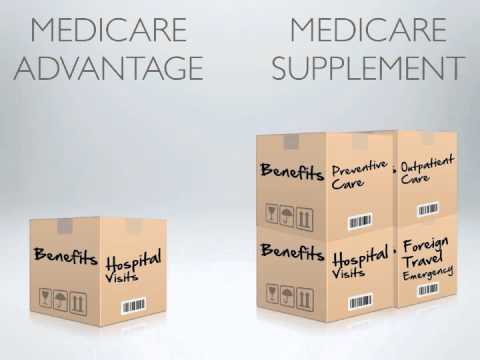
medicare-advantage-vs-medigap-boxes

MA Plan Advantages

Here are some of the benefits of having an MA plan:

  • MA premiums can be very low, and some plans have no monthly premiums at all.
  • Some MA plans include Medicare prescription drug coverage (Part D).
  • Maximum out-of-pocket (OOP) costs are limited. Plans vary, but in 2025, the most you can pay for in-network OOP costs is $9,350 per calendar year. If you go out of network, you would normally pay all costs! (I wouldn’t really call this a benefit since $9,350 is a lot of money, and the most you would pay in OOP costs with a Plan G Medicare Supplement is the Medicare Part B deductible, which is currently $240 per calendar year in 2024! The Medicare Part B deductible for 2025 is projected to be $257. However, the Centers for Medicare & Medicaid Services (CMS) will not finalize the deductible until fall 2024.)
  • Some MA plans offer additional benefits such as vision, hearing, dental, and other health and wellness programs. (Some Medicare Supplement plans also offer additional benefits such as free gym memberships, vision, and hearing aid benefits.)

Medicare Supplement Plan Advantages

Here are some of the benefits of having a Medicare Supplement plan:

  • You have much more FREEDOM of choice with a Medicare Supplement than you do with an MA plan because you can go to ANY doctor, hospital, specialist, care facility, etc. in the United States as long as they accept Medicare, and most do, about 93%. (You can’t do that with an MA plan.)
  • You have much for financial stability with a Medicare Supplement than an MA plan because there are no unexpected expenses for deductibles, co-payments, hospitalizations, surgeries, chemotherapy, etc.
  • With a Plan G Medicare Supplement, other than your premiums, your maximum OOP cost in the 2025 calendar year will be no more than the Part B deductible, which is currently projected to be around $257. With an MA plan, your in-network maximum OOP “in-network” costs can be as high as $9,350! If you go out of network, your costs can be significantly higher.

NOTE: The Medicare Part B deductible is payable only one time per calendar year. If you’ve already met that deductible, you won’t have any other costs for Medicare-approved charges for the rest of the year.

  • You are not limited to a specific geographic region or a restrictive network of doctors, hospitals, specialists, care facilities, etc. like you are with an MA plan. Most MA plans are HMO’s and you will normally pay all costs if you go out of network.
  • With a Medicare Supplement, you can go directly to the specialist of your choice, ANYWHERE in the United States, as long as they accept Medicare. Most MA plans require you to go through a primary care doctor first and get permission to see a specialist within the local, geographic network.
  • Unlike MA plans, there are no HMO or PPO plans or networks with Medicare Supplements. You can go to any doctor or specialist in the US as long as they accept Medicare.
  • If you want to go to a renowned treatment center such as the MD Anderson Cancer Treatment Center in Texas, you can do so with any Medicare Supplement, as long as they accept Medicare. You can’t do that with most MA plans.
  • If you move to another part of the country, you can keep your Medicare Supplement, but you cannot keep your MA plan if you move out of your network.
  • There are only 10 “standardized” Medicare Supplement plans to choose from,  (Plan A through Plan N). Since Medicare Supplements are standardized, the coverage and benefits for every Plan G, etc. is exactly the same with every insurance carrier, so it’s much easier to shop around and compare “apples with apples.” MA plans are not standardized, and the co-payments, deductibles, out of pocket costs, etc. vary between MA plans, and they change every year making them unnecessarily complicated and confusing.
  • A Medicare Supplement plan cannot be cancelled as long as you pay your premiums. MA plans are annual contracts, and they can be cancelled or benefits changed at the end of each calendar year.
  • There is no Annual Election Period (AEP) for Medicare Supplements, and you don’t have to shop around every year and make sure that your coverage, co-payments, co-insurance, deductibles, and benefits haven’t changed since the previous year. If there are any Medicare changes from one calendar year to the next, your Medicare Supplement will automatically pay the difference.
  • Medicare Supplements are “portable” meaning that you can keep them and take them with you if you travel to another state or if you move to another state, and your Medicare Supplement cannot be cancelled for leaving your “service area.” With most MA plans, if you travel outside of the MA plan’s service area for more than six months, you could be dis-enrolled from the plan.
  • With a Plan G Medicare Supplement, there are no co-payments when you go to the doctor. With most MA plans, you have to pay co-payments every time you see a doctor.
  • You can switch Medicare Supplement plans or Medicare insurance carriers any time of the year as long as you meet minimum health and underwriting requirements. With an MA plan, you can only join or leave an MA plan during the AEP or a SEP. Otherwise, you are locked into your MA plan for the entire calendar year.

NOTE: In California, there is a law called the California Birthday Rule. Under this law, if you have a Medicare Supplement, you can change it every year during the 60 days following your birthday to any other Medicare Supplement plan with “equal or fewer” benefits. For example, if you have Plan G, you can switch to Plan G with any other insurance carrier, regardless of your health. If you have Plan G, you can also switch to Plan N because Plan N has fewer benefits than Plan G, etc. Under the birthday rule, you just can’t switch from a plan with fewer benefits to greater benefits.

As you can see from the facts mentioned above, the benefits of having a Medicare Supplement far outweigh the benefits of having a Medicare Advantage plan.

Are Some Medicare Advantage Plans Really Free?

Because some MA plans have very low monthly premiums or no monthly premiums at all, some unscrupulous individuals promote them as “FREE” Medicare insurance plans, which is inaccurate, misleading, and, in my opinion, unethical. During the AEP, there are a lot of commercials for MA plans on TV. If you listen carefully, the one thing you’ll NEVER hear them mention is the maximum out-of-pocket costs for those plans. In 2025, in-network OOP costs can be as high as $9,350, and if you go out of network, you can pay significantly more!

Also, regardless of whether you have an MA plan or a Medicare Supplement plan, you still have to pay the monthly Medicare Part B premium, which is currently $174.70 per month for most people in 2024. The Medicare Part B premium in 2025 hasn’t been released yet, but it is estimated to be around $185.00 per month.

medicare-advantage-pig

You Can Always Get a Medicare Advantage Plan But You Can’t Always Get a Medicare Supplement Plan

MA plans are adequate as long as you are healthy, but if your health should change and you develop a serious illness, you will wish that you had a Medicare Supplement instead of an MA plan because you will have much more freedom of choice and control over your health care with a Medicare Supplement!

Original Medicare (Part A and B) only cover about 80% of medical and hospital costs and Medicare Supplements pick up most of the remaining 20%. During the AEP, you can always switch from a Medicare Supplement to an MA plan, regardless of your health, and you can always switch from an MA plan back to Original Medicare (Part A and Part B), regardless of your health. However, if you switch back from an MA plan to Original Medicare during the AEP, there is no guarantee that you can get a Medicare Supplement as you must be in good health, answer health questions, and be medically underwritten to be approved. If you have any serious health issues, more than likely, you won’t be able to get a Medicare Supplement.

NOTE: There are some situations where you can switch from an MA plan to a Medicare Supplement as a “guaranteed issue” without answering any health questions or going through medical underwriting. If you are in this situation, please let me know.

Also, if you are in the first year of your MA plan, you are guaranteed the right to switch back to a Medicare Supplement during the first 12 months. This is called a trial right. The trial period gives you a year to try an MA plan and see if it’s right for you. If you decide it’s not, you are guaranteed the right to switch back to original Medicare (Parts A and B) and purchase a Medicare Supplement plan.

The Maximum Out of Pocket Cost for MA Plans Can Be Twice As Much As You Think

Depending on which MA plan you have, the most you would pay for in-network out-of-pocket (OOP) costs in 2025 is $9,350 per calendar year! If you go outside of your plan’s network, you will pay even more than that!

Now suppose that you get really sick and need expensive treatment in the second half of the year. You could end up paying up to $9,350 (or whatever your plan’s maximum OOP cost is) by the end of the calendar year, but your OOP maximum zeros out in January, and it starts all over again! You could potentially end up paying your OOP TWICE in a 12-month period!

Conclusion

If you have an MA plan, you give up your Original Medicare (Part A and Part B) rights and you compromise your freedom of choice to go to the best doctors, specialists, hospitals, care facilities, etc. throughout the United States. Unless you are impoverished and can’t afford to pay the monthly premium for a Medicare Supplement, I would never recommend an MA plan to a friend or family member as you are always better off with a Medicare Supplement.

I’m an independent insurance agent, not a captive agent, and I work with most of the major insurance carriers. I shop around for my clients, every year, and I will shop around for you too! If you have any questions or if you have an MA plan and would like for me to help you switch to a Medicare Supplement plan, please let me know! And if you have a Medicare Supplement, I’m happy to shop around for you to save you money on your premiums!

There’s no such thing as free Medicare insurance! As the old expression goes… “You get what you pay for!”

you-get-what-you-pay-for

If you liked this blog and found it informative, please click the “Like” button, and please send me your questions, comments, or feedback! And please feel free to share this article with your friends!

Thank you!

Ron Lewis
Ron@RonLewisInsurance.com
www.MedigapShopper.com
(760) 525-5769 – Cell
(866) 718-1600 – Toll-free

Medicare Prescription Drug Plans

When Is the Best Time To Sign Up For a Medicare Prescription Drug Plan?

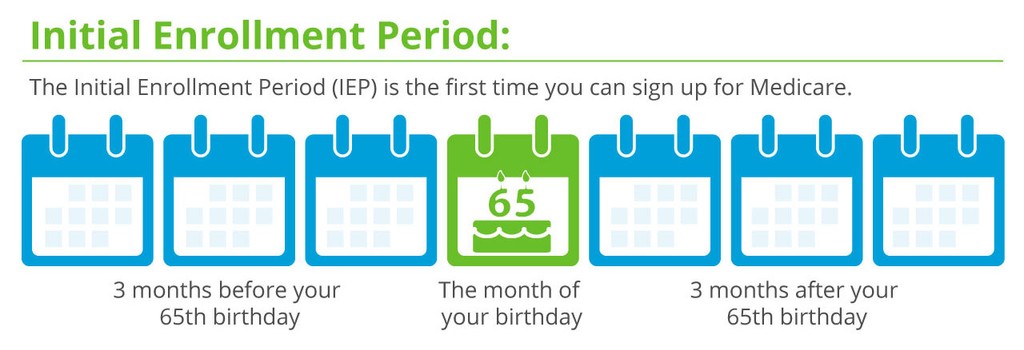
If you are eligible for Medicare, you can generally sign up for Medicare Part D, also known as a Medicare Prescription Drug Plan (PDP) during the Initial Enrollment Period (IEP), which is the 7-month period that starts 3 months before the month you turn 65, includes the month you turn 65, and ends 3 months after the month you turn 65.

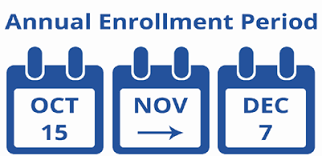
In addition, you can also sign up for a Medicare PDP during the Annual Enrollment Period (AEP), which runs from October 15th through December 7th each year. During this period, you can join, switch, or drop your Medicare PDP.

NOTE: The AEP is the annual open enrollment period to change prescription drug plans and Medicare Advantage plans, not Medicare Supplement plans. If you have a Medicare Supplement, you can change it any time of the year. If you change your Medicare PDP or your Medicare Advantage plan during the AEP, the new coverage will begin on January 1st of the following year.

If you don’t enroll in a Medicare PDP during your IEP or when you first become eligible for Medicare, you may be subject to a late enrollment penalty if you later decide to enroll in a plan.

What Happens If I Don’t Sign Up For a Prescription Drug Plan During the Initial Enrollment Period?

If you miss your IEP to sign up for a Medicare PDP, you generally have to wait until the AEP to sign up for a plan unless you qualify for a Special Enrollment Period (SEP). A SEP is a time outside of the IEP or AEP when you can make changes to your Medicare coverage.

Here are some examples of events that may qualify as a SEP:

  • Moving to a new address: If an individual moves outside of their Medicare Advantage plan’s service area, they may be eligible for a SEP to enroll in a new plan.
  • Losing other health coverage: If an individual loses coverage from an employer, union, or other health plan, they may be eligible for a SEP to enroll in a Medicare Advantage plan or a Medicare Part D prescription drug plan.
  • Gaining new health coverage: If an individual gains coverage from an employer, union, or other health plan, they may be eligible for a SEP to disenroll from their Medicare Advantage plan or their Medicare Part D prescription drug plan.
  • Becoming eligible for Medicaid: If an individual becomes eligible for Medicaid, they may be eligible for a SEP to enroll in a Medicare Advantage plan or a Medicare Part D prescription drug plan.
  • Moving into or out of a nursing home or long-term care facility: If an individual moves into or out of a nursing home or long-term care facility, they may be eligible for a SEP to enroll in or change their Medicare coverage.

Not all events will qualify an individual for a Medicare SEP, and the rules and timelines for each SEP can vary. It’s always a good idea to check with Medicare or a licensed insurance agent to confirm eligibility and understand the options available. If you do qualify for a SEP, you have a limited time period to enroll in a Medicare PDP. The length of the SEP varies depending on the reason for the SEP. If you don’t qualify for a SEP, you will have to wait until the next AEP to sign up for a Medicare PDP.

When Do I Need to Sign Up For a Prescription Drug Plan When Coming Off An Employer Health Plan?

If you are coming off an employer health plan that included “creditable” prescription drug coverage and you enroll in a Medicare PDP within 63 days of losing your employer coverage, you generally will not be subject to a late enrollment penalty. Creditable coverage is prescription drug coverage that is expected to pay, on average, at least as much as Medicare’s standard prescription drug coverage. Your employer should notify you each year if your prescription drug coverage is creditable.

If you do not enroll in a Medicare PDP within 63 days of losing your employer coverage, you will be subject to a late enrollment penalty if you later decide to enroll in a plan. The penalty would be calculated based on the number of full months you were eligible for a Medicare PDP but did not have creditable prescription drug coverage.

Important: If you enroll in a Medicare Prescription Drug Plan after the 63-day period, you may also have a gap in coverage, which could result in higher out-of-pocket costs for your prescription medications.

What Is the Medicare Prescription Drug Plan Late Enrollment Penalty?

The Medicare PDP late enrollment penalty is a fee that may be imposed on individuals who enroll in a Medicare PDP after their IEP has ended, and who do not have creditable prescription drug coverage from another source (such as an employer).

The penalty is calculated based on the number of months that an individual went without creditable coverage, and is added to the monthly premium for the Medicare PDP. The penalty amount may increase each year, and the penalty is paid for as long as the individual is enrolled in a Medicare PDP. There are some exceptions to the penalty, such as if an individual had a valid reason for delaying enrollment, such as being covered under a spouse’s health insurance plan, etc.

How To Calculate the Medicare Prescription Drug Plan Late Enrollment Penalty

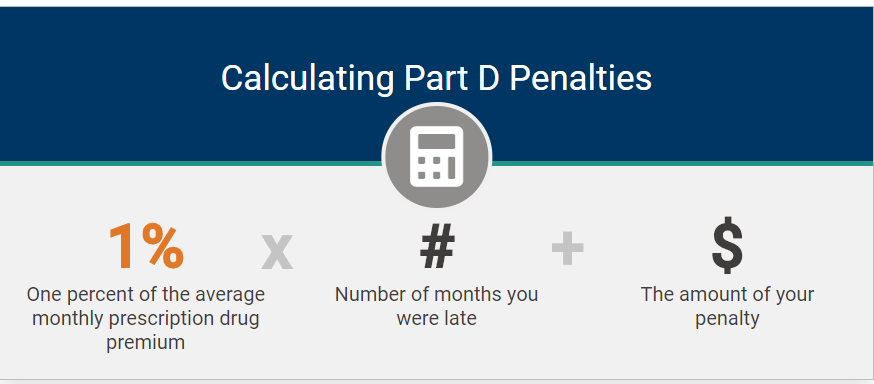
The Medicare PDP late enrollment penalty is calculated by multiplying 1% of the “national base beneficiary premium” ($32.74 in 2023) by the number of full, uncovered months that an individual did not have creditable prescription drug coverage.

The national base beneficiary premium is the average monthly premium for a Medicare prescription drug plan in the United States, as determined by the Centers for Medicare & Medicaid Services (CMS). The amount of the penalty may increase each year, as the national base beneficiary premium changes.

Here’s an example of how to calculate the penalty:

In 2023, the national base beneficiary premium is $32.74. If an individual goes without creditable prescription drug coverage for 12 months (a full year) after their IEP has ended, the penalty would be 1% of $32.74, or approximately $0.33 per month. Therefore, the penalty amount would be $3.96 ($0.33 x 12 months = $3.96), and this amount would be added to the individual’s monthly premium for their Medicare PDP.

If an individual goes without creditable prescription drug coverage for a shorter period of time, the penalty amount would be lower, based on the number of full, uncovered months, etc. The late enrollment penalty is added to your monthly premium for as long as you have Medicare PDP coverage.

NOTE: The penalty is permanent and may increase each year based on changes to the national base beneficiary premium.

To avoid the late enrollment penalty, it’s important to enroll in a Medicare PDP during your IEP, or when you first become eligible for Medicare, or within 63 days of coming off of an employer health plan, even if you don’t currently take any prescription medications. In California, you can get a Medicare PDP for as low as $4.50 per month!

How Do I Know If I Have to Pay a Penalty?

After you join a Medicare PDP, the plan will tell you if you have to pay a penalty and what your premium will be. In general, you’ll have to pay this penalty for as long as you have a Medicare drug plan.

What If I Don’t Agree With the Late Enrollment Penalty?

You may be able to ask for a “reconsideration.” Your drug plan will send information about how to request a reconsideration. Complete the form, and return it to the address or fax the number listed on the form. You must do this within 60 days from the date on the letter telling you that you have to pay a late enrollment penalty. Also send any proof that supports your case, like a copy of your notice of creditable prescription drug coverage from an employer or union plan.

Do I Have to Pay the Penalty Even If I Don’t Agree With It?

By law, the late enrollment penalty is part of the premium, so you must pay the penalty with the premium. You must also pay the penalty even if you’ve asked for a reconsideration. Medicare PDP’s can dis-enroll members who don’t pay their premiums, including the late enrollment penalty portion of the premium.

How Soon Will I Get a Reconsideration Decision?

In general, Medicare makes reconsideration decisions within 90 days. They will try to make a decision as quickly as possible. However, you may request an extension. Medicare may sometimes take an additional 14 days to resolve your case.

If Medicare decides that all or part of your late enrollment penalty is wrong, Medicare will send you and your drug plan a letter explaining its decision. Your Medicare PDP will remove or reduce your late enrollment penalty. The plan will send you a letter that shows the correct premium amount and explains whether you’ll get a refund. If Medicare decides that your late enrollment penalty is correct, Medicare will send you a letter explaining the decision, and you must pay the penalty.

To Make a Long Story Short…

To avoid the Medicare late enrollment penalty…

  • When you are turning 65, the best time to sign up for a Medicare PDP is during the 7-month IEP.
  • If you or your spouse is coming off of a creditable employer health plan, the best time to sign up for a Medicare PDP is during the 63 days after your employer coverage ends.

About Me

I hope that you have found this information to be interesting and informative. I’m an independent insurance agent with over 15 years of experience specializing in Medicare Supplement insurance, primarily in California. As an independent agent, I work with most of the major insurance carriers including Mutual of Omaha, Cigna, Blue Shield of CA, Anthem Blue Cross, Health Net, Aetna, etc. I have hundreds of clients, and I shop around for them every year around their birthday. Please click here to see some of my client testimonials.

If you have any questions, or if you know anyone that is turning 65 or starting Medicare, or if you would like for me to shop around for you, I’m happy to help, and there is no charge for my service!!! Please feel free to contact me! Also, please feel free to forward this blog on to anyone you know who may be interested.

Thank you!

Ron Lewis
CA agent #0B33674
NV agent #3822123

Ron@RonLewisInsurance.com
866.718.1600 (Toll-free)
760.525.5769 (Cell)
www.MedigapShopper.com

New CMS Marketing Rule Harms Medicare Beneficiaries

The Centers for Medicare & Medicaid Services (CMS) recently released their 2023 final rule, which includes two requirements that will have a significant impact on independent agents and brokers who sell Medicare Advantage (MA) and Prescription Drug Plans (PDP’s). In my opinion, this new CMS requirement will adversely affect Medicare beneficiaries because many independent insurance agents and brokers will no longer market or sell MA or PDP’s because of these onerous rules. Consequently, many Medicare beneficiaries will be left on their own to shop for these plans.

Although these new marketing guideline changes are for calendar year 2023, they begin on October 1st, 2022, just before the start of the 2023 Annual Election Period (AEP) for Medicare Advantage and prescription drug plans.

NOTE: The AEP begins on October 15th each year and ends on December 7th. Unless you are in a Special Enrollment Period (SEP), this is the only time of year you can switch to or from an MA or a PDP. With Medicare Supplements, you can change your plan any time of the year.

This new CMS ruling is in response to misleading TV commercials by Third Party Marketing Organizations (TPMO’s) and numerous consumer complaints to CMS. Under these new guidelines, the definition of TPMO’s has been expanded to include agents and brokers. The new definition of TPMO is too broad and will negatively impact many entities that are acting responsibly such as individual agents and brokers who will now be subject to new call recording requirements (see next section). It has been argued that consumer dissatisfaction is not usually with their insurance agent but with TPMO call centers that solicit beneficiaries to switch plans that do not necessarily meet their needs.

Do you recall those TV commercials and pitches from celebrities and pitchmen like Joe Namath, William Shatner, Jimmie Walker, etc.? They promise things from free meal delivery to money deposited in your Social Security account. A few MA plans may offer meal delivery for certain qualified individuals, but only one or two plans in your county may offer those benefits, but most don’t. And while the dental and vision coverage of MA plans may sound great, many plans only include routine visits, not more expensive items like dental implants, eyeglasses, etc.

There are a couple of things you need to consider before you race to your phone to “Call Now.” First, Joe Namath, while he may be a perfectly upstanding gentleman, is no Medicare expert. He is a paid endorser. In fact, I doubt he even understands what a Medicare Advantage plan is. Even if he is on a Medicare Advantage plan, I doubt he is concerned with the potential out of pocket costs involved. I believe his $25 million net worth may place him a little out of touch with the average American budget. Second, be aware that he is speaking on behalf of the Medicare Coverage Hotline, not Medicare. And if you were to pause the commercial on the last slide, you would see that The Medicare Coverage Hotline is a for-profit lead generation campaign. This means that they are simply trying to get you to call their 800 number so they can sell you as a lead to an insurance agent.

http://www.SeniorMark.com

New Call Recording Requirement

Agents and brokers must now record all sales calls with potential clients in their entirety including the enrollment process. These recordings must be retained in a HIPAA-compliant manner for 10 years! This applies to all new and existing clients.

What is considered a sales call? Anything that falls under the “chain of enrollment,” which is defined as the events from the point when a Medicare beneficiary becomes aware of an MA or PDP to the end of the enrollment process. This means when an agent is calling leads, scheduling appointments, collecting drug and provider lists and conducting education meetings and phone enrollments. All of these calls would fall under this category and must be recorded!

NOTE: Medicare Supplements are not included in the new call recording rules. However, if an agent is selling a Medicare Supplement and a PDP, the call must be recorded.

Zoom meetings must also be recorded. Only in-person, face-to-face marketing and sales appointments are excluded, however any follow-up calls related to sales and completing the enrollment process must be recorded. Sales calls conducted on cell phones must also be recorded.

Phone Recording Problems for Agents and Medicare Beneficiaries

This new phone recording requirement will add an additional burden to insurance agents attempting to assist Medicare beneficiaries when selecting suitable health and drug plans. According to the The National Association of Health Underwriters (NAHU), who are advocating against these new CMS changes, “The cost of setting up a HIPAA-compliant audio recording system with adequate and protected storage capabilities far exceeds the abilities of many of these licensed and certified agents who are now facing a decision as to whether to participate in this fall’s AEP.”

There is also a concern from Medicare beneficiaries who do not wish to have their enrollment recorded. An enrollment conversation can last hours, during which beneficiaries may disclose several private details about their health, financials and personal life. Many seniors are not comfortable with the requirement that these conversations be recorded and stored for up to 10 years, regardless of the protections that may be put in place for the recordings.

NAHU

New Disclaimer Requirement

When discussing MA or PDP’s, insurance agents must use the following disclaimer:

“We do not offer every plan available in your area. Any information we provide is limited to those plans we do offer in your area. Please contact Medicare.gov or 1-800-MEDICARE to get information on all your options.”

Agents must include the new disclaimer in the following places:

  • Verbally stated during the first minute of a sales phone call
  • Electronically conveyed when communicating with a potential client via email, online chat, or other electronic form of communication
  • Prominently displayed on the agent’s website
  • On all marketing materials, in print (12-point font) and television advertisements

Contact Congress Today to Delay this New CMS Marketing Rule

Please click here to contact your member of Congress to request that CMS implement a delay of six to 12 months, during which CMS will work with stakeholders to develop marketing regulations that will protect Medicare beneficiaries while allowing them access to their trusted independent agent or broker.

Are You a Hospital Inpatient or Outpatient?

If you are on Medicare and you are hospitalized, it’s important for you to know if you are being classified as a hospital “inpatient” or “outpatient!”

If you are classified as an outpatient or “under observation,” this can adversely affect how much you will pay for hospital services such as X-rays, drugs, and lab tests. This may also affect whether Medicare will cover the care you receive in a Skilled Nursing Facility (SNF) following a hospital stay.

You’re an inpatient beginning when you are formally admitted to a hospital with a doctor’s order. The day before you are discharged is your last inpatient day.

You’re an outpatient if you’re getting emergency department services, observation services, outpatient surgery, lab tests, X-rays, or any other hospital services, and the doctor hasn’t written an order to admit you to a hospital as an inpatient.

IMPORTANT: Even if you stay overnight in a hospital, you could still be classified as an “outpatient” or “under observation.”

inpatient vs outpatient

Observation services are hospital outpatient services given to help the doctor decide if you need to be admitted as an inpatient or if you can be discharged. These services may be given in the emergency room or another area of the hospital.

The decision for inpatient hospital admission is a complex medical decision based on your doctor’s judgment and your need for “medically necessary” hospital care. An inpatient admission is generally appropriate for payment under Medicare Part A when you’re expected to need 2 or more midnight’s of medically necessary hospital care, but your doctor must order this admission and the hospital must formally admit you for you to become an inpatient.

You may get a Medicare Outpatient Observation Notice (MOON) that lets you know you’re an outpatient in a hospital or critical access hospital. You must get this notice if you’re getting outpatient observation services for more than 24 hours.

The MOON will tell you why you’re an outpatient getting observation services, instead of an inpatient. It will also let you know how this may affect what you pay while in the hospital, and for care you get after leaving the hospital.

observation

How Much Do I Pay as an Inpatient?

Medicare Part A (Hospital Insurance) covers inpatient hospital services. Generally, this means you pay a one-time deductible for all of your hospital services for the first 60 days you’re in a hospital.

Medicare Part B (Medical Insurance) covers most of your doctor services when you’re an inpatient. You pay 20% of the Medicare-approved amount for doctor services after paying the Part B deductible.

NOTE: Most Medicare Supplement insurance plans will pay the entire Part A hospital deductible of $1,408 (in 2020) and most or all of the remaining 20% of the Medicare Part B expenses that are not covered by Medicare.

inpatient

How Much Do I Pay as an Outpatient?

Medicare Part B covers outpatient hospital services. Generally, this means you would pay a co-payment for each outpatient hospital service. This amount may vary by service. Part B also covers most of your doctor services when you’re a hospital outpatient. You pay 20% of the Medicare-approved amount after you pay the Part B deductible. Again, most Medicare Supplement insurance plans will pay for most or all of the Part B expenses that are not covered by Medicare.

In most cases, prescription and over-the-counter drugs you get in an outpatient setting such as an emergency room are not covered by Part B.

In certain circumstances, if you have a Medicare Prescription Drug Plan (PDP), also known as Medicare Part D, these prescriptions may be covered. You may have to initially pay out-of-pocket for these prescriptions and then submit a claim later on to your PDP for a refund.

Outpatient

How Would My Hospital Status Affect Skilled Nursing Home Care?

Medicare will only cover care you receive in a Skilled Nursing Facility (SNF) if you first have a “qualifying inpatient hospital stay.” This means that you must have been classified as a hospital inpatient (not an outpatient or under observation) for at least three days counting the day you were admitted as an inpatient, but not counting the day of your discharge.

If you don’t have a 3-day inpatient hospital stay and you need care after your discharge from a hospital, you should ask if you can get home health care or if any other programs such as Medicaid or Veterans’ benefits can cover your SNF care. Always ask your doctor or hospital staff if Medicare will cover your SNF stay.

Any days you spend in a hospital as an outpatient before you are formally admitted as an inpatient are not counted as inpatient days. An inpatient stay begins on the day you are formally admitted to the hospital as an inpatient with a doctor’s order. That’s your first inpatient day. The day of discharge does not count as an inpatient day.

NOTE: During the time you’re getting observation services in a hospital, you’re considered an outpatient. This means Medicare won’t count this time towards the 3-day inpatient hospital stay needed for Medicare to cover your SNF stay. If you have a Medicare Advantage (MA) plan, your costs and coverage may be different. You should check with your plan.

To qualify for SNF care, you must meet Medicare’s requirements and enter a Medicare-approved facility within 30 days after leaving a the hospital. Medicare covers the first 100 days of nursing home care after a three-day inpatient hospital stay. During the first 20 days in a nursing home, Medicare pays for all approved amounts. During the 21st through the 100th day, Medicare pays all up to $176 per day. After the 100th day, Medicare pays nothing.

NOTE: Most Medicare Supplements will pay the difference that is not covered by Medicare during the 21st though the 100th day in a skilled nursing home.

Common Hospital Situations That May Affect Your SNF Coverage

Situation You came to the ER and you were formally admitted to the hospital with a doctor’s order and spent 3 days in the hospital as an inpatient after admission. You were discharged on the 4th day.

Is My SNF Stay Covered? Yes, if all other coverage requirements are met. You met the 3-day inpatient hospital stay requirement for a covered SNF stay.

Situation You came to the ER and spent one day getting observation services. Then, you were formally admitted to the hospital as an inpatient for 2 more days.

Is My SNF Stay Covered? No. Even though you spent 3 days in the hospital, you were considered an outpatient while getting ER and observation services. These days don’t count toward the 3-day inpatient hospital stay requirement.

You Have Medicare Rights

No matter what type of Medicare coverage you have, you have certain guaranteed rights. As a person with Medicare, you have the right to all of these:

  • Have your questions about Medicare answered.
  • Learn about all of your treatment choices and participate in treatment decisions.
  • Get a decision about health care payment or services, or prescription drug coverage.
  • Get a review of (appeal) certain decisions about health care payment, coverage of services, or prescription drug coverage.
  • File complaints (sometimes called “grievances”), including complaints about the quality of your care.

For more information about your rights, the different levels of appeals, and Medicare notices, visit Medicare.gov to view the booklet “Medicare Rights & Protections.” You can also call 1-800-MEDICARE (1‑800‑633-4227). For more information, please click here to access a video I made about this subject.

Medicare Rights

Conclusion

If you are hospitalized, you must be classified as an “inpatient,” not an “outpatient” or “under observation” to receive maximum Medicare benefits, and you must be hospitalized for three full days as an inpatient in order to receive care in a skilled nursing facility. Otherwise, you may have high out-of-pocket costs and you may not be able to get other Medicare benefits you would otherwise be entitled to.

If you have any questions, or if you would like a Medicare Supplement quote, please contact me at (760) 652-6060 or at Ron@RonLewisInsurance.com or go to www.MedigapExpress.com.

2019 Medicare Deductibles, Coinsurance, and Out-Of-Pocket Limits

The new 2019 Medicare deductibles, coinsurance, and out-of-pocket limits were recently released, and they go into effect on January 1st, 2019.

January 2019

Medicare Part A (Hospital Insurance)

  • Part A Deductible: This deductible is increasing $24 to $1,364 per benefit period.
  • Part A Coinsurance: Inpatient Hospital Care (Days 61-90). Increasing $6 to $341 per day.
  • Lifetime Reserve Coinsurance: Inpatient Hospital Care (Days 91-150). Increasing $12 to $682 per day.
  • Skilled Nursing Facility (SNF) Coinsurance: (Days 21 through 100) Increasing $3 to $170.50 per day.

NOTE: A benefit period begins on the first day you receive service as an inpatient in a hospital and ends after you have been out of the hospital and not received skilled care in any other facility for 60 days in a row. This is not an annual deductible; there can be multiple benefit periods (up to six) in a calendar year!

Medicare Part B (Medical Insurance)

  • Part B Annual Deductible: Increasing $2 to $185 per year.

NOTE: For those of you with a Plan G Medicare Supplement (also known as Medigap because it picks up the gap in coverage not covered by Medicare), Plan G is identical to Plan F with the exception of the Part B deductible. Once this deductible has been met, Plan F and Plan G are exactly the same. If you are saving more than $185 per year on your premiums by switching from Plan F to Plan G, then Plan G ends up costing less than Plan F.

Medicare Supplement Plan-Specific Deductibles and Out-of-Pocket  Limits

  • High Deductible Plan F Annual Deductible: Increasing $60 to $2,300 per calendar year.
  • Plan K Annual Out-of-Pocket Limit: Increasing $320 to $5,560 per calendar year.
  • Plan L Annual Out-of-Pocket Limit: Increasing $160 to $2,780 per calendar year.

Part D Prescription Drug Plans

The new 2019 Part D deductible is $415 once a year.

How Do These Changes Affect My Medicare Supplement?

If you have a Medicare Supplement, your benefits are automatically adjusted every year to cover the new deductibles, co-payments, and coinsurance amounts in 2019.

Do You Have a Medicare Supplement Plan?

If you have a Medicare Supplement plan, contact me for a free quote! As an independent insurance agent, I work with all the major insurance carriers, and more than likely, I can save you hundreds of dollars on your Medicare Supplement premiums for the same exact plan and coverage!

If you have any questions or comments, please let me know!

Thanks!

Ron Lewis

Ron@RonLewisInsurance.com
www.MedigapExpress.com

Should You Sign Up for a Medicare Prescription Drug Plan?

I just turned 65 yesterday, August 20th, and my Medicare Part A (Hospital) and Part B (Medical), Medicare Supplement, and Medicare Prescription Drug Plan (PDP), also known as Part D, all started a few weeks ago on August 1st, 2017.

NOTE: For most people, their Medicare benefits usually begin on the 1st of the month when they turn 65.

Fortunately, I’m in pretty good health, and I only take two relatively inexpensive medications. Since there is a late enrollment penalty added to your monthly PDP premiums if you don’t sign up for a PDP when you are first eligible (turning 65 or starting Medicare Part B), I decided that I was going to at least sign up for the cheapest PDP to avoid the penalty later on.

Pills

How Much is the Part D Penalty?

The cost of the late enrollment penalty depends on how long you went without Part D or creditable prescription drug coverage.

According to the Medicare.gov website “Medicare calculates the penalty by multiplying 1% of the “national base beneficiary premium” ($35.63 in 2017) times the number of full, uncovered months you didn’t have Part D or creditable coverage. The monthly premium is rounded to the nearest $.10 and added to your monthly Part D premium.”

NOTE: The national base beneficiary premium may increase each year, so your penalty amount may also increase each year.

The late enrollment penalty is approximately $0.34 per month for every month you could have had prescription drug coverage but didn’t. For example, if you went 10 months without PDP coverage before you started a new PDP, the total penalty would be approximately $3.40 per month ($0.34 x 10 months) on top of the regular prescription drug plan monthly premium. Again, the penalty amount can increase in the future.

Part D Penalty

My Prescription Drug Plan Coverage — Before and After Medicare

Before I started on Medicare, I had some limited prescription drug plan coverage through my Affordable Care Act (Obamacare) health insurance, which wasn’t so “affordable.”

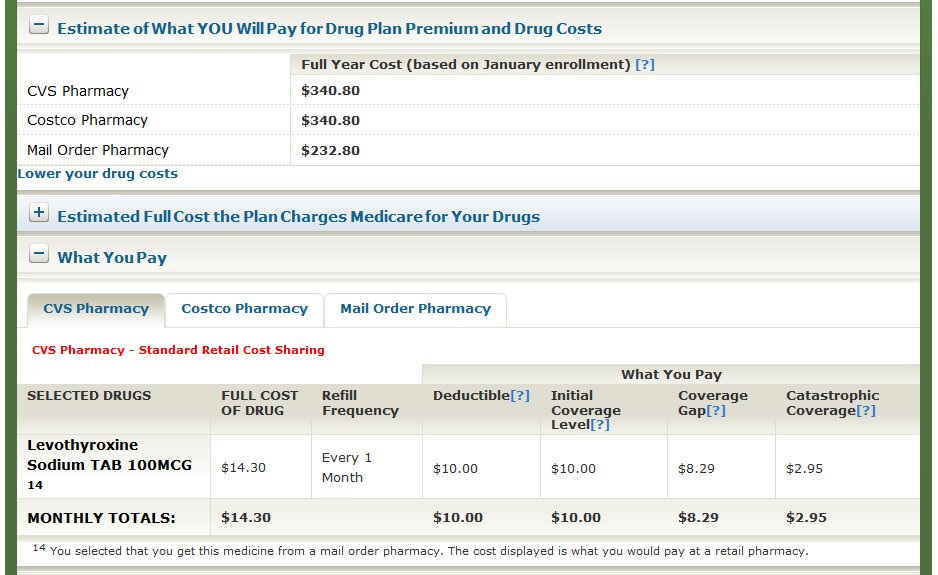
I take two medications: Fluticasone nasal inhaler and Levothyroxine. Through my previous pharmacy, the regular price of the Fluticasone was $56.80 per month, but with my Obamacare insurance, I was paying $20.00 per month. In addition to that, I was paying $12.68 per month for the Levothyroxine.

Altogether, before I started on Medicare, I was paying $32.68 per month for both prescriptions.

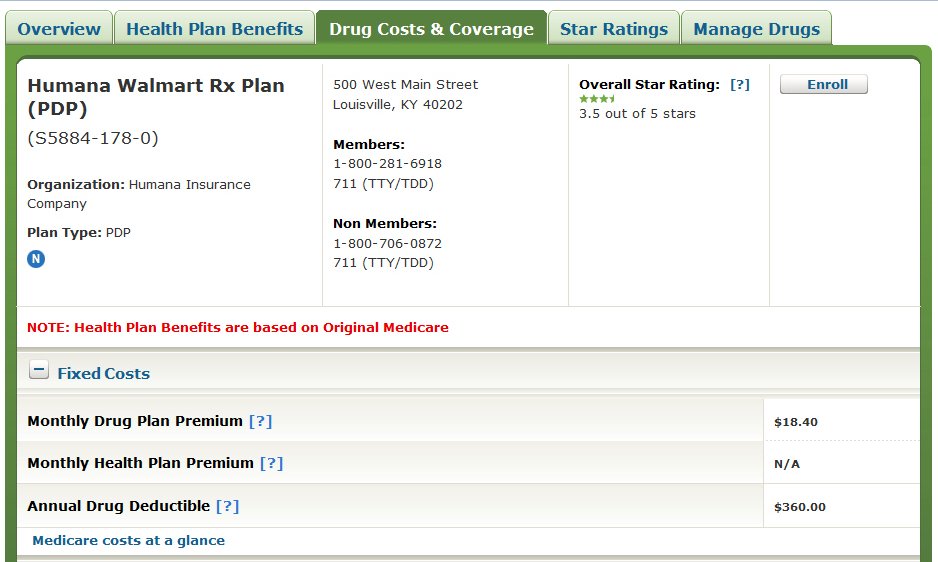
In contrast, I recently signed up with the Medicare “Humana Walmart Rx Plan” because it is currently the cheapest and most cost-effective drug plan for my particular situation. During the next Annual Enrollment Period (AEP), which is from October 15th through December 7th each year, I may sign up for a different PDP plan if I find another plan that is better than the one that I currently have.

Regardless of what PDP you currently have, you should always shop around every year during the AEP between October 15th and December 7th.

open-enrollment-street-sign

NOTE: I am not certified to sell prescription drug plans, and I am not recommending, endorsing, or promoting Humana or any particular insurance carrier. My primary focus and area of expertise is with Medicare Supplement insurance plans.

With my Humana PDP, I pay a monthly premium of $17 per month, and I have a $400 per calendar year deductible. However, the two prescriptions that I take are classified as
Tier 1 prescriptions, and under my current plan, Tier 1 and Tier 2 prescriptions are not subject to the deductible, so I don’t have to pay any deductibles for the two prescriptions that I take!

With my Humana PDP, I chose to have my prescriptions mailed to me every three months, so I no longer have to drive to the pharmacy to pick up my prescriptions each month. That’s a nice benefit too!

NOTE: In my particular situation, the mail-order option ended up costing me less than picking my prescriptions up from a pharmacy, but that isn’t always the case.

For the Fluticasone, I am currently paying $8.00 TOTAL for a three-month supply! That comes out to $2.67 per month! For the Levothyroxine, I do not have to pay anything other than my monthly premium!

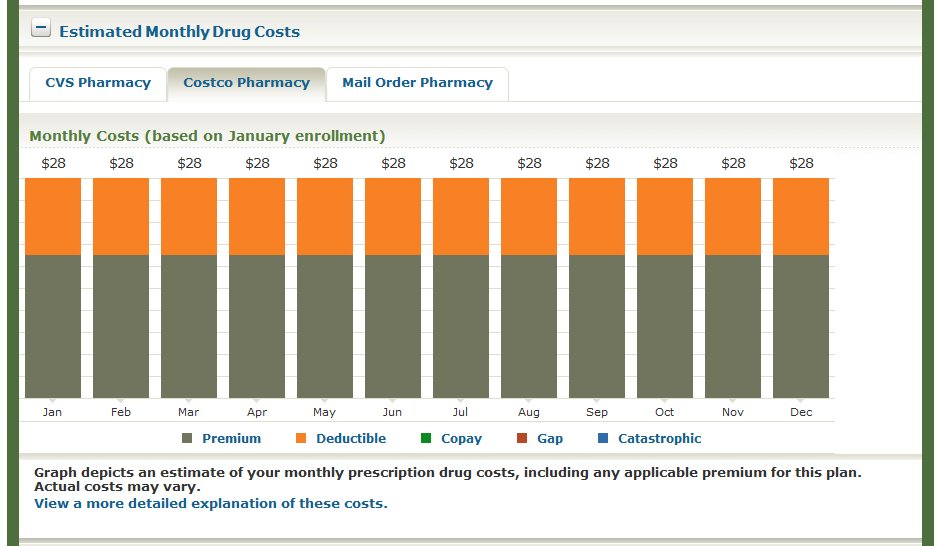
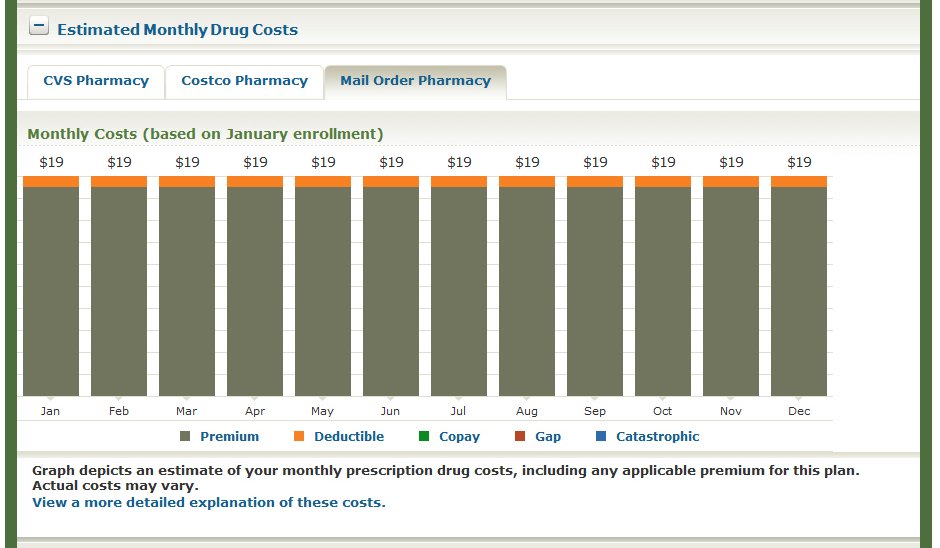
As mentioned before, I am currently paying $17.00 per month for my Humana PDP premium, and my total out-of-pocket cost for my medications is $2.67 per month for a total cost of $19.67 per month. In contrast, I was paying $32.68 per month prior to Medicare just for my prescriptions, not including my not-so-reasonably-priced health insurance premium.

I am very happy with my Medicare prescription drug plan. For me, it is significantly better than the prescription coverage that I had before I was on Medicare.

happy

Is a Medicare Prescription Drug Plan Good for Everyone?

Fortunately for me, the prescriptions that I take are relatively inexpensive, but I know that isn’t the case for everyone. Some of my clients take a lot of expensive prescriptions, and a PDP doesn’t always save them money or else some of the prescriptions may not be covered at all by the PDP, which is very frustrating.

Some people don’t take any prescriptions at all, and they may question whether it makes sense to sign up for a PDP if they currently don’t need one, even though their health could (and probably will) change at some point in the future.

Because of the late enrollment penalty, I would still recommend signing up for the cheapest PDP, at least for the time being, if it isn’t a financial hardship.

NOTE: This blog addresses my experience with Medicare prescription drug plans. To read about my experience with Medicare Supplement insurance plans, please click here.

Everyone is different, and what is good for one person isn’t necessarily good for another. Should you sign up for a prescription drug plan? That is a personal decision and a question that only you can answer.

*************************

Please click the “Subscribe” button to be notified when I write future blogs.

I am an independent insurance agent specializing in Medicare Supplement insurance plans. I work with all the major insurance carriers in California, Washington, and several other states. If you have any questions, or if you would like for me to shop around for you to save you money on your Medicare Supplement insurance, please don’t hesitate to let me know!

Thank you!

Ron Lewis
www.MedigapExpress.com
Ron@RonLewisInsurance.com
866.718.1600 (Toll-free)

Hello Medicare, and Goodbye Obamacare!

In several months from now, a good friend of mine will be turning 65 years old. While he is not anxious to get any older than he already is, he is happy about one thing… he will be getting off of Obamacare and onto Medicare!

65th-birthday-latex-balloons

My friend used to have a really good, low-deductible health insurance plan that was very affordable. But under Obamacare, all of that changed. The quality of his health insurance decreased significantly while his Affordable Care Act (ACA) premiums, co-payments, and deductibles increased dramatically. But fortunately, he now has maternity coverage, which is something that he never had before! Sorry about the sarcasm!

Pregnant man

When he goes onto Medicare, it will be just the opposite; the quality of his health insurance will increase significantly while the cost of his premiums, co-payments, co-insurance, and deductibles will all decrease!

Current Coverage

For example, he currently has a Bronze 60 ACA plan. The annual deductible is $4,800 per calendar year if he goes to “participating” providers and $9,000 per calendar year if he goes to “non-participating” providers! According to his health plan, “You must pay all the costs up to the deductible amount before this plan begins to pay for covered services you use. The integrated deductible applies to both medical and pharmacy services.” Therefore, the deductibles apply to prescription drug coverage as well.

Once the deductible is met, my friend must pay 40% of the remaining costs until he has reached the maximum out-of-pocket (OOP) cost, which is $6,550 per calendar year for “participating” providers and $9,650 per calendar year for “non-participating” providers.

NOTE: According to his current health insurance plan, OOP costs do not include “Premiums, balance-billed charges, some co-payments, charges in excess of specified benefit maximums, and health care this plan doesn’t cover.” So, total OOP costs are really much higher than $6,550 or $9,650 per calendar year when you factor in premiums and other miscellaneous costs.

The deductible and OOP costs start all over again every January. If he got really sick in the last six months of the year, there is a real possibility that he could reach his maximum OOP costs of $6,550 (or $9,650) again in the first six months of the following year. That means that he could potentially have total OOP costs in excess of $13,100 to $19,300 in a twelve-month period, not including his premiums!

My friend has a subsidized plan through Covered California. Although he pays $268.52 per month for his Bronze 60 PPO plan, the full premium that others are paying for the same identical (non-subsidized) plan is $784.79 per month, which isn’t exactly cheap for a high-deductible, catastrophic plan! I’m pretty sure you can buy or lease a luxury automobile for a lot less than that!

Mercedes

Medicare Coverage

In contrast, he won’t have to pay anything for his Medicare Part A (Hospital) insurance, and he will pay $134.00 per month for his Medicare Part B (Medical) insurance. In addition to his Original Medicare, he will need to take out a Medicare Supplement plan to pick up the difference in co-payments, deductibles, and co-insurance that Medicare does not pay.

Medicare Supplement Coverage

Of the 10 standardized Medicare Supplement plans (aka Medigap plans because they pick up the “gaps” in coverage that are not covered by Medicare), Plan F and Plan G are the two best plans:

  • Plan F pays for ALL of the co-payments, deductibles, and co-insurance that is not covered by Medicare. With Plan F, there are NO DEDUCTIBLES OR OUT-OF-POCKET COSTS!
  • Plan G is identical to Plan F except for the $183 per calendar year deductible for outpatient treatment such as physician services, inpatient and outpatient medical and surgical services and supplies, physical and speech therapy, diagnostic tests, and durable medical equipment.

NOTE: In 2017, the Part B deductible is $183 per calendar year. This amount can change from year to year, but historically, it has been very stable. With Plan G, once you have met the $183 per calendar year deductible, there are no other out of pocket costs, and Plan G is exactly the same as Plan F. The monthly premiums for Plan G are usually significantly less than the monthly premiums for Plan F, so Plan G usually ends up being more cost effective than Plan F.

For this reason, many people with Plan F have been switching to Plan G. Also, beginning on January 1st, 2020, Plan F will no longer be available for new people who are turning 65.

Although my friend’s ACA health plan is a PPO, he is still restricted to doctors, specialists, hospitals, care facilities, etc. that are within his health plan’s network. If he goes out of the network or goes to “non-participating” providers, he pays even more!

With Original Medicare and Medicare Supplements, there are no networks, HMO’s, or PPO’s, so my friend will have much more freedom of choice than he presently has with his ACA plan.

freedom

With a Medicare Supplement plan, you can go to ANY doctor, specialist, care facility, or hospital in the United States, as long as they accept Medicare! If you later move to another state, you can keep your Medicare Supplement plan and use it ANYWHERE in the US!

Medicare Supplement Premiums

In California, Medicare Supplement rates are based primarily on your age and zip code. If my friend decides to splurge and go with Plan F (the “Cadillac” plan) he will have a $0 deductible and no out-of-pocket costs! For age 65, his monthly premium will be as low as $132.00 per month!

Rates can vary significantly between insurance carriers for the same identical plan and coverage, so it’s important to shop around every year!

If my friend wants to save money on his Medicare Supplement premiums by signing up with Plan G, his maximum calendar year deductible AND out-of-pocket costs combined will be $183 per calendar year, and his monthly premium will be as low as $119.36 per month!

Plan F or Plan G

Scenario #1 – Total Costs if My Friend Signs up with Plan F

If he decides to sign up with Plan F, the most expensive Medicare Supplement plan, his total monthly premiums for his Medicare Part A ($0), Medicare Part B ($134.00), and his Plan F Medicare Supplement ($132.00) will be $266.00 per month!

NOTE: If he wants to, my friend can also pick up a good Prescription Drug Plan (PDP) for $17.00 per month.

Scenario #2 – Total Costs if My Friend Signs up with Plan G

If he decides to sign up with Plan G, the most popular Medicare Supplement plan, his total monthly premiums for his Medicare Part A ($0), Medicare Part B ($134.00) and his Plan G Medicare Supplement ($119.36) will be $253.36 per month!

Conclusion

My friend is currently paying $268.52 per month for a high-deductible, catastrophic ACA health insurance plan that is basically worthless.

If he decides to sign up for a Plan F Medicare Supplement with no deductibles or out-of-pocket costs, his total cost for coverage under Medicare and his Medicare Supplement will be $266.00 per month!

If he decides to sign up for a Plan G Medicare Supplement with a $183 per calendar year deductible and no out-of-pocket costs, his total cost for coverage under Medicare and his Medicare Supplement will be $253.36 per month!

And now you know why my friend is smiling about his upcoming 65th birthday…
“Hello Medicare, and good riddance Obamacare!”

*****************************************************

Let me do the shopping for you and save you money on your Medicare Supplement! Contact me today for a for a free insurance quote and price comparison!

Ron Lewis
www.MedigapExpress.com
Ron@RonLewisInsurance.com
866.718.1600 (Toll-free)

How to Use the Medicare.gov Website to Purchase a Prescription Drug Plan

The Medicare open enrollment period just started, and it goes from October 15th through December 7th. During this period, you can choose a Prescription Drug Plan (PDP) that will begin on January 1st, 2016. Many people are confused because they don’t know how to shop around for a PDP. You don’t have to be an “expert” or a rocket scientist to purchase your own PDP. The purpose of this blog is to help you save money on your insurance premiums and find a PDP that is right for you.

IMPORTANT If you decide not to join a Medicare drug plan when you’re first eligible, and you don’t have other creditable prescription drug coverage, and you don’t get Extra Help, you’ll likely pay a late enrollment penalty if you join a plan later.

Medicare SimplifiedAccessing the Medicare.gov Website

If you have access to a computer and the Internet, shopping around for a PDP is really quite easy. If you’re ready to begin, follow these steps:

1.)  Navigate to the Medicare.gov website.

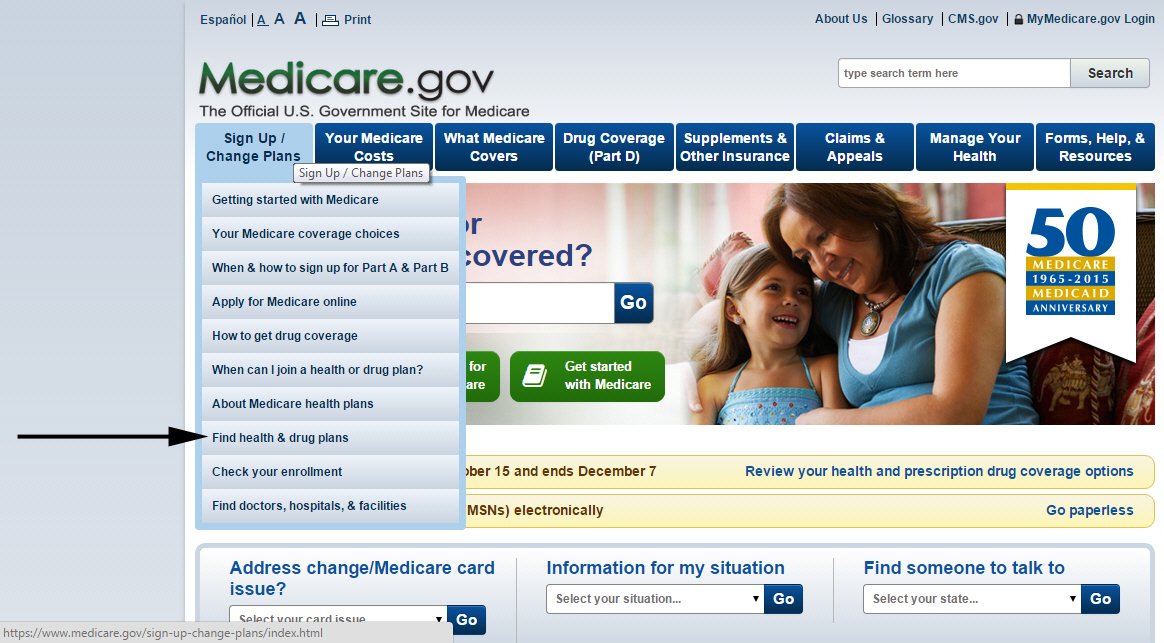
PDP1-0003x2.)  Under the blue tab at the top left-side of page that says Sign Up/Change Plans, click Find health & drug plans.

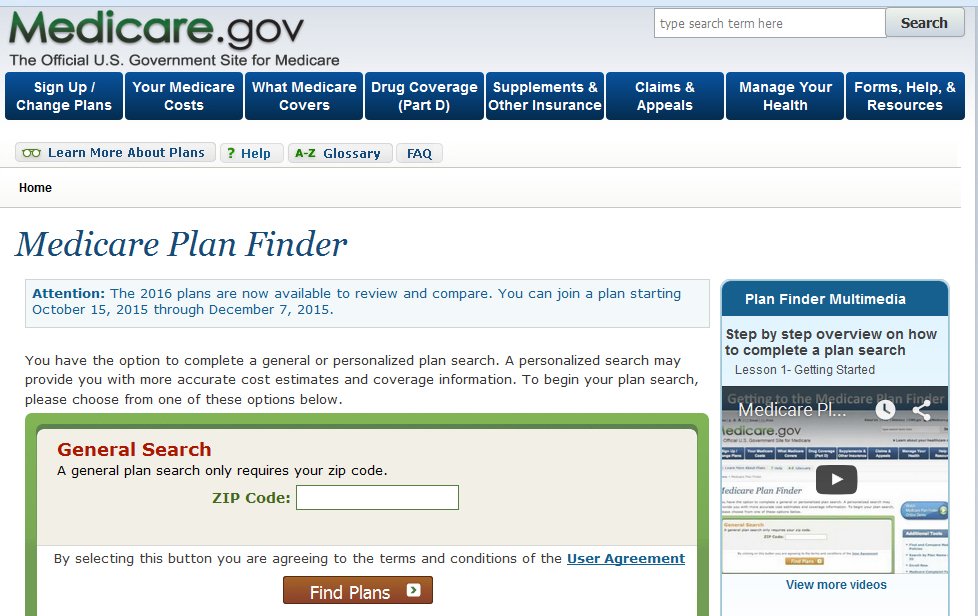
PDP1-0004xThe Medicare Plan Finder page displays.

PDP3-0001x3.)  In the General Search section, enter your zip code and click Find Plans. The Step 1 of 4 page displays.

NOTE If a survey window displays, close it and continue.

PDP1-0007x4.)  In the first section, select Original Medicare, and in the second section, select I don’t get any Extra Help. After that, click Continue to Plan Results. The Step 2 of 4 window displays.

NOTE You can choose other options that are more appropriate for your situation.

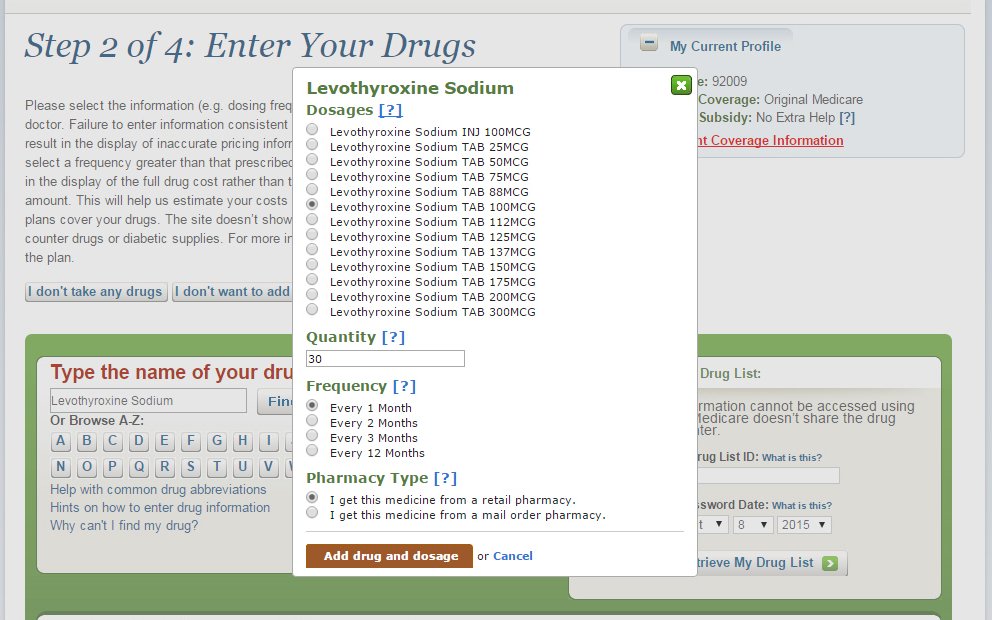
PDP1-0009x5.)  Enter your prescriptions in the text box and choose the appropriate dosages for each. A window, similar to the following, displays.

PDP1-0010x6.)  After you select the appropriate prescription dose, click Add drug and dosage.

NOTE: Continue adding your prescriptions until your prescription drug list is complete. You can add up to 25 prescriptions, and you can see your list in the lower part of the window. You can also choose “mail order pharmacy” to have your prescriptions mailed to you. In some instances, it is more cost effective to do that. If you select “mail order pharmacy,” information for both retail pharmacies and mail order options will display.

7.)  Write down the Drug List ID number AND the Password Date on a separate piece of paper.

NOTE The prescriptions, dosages, etc. that you entered are saved, and you can enter this number and the date later on to retrieve your prescription information instead of reentering it again.

Medigap PDP Window2x8.)  Click My Drug List is Complete when your drug list is complete. The Step 3 of 4 window displays.

PDP1-0014x9.)  Click Add Pharmacy to add up to two pharmacies, and then click Continue to Plan Results. The Step 4 of 4 window displays.

NOTE You can click the drop-down menu at the top of the page to select from more pharmacies near your zip code.

PDP3-0002x10.)  Click the check box next to Prescription Drug Plans (with Original Medicare), and then click Continue to Plan Results. The Your Plan Results window displays.

PDP1-0019NOTE By default, the prescription drug plans are sorted from the lowest to highest estimated annual retail drug cost. In the Plan Results window, click View All to see all the plans.

Understanding the Plan Results Window

After you access the Plan Results window, you are ready to evaluate and compare prescription drug plans and decide which plan is best for you.

There are different variables to take into consideration when choosing a PDP. Here are some of the more important ones:

  • Are drugs on the formulary?
  • Drug restrictions
  • Estimated annual drug costs
  • Annual drug deductible
  • Monthly premium
  • Overall star rating of the company

Are Drugs on the Formulary?

If a drug is not on the PDP formulary, that means that the plan does not offer coverage for that specific drug, and you should continue looking at other plans.

Drug Restrictions

If there are drug restrictions, the plan may have certain coverage restrictions (including quantity limits, prior authorization, etc.) on a prescription drug. Although your prescription may have limitations, these limits may not necessarily adversely affect you, and the plan may still meet your needs. For example, if you take 30 pills a month and the plan will cover a maximum of 60 per month, that would not impact you, and the plan is still worth considering.

Estimated Annual Costs

This is an estimate of the average amount you might expect to pay each year for your prescription drug coverage. This estimate includes the following costs:

  • Monthly premiums
  • Annual deductible
  • Drug copayments/coinsurance
  • Drug costs not covered by prescription drug insurance

If you entered your drugs into the Medicare Plan Finder, then this estimate includes the cost of those drugs.

IMPORTANT If your prescriptions are covered by the plan’s formulary and there are no major drug restrictions on the plan, this is the critical piece of information you need to determine which plan you select because it factors in all your premiums, deductibles, co-payments, and miscellaneous drug costs for the entire year. I don’t really factor in the various co-payments of each prescription; the estimated annual costs tell you approximately how much you will spend during the entire year.

Compare the estimated total annual pharmacy and mail order costs between the different plans to determine which plan offers you the best deal for the entire year!

PDP1-0019xNOTE In the previous example, the total retail annual costs for Humana are approximately $341 compared to $221 for the mail order costs. For Aetna, the total retail costs are approximately $347 compared to $387 for the mail order costs. Therefore, in this example, the most cost-effective option is to purchase the Humana PDP and use their mail order service.

If you selected “I don’t take any drugs,” then this amount includes only the cost of the monthly premiums that you would pay for the plan and it does not include any drug costs. If you selected “I don’t want to add drugs now,” then this estimate includes the average drug costs for people with Medicare and may differ depending on your age and health status.

Annual Drug Deductible

Some plans have no annual deductible and others have a maximum annual deductible up to $360 per year. Again, use the estimated annual costs to determine the value of the plan, not just the deductibles, the co-payments, etc.

Monthly Premium

The lowest monthly premium (and deductible) does not necessarily mean that you will be saving the most money. Again, compare the estimated annual drug cost to determine which plan is the most cost effective.

Overall Star Rating of the Company

For plans covering drug services, the overall score for quality of those services covers many different topics that fall into four categories:

  • Drug plan customer service: Includes how well the plan handles member appeals.
  • Member complaints and changes in the drug plan’s performance: Includes how often Medicare found problems with the plan and how often members had problems with the plan. Includes how much the plan’s performance has improved (if at all) over time.
  • Member experience with plan’s drug services: Includes ratings of member satisfaction with the plan.
  • Drug safety and accuracy of drug pricing: Includes how accurate the plan’s pricing information is and how often members with certain medical conditions are prescribed drugs in a way that is safer and clinically recommended for their condition.

If the plan has a low star rating, I would not recommend signing up for it.

Drilling Down a Little Deeper on the Medicare.gov Website

To get more information about a specific plan, click on the name of the plan, which is a hypertext link. In the following example, click Humana Walmart Rx Plan (PDP).

Medigap2-0002a

After you click the name of the plan, a window, similar to the following, displays.

Medigap2-0003a

The previous window shows the phone numbers, for members and non-members.

NOTE  If you have questions about the plan or wish to enroll, you would call the phone number for non-members. For more information, see “Signing Up for a PDP Plan” below.

Medigap2-0006a

The previous window shows the estimated monthly totals for prescriptions at CVS Pharmacy.

Medigap2-0007a

The previous window shows the estimated monthly cost (premium and deductible) for prescriptions at CVS Pharmacy.

Medigap2-0008a

The previous window shows the estimated monthly cost (premium and deductible) for prescriptions at Costco Pharmacy.

Medigap2-0009a

The previous window shows the estimated monthly cost (premium and deductible) for prescriptions through a mail order pharmacy.

Medigap2-0010a

The previous window shows drug coverage information, such as formulary status and Tier information, for the various prescriptions you entered on the Medicare.gov website.

Signing Up for a PDP Plan

After you have evaluated and compared several prescription drug plans, you are ready to sign up for a PDP on your own.

Follow these steps to sign up for a prescription drug plan:

1.)  From the Your Plan Details window, click on the hypertext name of the plan you are interested in. In the following example, click Humana Walmart Rx Plan (PDP).

Medigap2-0002a

After you click the name of the plan you are interested in, a window, similar to the following, displays.

Medigap2-0003a

2.) Call the toll-free number for non-members, and speak to a representative of the company.

IMPORTANT  If you have questions about the plan or wish to enroll, you would call the phone number for non-members. When you decide to enroll, call the plan and verify that your prescriptions are covered by the plan and that the estimated annual retail pharmacy or mail order drug costs are accurate. You want to make sure that you are interpreting and understanding the information correctly from the Medicare.gov website.

Conclusion

After you go to the Medicare.gov website and play around with it a little, you will find that signing up for a prescription drug plan is really quite easy.

NOTE  If you are having trouble signing up for a prescription drug plan or if you ever have Medicare questions or need help understanding information on the Medicare.gov website, call 1-800-MEDICARE. They are open 24 x 7, and most of the representatives are very helpful.

My primary specialty is Medicare Supplement insurance, but if you have any questions or comments, please feel free to contact me at RonLewisInsurance@yahoo.com.