Why You Should Contact HICAP for Help Choosing a Medicare Prescription Drug Plan

Choosing a Medicare Prescription Drug Plan (PDP), which is also known as Part D, can feel overwhelming. With dozens of plans available, each with different premiums, deductibles, copays, and pharmacy networks, it’s easy to make a costly mistake.

As a Medicare Supplement (Medigap) insurance agent, I often get questions from clients who also want help selecting a Part D plan. While I’d love to help, I recently learned that helping someone choose or enroll in a Part D plan without proper certification could put my insurance license at risk. However, there’s a better option that is free, unbiased, and comprehensive through the Health Insurance Counseling and Advocacy Program (HICAP).

Many Insurance Agents Have Stopped Selling Prescription Drug Plans

If you’ve noticed that fewer independent agents are offering Medicare Prescription Drug (Part D) plans, you’re not imagining things. Over the past couple of years, the Centers for Medicare & Medicaid Services (CMS) has introduced an increasing number of onerous regulations that have made it extremely difficult for many agents to continue offering these plans, especially independent agents who value personal service and client relationships.

For example, CMS recently began requiring insurance agents to record every marketing, sales, and enrollment call related to Medicare Prescription Drug Plans (Part D). This means any discussion involving benefits, costs, or plan comparisons must be recorded, both inbound and outbound, and those recordings must be securely stored for 10 years. Agents don’t like this and many Medicare beneficiaries don’t want their conversations recorded.

While these rules were intended to protect consumers from misleading marketing, the burden of compliance has become overwhelming for many professionals in the field. For more detailed information, please click here to check out my other blog called “Why Many Insurance Agents Have Stopped Selling Prescription Drug and Advantage Plans,” and click here to to check out another related blog called “Why You May Be Better Off Choosing Your Own Medicare Prescription Drug Plan (Part D).”

Why an Insurance Agent Might Not Be Enough

Many insurance agents are only certified to sell PDP’s from certain insurance carriers, which means:

  • They may not have access to every plan available in your area.
  • Their guidance could be influenced by commissions or appointments, even unintentionally.
  • You may not get a complete picture of your options, which can lead to higher costs or gaps in coverage.

That’s where HICAP comes in.

What is HICAP and How It Helps

The Health Insurance Counseling and Advocacy Program (HICAP) is a free, state-run program in California that provides free, confidential one-on-one counseling, education, and assistance to individuals and their families on Medicare, Long-Term Care insurance, other health insurance related issues, and planning ahead for Long-Term Care needs.

HICAP also provides legal assistance or legal referrals in dealing with Medicare or Long-Term Care insurance related issues. HICAP counselors are trained in Medi-Cal and Medicare and can help you understand the complex insurance options to find the best fit for you.

HICAP counselors:

  • Can show all available Part D plans in your area.
  • Provide completely unbiased guidance, with no sales pressure.
  • Help you compare costs, deductibles, co-pays, and pharmacy networks.
  • Walk you through the Medicare Plan Finder tool or help you understand your plan options.

What HICAP Services Are Available?

HICAP can help you with the following:

  • Have questions on prescription drug coverage, co-pays, or eligibility rules?
  • Wondering how to sign up for Medicare now that you are almost 65?
  • Confused about all the different parts to Medicare, do you need A, B, C, D?
  • Need help filing an appeal or challenging a denial?
  • Considering long-term care insurance?
  • Need a speaker for a community education event?

How a HICAP Session Works

Whether over the phone or in person, the process is simple:

  • Prepare your information: Have a list of all your prescriptions, your preferred pharmacy, and your zip code.
  • Enter your own prescriptions: You input your medication information into Medicare.gov.
  • Guided support: The HICAP counselor explains your options, interprets plan details, and answers questions.
  • Compare plans: They help you see which plan offers the best coverage for your needs.
  • Enrollment: You complete the enrollment yourself online or by calling the plan.

Who Can Get These Services?

Counseling is provided to the following individuals:

  • Persons 65 years of age or older and are eligible for Medicare
  • Persons younger than age 65 years of age with a disability and are eligible for Medicare
  • Persons soon to be eligible for Medicare

Why HICAP is the Best Choice

HICAP counselors provide a full picture of your options, which an insurance agent cannot always do. Their guidance is independent, comprehensive, and free. This ensures you make an informed decision about your prescription coverage without missing important details or paying more than necessary.

Check Out My Video — How to Sign Up for a PDP on the Medicare Website

This past year, I created a step-by-step YouTube video that shows you how to use the Medicare Plan Finder tool. Nothing has changed since last year. Instead of contacting a HICAP counselor, you should be able to watch the video and be able to select a PDP and enroll on your own. It’s really very easy! Please click here to watch the video. It’s only 14 minutes long.
Next Steps

If you’re ready to compare Medicare Prescription Drug Plans for 2026:

  • Click here to watch my Youtube video that explains how to to use the Medicare Plan Finder tool to select a PDP and enroll on your own.
  • Call HICAP at 1-800-434-0222 or click here to find a local office in California.
  • In other states besides California, you can get help at your local State Health Insurance Assistance Program (SHIP). Their phone number is 1-877-839-2675 or click here to find a local office outside of California.

And if you have questions about Medicare Supplement (Medigap) plans, I’m here to help guide you through your options.

Conclusion

Choosing a Part D plan doesn’t have to be stressful. By using HICAP’s free, unbiased services, you can get all the information you need to make the best decision for your health and budget, while staying in control of the process.

About the Author

As an independent Medicare Supplement insurance specialist, I work with most of the major insurance carriers throughout California, Nevada, Arizona, and several other states. I shop around for my clients every year during their 60-day annual open enrollment period under the California Birthday Rule to help them save money on their Medicare Supplement premiums. Many of my clients have saved hundreds, even thousands of dollars on the same exact plan and coverage! Please click here to see what my clients have to say about my services.

There is no charge for my services as I’m compensated by the insurance carriers, not my clients. My goal is to help you find the lowest premiums and provide the best personal service possible, year after year. Unlike many agents, I won’t do a magic act and disappear after you sign up! 🙂

If you enjoyed this blog and found it helpful, please leave your comments, questions, or feedback below and feel free to share this article with your friends!

Thank you!

Ron Lewis
Ron@RonLewisInsurance.com
www.MedigapShopper.com
(760) 525-5769 – Cell
(866) 718-1600 – Toll-free

Switching from Medicare Advantage to Medigap in California: What You Need to Know

Each year, many people in California decide to leave their Medicare Advantage (Part C) plan and return to Original Medicare (Part A and Part B) with a Medicare Supplement (Medigap) plan. Often, this happens when premiums, copays, or out-of-pocket costs increase, or when clients find their favorite doctors or hospitals are no longer in their plan’s network.

If you’ve ever wondered how to switch from Medicare Advantage to Medigap, it’s important to understand how the process works, and the potential challenges if you have existing health conditions.

You Can Switch Back to Original Medicare — But You’re Not Automatically Guaranteed Medigap Approval

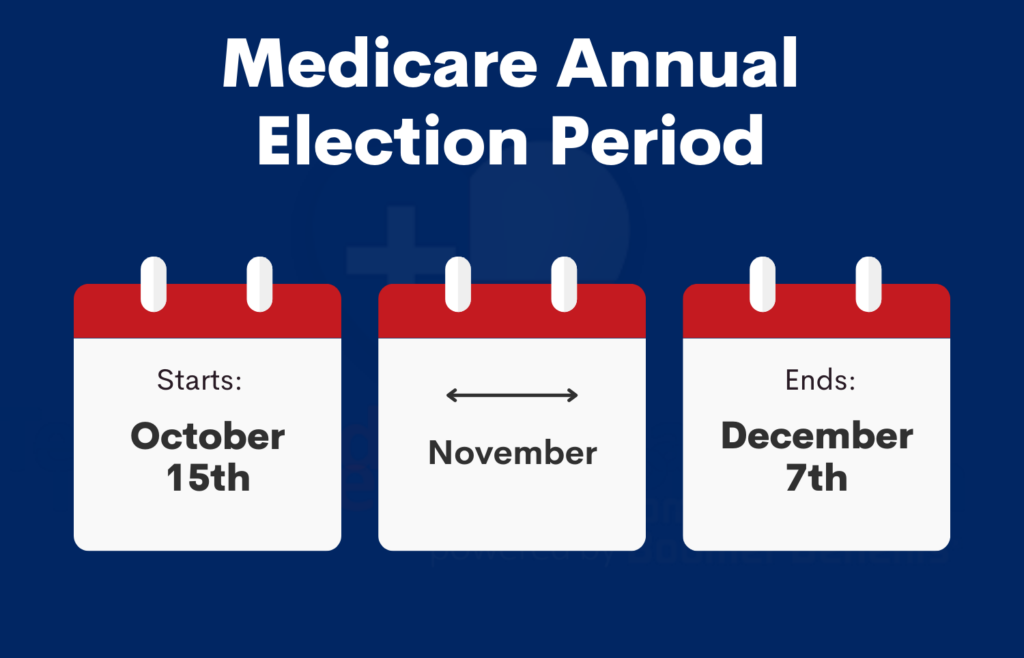
You can drop your Medicare Advantage plan and go back to Original Medicare during certain times of the year, such as the Annual Election Period (AEP), which goes from October 15th through December 7th every year or during the Medicare Advantage Open Enrollment Period, which goes from January 1st through March 31st.

However, many people are surprised to learn that once they return to Original Medicare, they must apply separately for a Medicare Supplement plan, and approval is not guaranteed. In most cases, insurance companies can review your health history, which is called “medical underwriting,” and deny coverage if you have serious or chronic health conditions. That’s why timing and knowing the rules can make all the difference.

Medicare Guaranteed Issue Rights: The Hidden Opportunities

Here’s the good news… even if you have health problems, there are special Guaranteed Issue (GI) rights or situations that often let you enroll in a Medigap plan without health questions or underwriting.

These rights apply in specific situations and many beneficiaries don’t realize they qualify. Some are tied to Medicare Advantage plan changes, others to state-specific protections. In California, there are several lesser-known GI opportunities that can help people switch to Medigap coverage, even when they’ve been told “no” before.

I work with clients every year who thought they couldn’t qualify due to health issues and I’ve helped them get accepted for Medicare Supplement coverage using legitimate Guaranteed Issue options that most agents aren’t aware of or don’t mention to their clients.

Why Work with a Specialist Who Knows the California Rules

The Medicare rules in California are unique. Between the California Birthday Rule and other state-specific guaranteed issue protections, there are several ways to save money and secure coverage without medical underwriting.

As an independent Medicare Supplement insurance specialist, I work with all the major insurance carriers throughout California, Nevada, and several other states. My goal is simple. I want to help you find the best Medicare Supplement plan with the lowest premium and the most reliable coverage, year after year.

Let’s See What You Qualify For

If you’re considering leaving your Medicare Advantage plan or want to see if you qualify for a Guaranteed Issue Medicare Supplement, don’t wait until it’s too late.

There is no cost for my help. I’m paid by the insurance carriers, not my clients. I can review your situation, identify any Guaranteed Issue opportunities, and help you apply for the coverage that fits your needs and budget.

Contact me today to learn your options and see how much you could save on your Medicare Supplement plan.

About the Author

As an independent Medicare Supplement insurance specialist, I work with all the major insurance carriers throughout California, Nevada, and several other states. I shop around for my clients every year during their annual open enrollment period under the California Birthday Rule to help them save money on their Medicare Supplement premiums. Many of my clients have saved hundreds, even thousands of dollars for the same exact plan and coverage! Please click here to read what my clients have to say about my services.

There is no charge for my services as I’m compensated by the insurance carriers, not my clients. My goal is to help you find the lowest premiums and provide the best personal service possible, year after year. Unlike many agents, I won’t disappear after you sign up!

If you enjoyed this blog and found it helpful, please leave your comments, questions, or feedback below and feel free to share this article with your friends!

Thank you!

Ron Lewis
Ron@RonLewisInsurance.com
www.MedigapShopper.com
(760) 525-5769 – Cell
(866) 718-1600 – Toll-free

Why You May Be Better Off Choosing Your Own Medicare Prescription Drug Plan (Part D)

If you’ve ever tried to compare Medicare Prescription Drug Plans (PDPs), also known as Medicare Part D, you know how confusing it can be. There are dozens of options, and each plan has its own list of covered drugs (called a formulary), preferred pharmacies, and cost structure. What looks like a small difference in co-pays or premiums can easily add up to hundreds of dollars over the course of a year.

Why Most Agents No Longer Sell Prescription Drug Plans

You might assume that a licensed insurance agent can help you find the best plan, and in the past, many could. However, today’s system makes that much more difficult. Because of how Medicare’s certification and contracting rules work, most independent agents are not certified with every drug plan available in your area. They can only recommend or enroll you in a limited number of specific plans they are contracted with and certified to sell.

If another company offers a plan with lower co-pays or better coverage for your medications, your agent may not even be allowed to discuss it with you. Why? Because they don’t get paid for selling plans they’re not certified or contracted to represent. Even if they know a different plan would save you money, compliance rules and commission structures prevent them from showing it to you.

The Hidden Time and Cost Burden on Agents

Before an agent can help anyone with a PDP or a Medicare Advantage (MA) plan, they must complete extensive training and certification every year. This starts with the AHIP certification exam, which takes many agents 10–20 hours of study time to complete. The AHIP exam covers topics such as Medicare compliance, plan rules, CMS marketing guidelines, etc.

But that’s only the beginning. Agents must also spend time studying and taking individual certification exams for EVERY insurance company whose plans they want to sell. Each carrier’s certification process is different. Some require several hours of training, testing, and annual renewal. Altogether, a well-rounded agent could easily spend 50+ hours each year just keeping up with certifications before they can even begin helping clients.

Then there are the CMS compliance rules, which now require all sales calls related to PDPs and MA plans to be recorded and stored securely for 10 years! The added administrative burden and potential liability make it even less practical for agents to offer these plans, especially since commissions for prescription plans are typically under $100 per year per client. Many agents have simply decided that it’s not worth the time and effort.

How You Can Shop and Enroll in a Drug Plan On Your Own

Fortunately, Medicare makes it easy for you to shop around on your own and sign up for a prescription drug plan at www.Medicare.gov by using the exact same tool that agents use.

This past year, I put together a short video that explains how to shop for and sign up for a Medicare prescription drug plan using the Medicare Plan Finder tool. It’s actually very easy, and there aren’t any significant changes since last year. Please click here to watch the video.

The Medicare Plan Finder is available 24/7 and it is updated every fall with the latest plan information. It allows you to make an informed decision without pressure or bias, and without worrying whether your agent is certified to sell a particular plan.

Review Your Coverage Each Fall

Even if you’re happy with your current PDP, it’s important to review your coverage each year during the Annual Election Period (AEP), which goes from October 15th through December 7th each year. PDPs are annual contracts, and drug prices, plan premiums, and pharmacy networks can change every year. What’s good this year may not be so good next year.

It only takes about 15 to 20 minutes to shop around and review your PDP options, and it could save you literally hundreds of dollars and ensure you have the right coverage for your specific prescriptions.

The Bottom Line

Most Medicare agents are honest, hardworking professionals who want to help their clients, but the system is stacked against them when it comes to prescription drug plans. Between certification costs, compliance rules, and low commissions, many agents have chosen to focus on Medicare Supplements, Medicare Advantage plans, or other types of insurance products instead.

By learning how to shop for your own prescription drug coverage at Medicare.gov, you can take control of your health care costs, stay informed, and make sure you’re always getting the best prescription drug plan every year.

About the Author

As an independent Medicare Supplement insurance specialist, I work with all the major carriers throughout California, Nevada, and several other states. I shop around for my clients every year during their 60-day annual open enrollment period under the California Birthday Rule to help them save money on their Medicare Supplement premiums. Many of my clients have saved hundreds, even thousands of dollars on the same exact plan and coverage! Please click here to see what my clients have to say about my services.

There is no charge for my services as I’m compensated by the insurance carriers, not my clients. My goal is to help you find the lowest premiums and provide the best personal service possible—year after year. Unlike many agents, I won’t disappear after you sign up!

If you enjoyed this blog and found it helpful, please leave your comments, questions, or feedback below and feel free to share this article with your friends!

Thank you!

Ron Lewis
Ron@RonLewisInsurance.com
www.MedigapShopper.com
(760) 525-5769 – Cell
(866) 718-1600 – Toll-free

The California Birthday Rule

If you are a California resident and you have a Medicare Supplement, aka a “Medigap” plan, I have good news for you! Under a law called the California Birthday Rule, you have 60 days of “open enrollment” following your birthday each year when you can change your Medigap plan, REGARDLESS OF YOUR HEALTH. During this period, there are no health questions to answer, no medical underwriting or waiting periods, and YOU CANNOT BE TURNED DOWN FOR COVERAGE! To qualify, the new plan must have “equal or fewer” benefits as your current policy.

For example, if you have Plan G, you can switch to Plan G with any other insurance carrier or you could switch to Plan N since Plan N has fewer benefits than Plan G. You just can’t switch from Plan N to Plan G, etc. under the birthday rule because Plan N has fewer benefits than Plan G.

NOTE: In California, most insurance carriers will let you apply during the 30 days before your birthday up to 60 days after your birthday, so in reality, you have a 90-day open enrollment period each year.

You can change your Medigap plan any time of the year, but if you do so around your birthday, it’s a lot easier because you don’t have to answer any health questions on the application and you can’t be turned down for coverage.

The Annual Election Period

There is another open enrollment period called the Annual Election Period (AEP) that goes from October 15th through December 7th every year. This open enrollment period has nothing to do with Medigap plans. It’s only for people with Medicare Advantage (MA) plans and/or Prescription Drug Plans (PDPs). If someone has an MA plan or a PDP, the AEP is the time to shop around and change those plans. The new coverage would begin on January 1st of the following year.

During the AEP, you can always switch from a Medigap plan to an MA plan, but there is no guarantee that you can switch from an MA plan to a Medigap plan. If someone has an MA plan, they are guaranteed the right to switch back to Original Medicare, which is Medicare Part A (Hospital insurance) and Part B (Medical insurance). However, they are not guaranteed the right to get a Medigap plan unless they are in a special enrollment period (SEP) that allows them to do so.

For example, if someone had an MA plan for the first time and they have had it for less than one year, they would be in a SEP, and they could still get a Medigap plan. Otherwise, they would have to answer health questions, be medically underwritten, and they could be turned down for certain types of health conditions.

NOTE: Medicare Part A and Part B cover approximately 80% of medical and hospital costs, so most people will get a Medigap plan to pick up most of the remaining 20% of the costs that are not covered by Medicare.

Most States Don’t Have a Birthday Rule

Most states don’t have a birthday rule, so the California Birthday Rule is definitely very beneficial for California residents because if your health should change, or if your rates go up significantly, or if you are not happy with your plan or insurance carrier, etc., you can always change to a different plan or insurance carrier, REGARDLESS OF YOUR HEALTH, every year around your birthday. In contrast, for those living in a state without a birthday rule, you could be stuck with your current Medigap plan, insurance carrier, high monthly premium, etc.

NOTE: Some states have recently added their own version of a birthday rule such as Idaho, Illinois, Louisiana, Maryland, Nevada, and Oregon. Besides the birthday rule, other states offer guaranteed issue protections for changing Medigap plans including Connecticut, Maine, Massachusetts, Missouri, New York, Rhode Island, and Washington. Each of these states have their own rules and requirements for changing Medigap plans, which are beyond the scope of this article.

When is the Best Time to Apply For New Coverage Under the California Birthday Rule?

In California, Medigap rates are based primarily on your age and zip code. Other factors that can affect the rate is if you use tobacco products and whether you live alone or with someone else in the household. Under the California Birthday Rule, most insurance carriers base their rates on your age after your birthday, but a couple carriers base their rates on your age on the date your application is submitted and signed. This one year age difference can make a big difference in the rate so for this reason, I normally recommend checking Medigap rates during the 30 days before your birthday each year.

Under the birthday rule, the new effective date is usually the 1st of the month following your birthday. For example, if your birthday is June 3rd, the new effective date would normally be July 1st, etc.

IMPORTANT: I shop around for my clients every year around their birthday to take advantage of the California Birthday Rule. If you aren’t a client of mine, and you would like for me to shop for you too, please let me know. As an independent agent, I work with all the major insurance carriers, and there’s no charge for my service!

10 Standardized Plans To Choose From

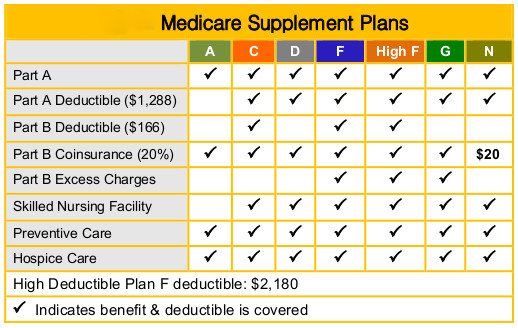
Nationwide, there are 10 standardized Medigap plans to choose from with lettered names, Plan A through Plan N. The term “standardized” means that the coverage and benefits for every Plan F, Plan G, Plan N, etc. are exactly the same no matter what carrier you are with. In other words, Plan G with Anthem Blue Cross is exactly the same as Plan G with Blue Shield of California, etc. Plan G is Plan G, Plan N is Plan N, Plan F is Plan F, etc.

As of January 1st, 2020, Medigap plans purchased by individuals who are turning 65 or who are new to Medicare can no longer cover the Part B deductible, which is currently $240 in 2024. (That amount can change from year to year.) Because of this, Plan C and Plan F aren’t available to people who are new to Medicare on or after January 1st, 2020.

NOTE: If you turned 65 before January 1st 2020 or you were eligible for Medicare before then, you can still get Plan F and Plan C. Those plans just aren’t available for those individuals who turned 65 after January 1st, 2020, etc.

Medigap Plans Are Standardized but Medigap Premiums Are Not Standardized

Although the coverage and benefits for all Medigap plans are standardized, the premiums for these plans are not standardized, and the rates vary significantly from one insurance carrier to another for the same identical plan and coverage.

For example, for a 72 year old female living in Encinitas, CA in the 92024 zip code, Plan G rates currently range from $178 to $280 per month for the same exact plan and coverage! That’s a difference of $102 per month or $1,224 per year! Since the monthly premiums vary significantly between insurance carriers, it’s important to shop around periodically.

The Application Process

Today, almost all Medigap insurance carriers in California use online applications that the agent completes. I work with clients throughout California and in several different states, so it’s not necessary to meet in person. The application process is simple, and it usually takes less than 15 minutes to complete.

In addition to the application, under the California Birthday Rule, most insurance carriers require some kind of proof that you currently have a Medigap plan. A copy of your Medicare Supplement card or a recent bill showing which plan you currently have (Plan G, etc.) is sufficient. Once the application has been submitted, the entire application process normally takes a couple of days to a week to complete since there is no medical underwriting. Underwritten applications usually take longer. After you are approved, you should contact your current Medigap insurance carrier to let them know that you will be canceling your old policy when your new policy begins.

CAUTION – Some Insurance Carriers Are Better Than Others!

In addition to finding an insurance carrier with competitive rates, you also have to be careful to choose a good insurance carrier because not all carriers are the same. Although the coverage and benefits for Medicare Supplement plans are standardized and the same, not all insurance carriers are the same; some are better than others!

For example, some insurance carriers will give you a 12-month rate lock and some don’t. Some have better financial ratings than others. Some will give you up to a 12% household discount if you live with someone else in your household, and some don’t. Some have much better customer service than others. Some have call centers in the US and some are overseas. Some provide free gym memberships and some don’t, etc. Price is important, but there are also other factors to consider when choosing a Medigap plan.

For More Information

As an independent insurance agent, I work with the major insurance carriers in California, Nevada, Arizona, and Washington state. I’m not limited to one particular insurance carrier. I shop around for my clients, every year, to find them the best rates, and I’m happy to shop for you too!

If you have any questions about the California Birthday Rule, etc. or if you would like a free, no-obligation Medicare Supplement quote, please don’t hesitate to let me know. There is no charge for my services as I am compensated by the insurance carriers, not my clients!

My contact information is below, and please click here to check out what my clients have to say about me. If you feel that the information in this blog would be helpful to a friend or family member, please feel free to pass it on and please feel free to add your comments below!

Thank you!

Ron Lewis
CA agent #0B33674
NV agent #3822123

Ron@RonLewisInsurance.com
866.718.1600 (Toll-free)
760.525.5769 (Cell)
www.MedigapShopper.com

Upcoming Medicare Supplement Changes Beginning on July 1st, 2020

As of July 1st, 2020, under Senate Bill No. 407, the California Birthday Rule will be changing. Under the current law, for those individuals that have a Medicare Supplement, also known as Medigap, you can change your current plan to any Medigap plan that offers benefits “equal to or lesser than” your current plan during the 30 days following your birthday each year.

Under the new law, you will have the same opportunity to change plans, but the 30 day period has been extended to 60 days.

July-1st Use

Nationwide, there are 10 standardized Medigap plans to choose from, Plan A through Plan N. The term “standardized” means that every Plan F, every Plan G, every Plan N, etc. has the same exact coverage and benefits no matter what insurance carrier you have your coverage with. In other words, Plan F is Plan F, Plan G is Plan G, Plan N is Plan N, etc. Because Medigap plans are standardized, it is much easier to compare “apples with apples.”

Medigap Plans Are Standardized but Rates Aren’t

Although Medigap plans are standardized, Medigap rates are not standardized, and they vary widely between insurance carriers. For example, in the 92009 zip code in San Diego, for a 72 year old male, Plan G rates range from $165.78 per month to $223.47 per month. That’s a difference of $57.69 per month or $692.28 per year for the same identical plan and coverage!

Medicare-Supplement-Plan-Chart

Medigap rates are based primarily on your age and zip code, and whether you use tobacco or not. In California, rates usually increase every year as we get older. An insurance carrier that has competitive rates this year may increase rates and not be as competitive next year. For this reason, it is very important to take advantage of the California Birthday Rule and shop around every year to make sure that you aren’t paying too much money for your Medigap insurance premiums.

This is a free service that I provide to all of my California clients every year around their birthday.

NOTE: You can change your Medigap plan or insurance carrier any time of the year, but if you do so other than around your birthday, you will have to answer health questions on the application, and your application will be medically underwritten, and you could be turned down for coverage. If you have a serious health condition, you should definitely take advantage of the California Birthday Rule and apply around your birthday. That way, you cannot be turned down for coverage, REGARDLESS OF YOUR HEALTH.

Innovative Medigap Plans Are Also Changing On July 1st

There is another significant change that will be occurring beginning on July 1st under Senate Bill No. 407. Several insurance carriers have recently introduced new “Innovative” Medigap plans that are the same as the standardized plans, but they also include some additional non-medical coverage for such things as hearing and vision.

For example, Blue Shield of California replaced their “standardized” Plan F with a different plan called “Plan F Extra.” Anthem Blue Cross offers two different Plan F Medigap plans, Plan F and “Plan F Innovative,” which also includes some additional coverage for vision and hearing. And Health Net now offers two different Plan F supplements as well, Plan F and “Plan F Innovative.” Blue Shield currently offers two Plan G Medigap plan, Plan G and “Plan G Extra,” and Health Net offers Plan G and and a “Plan G Innovative” plan as well.

As you can see, the recent introduction to these newer innovative plans has made the Medigap marketplace confusing and defeated the purpose of having standardized Medigap plans. It is no longer so easy to compare Medigap plans and benefits because the “extra” and “innovative” benefits are all similar yet slightly different from each other.

The real problem however, is that when someone wants to take advantage of their open enrollment period under the California Birthday Rule, Blue Shield and Anthem Blue Cross do not allow someone with a “regular” Plan F or Plan G to switch to one of their “Extra” or “Innovative” plans. Both of these companies claim that their innovative plans have “richer” benefits, and they do not qualify under the California Birthday Rule.

birthday-rule candles

Furthermore, Blue Shield no longer offers their “regular” Plan F, only their Plan F Extra, so this has prevented anyone with Plan F with a different insurance carrier to switch to Blue Shield’s Plan F during their annual open enrollment period under the birthday rule. And you would think that someone with Blue Shield’s Plan F Extra could switch to Anthem’s Plan F Innovative plan under the California Rule or vice versa around their birthday, but no. Neither carrier will accept these plans during someone’s 30 day open enrollment period because they consider their plans superior to the other carrier’s plan.

NOTE: Health Net has always allowed someone with the “regular” Plan F or Plan G to switch to their Plan F Innovative or Plan G Innovative plans.

As of July 1st, 2020, Blue Shield of California, Anthem Blue Cross, and all insurance carriers are now required to accept any Plan F or Plan G Medigap plans for any of their innovative Medigap plans under the California Birthday Rule! For example, if you have Plan F with Mutual of Omaha, you can now switch to Blue Shield’s Plan F Extra or Anthem’s Plan F Innovative plan under the birthday rule.

Which is Better, Plan F or Plan G?

Many people with Plan F have switched to Plan G because both plans are identical except Plan F covers the Medicare Part B deductible, which is currently $198 per calendar year, and Plan G does not cover the Part B deductible. Other than that, both plans are identical in coverage.

NOTE: The Medicare Part B deductible can change from year to year, but historically, it has never increased significantly.

plan-f-and-plan-g

Since the only difference between Plan F and Plan G is the $198 Medicare Part B deductible, if you can save more than $198 per year on your premiums by switching from Plan F to Plan G, then Plan G ends up being more cost effective.

If you are saving exactly $198 per year, you are breaking even, and you’re better off staying with Plan F. If you are saving $300 or more per year by switching, it will definitely cost you less money by switching from Plan F to Plan G.

NOTE: If you decide to switch from Plan F to Plan G, and you have already met the $198 Medicare Part B deductible for the current year, you would not have to pay that deductible again until the following year.

Conclusion

As of July 1st, 2020, your annual open enrollment period under the California Birthday Rule is increasing from 30 to 60 days after your birthday. Most carriers will let you apply for coverage during the 30 days prior to your birthday, but the effective date of your new policy would normally be the 1st of the month following your birthday. And if you have Plan F or Plan G with another insurance carrier and you want to switch to an “Innovative” plan under the birthday rule with Blue Shield of CA, Anthem Blue Cross,  Health Net, etc., you can now do so.

Since rates vary significantly between insurance carriers for the same identical plan and coverage, it is important to shop around, EVERY YEAR, to make sure that you aren’t paying too much.

As an independent insurance agent specializing in Medicare Supplement (Medigap) insurance, I work with all the major insurance carriers in California and several other states. If you have any questions or if you would like for me to shop around for you to save you money on your Medicare Supplement insurance, please don’t hesitate to let me know.

Ron Lewis
CA Lic# 0B33674
760.525.5769 (Cell)
760.718.1600 (Toll-free)
Ron@RonLewisInsurance.com
www.MedigapExpress.com

How to Use the Medicare.gov Website to Purchase a Prescription Drug Plan

The Medicare open enrollment period just started, and it goes from October 15th through December 7th. During this period, you can choose a Prescription Drug Plan (PDP) that will begin on January 1st, 2016. Many people are confused because they don’t know how to shop around for a PDP. You don’t have to be an “expert” or a rocket scientist to purchase your own PDP. The purpose of this blog is to help you save money on your insurance premiums and find a PDP that is right for you.

IMPORTANT If you decide not to join a Medicare drug plan when you’re first eligible, and you don’t have other creditable prescription drug coverage, and you don’t get Extra Help, you’ll likely pay a late enrollment penalty if you join a plan later.

Medicare SimplifiedAccessing the Medicare.gov Website

If you have access to a computer and the Internet, shopping around for a PDP is really quite easy. If you’re ready to begin, follow these steps:

1.)  Navigate to the Medicare.gov website.

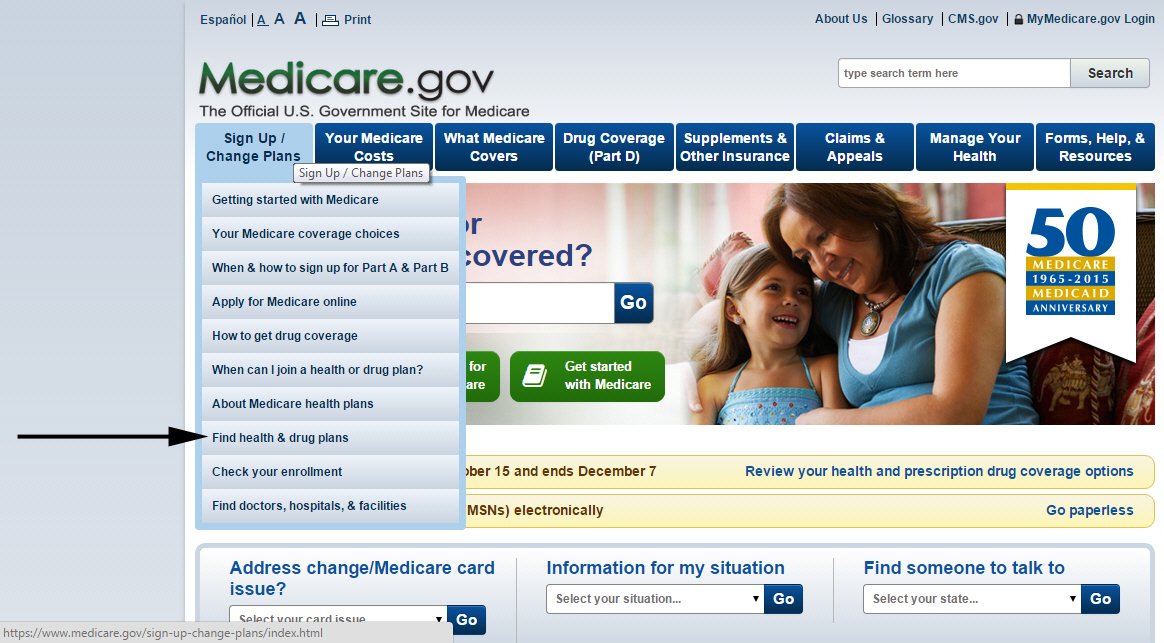
PDP1-0003x2.)  Under the blue tab at the top left-side of page that says Sign Up/Change Plans, click Find health & drug plans.

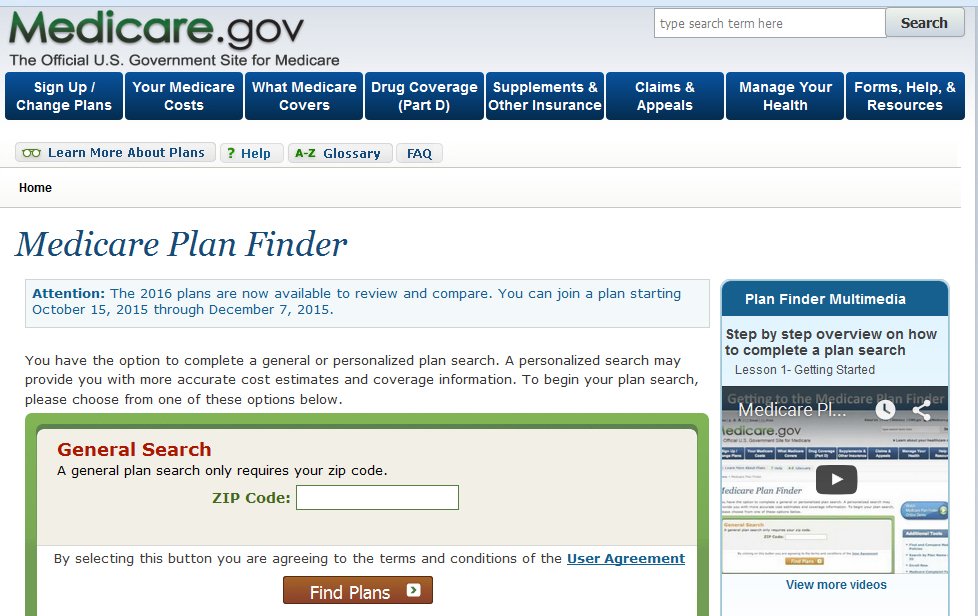
PDP1-0004xThe Medicare Plan Finder page displays.

PDP3-0001x3.)  In the General Search section, enter your zip code and click Find Plans. The Step 1 of 4 page displays.

NOTE If a survey window displays, close it and continue.

PDP1-0007x4.)  In the first section, select Original Medicare, and in the second section, select I don’t get any Extra Help. After that, click Continue to Plan Results. The Step 2 of 4 window displays.

NOTE You can choose other options that are more appropriate for your situation.

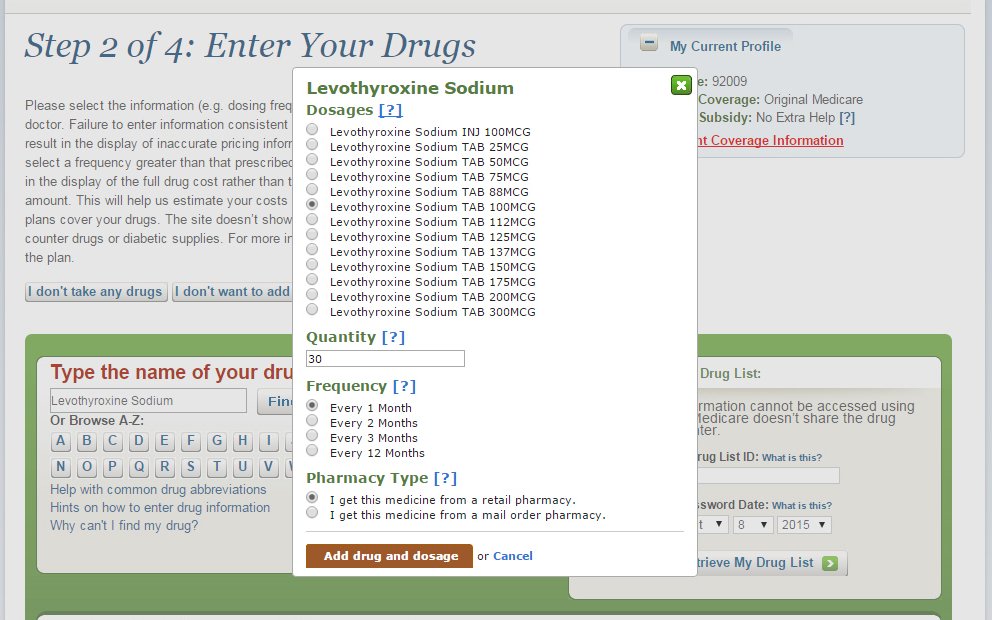
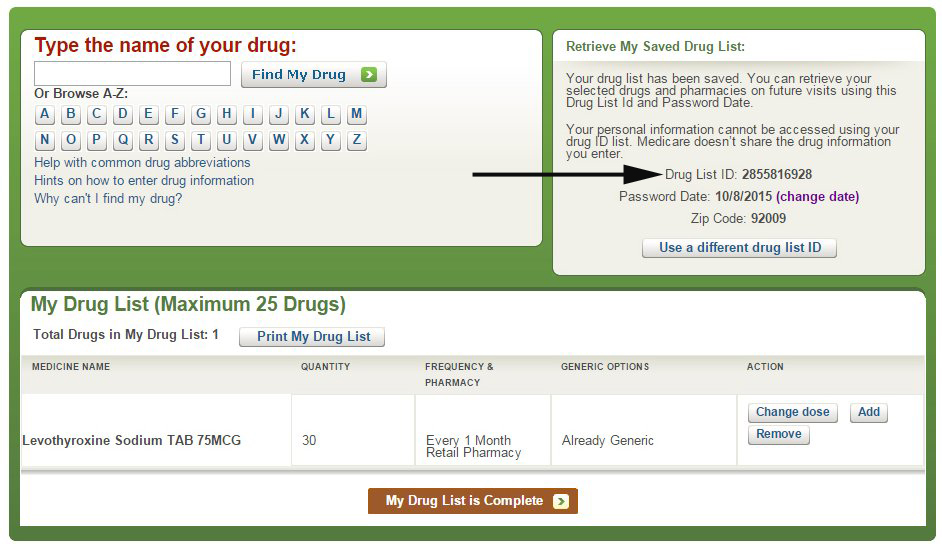
PDP1-0009x5.)  Enter your prescriptions in the text box and choose the appropriate dosages for each. A window, similar to the following, displays.

PDP1-0010x6.)  After you select the appropriate prescription dose, click Add drug and dosage.

NOTE: Continue adding your prescriptions until your prescription drug list is complete. You can add up to 25 prescriptions, and you can see your list in the lower part of the window. You can also choose “mail order pharmacy” to have your prescriptions mailed to you. In some instances, it is more cost effective to do that. If you select “mail order pharmacy,” information for both retail pharmacies and mail order options will display.

7.)  Write down the Drug List ID number AND the Password Date on a separate piece of paper.

NOTE The prescriptions, dosages, etc. that you entered are saved, and you can enter this number and the date later on to retrieve your prescription information instead of reentering it again.

Medigap PDP Window2x8.)  Click My Drug List is Complete when your drug list is complete. The Step 3 of 4 window displays.

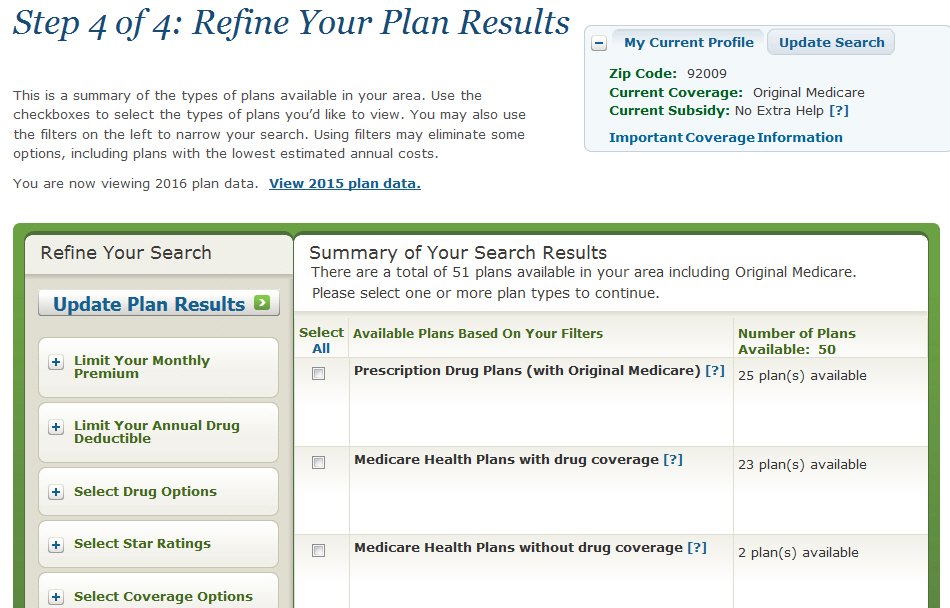
PDP1-0014x9.)  Click Add Pharmacy to add up to two pharmacies, and then click Continue to Plan Results. The Step 4 of 4 window displays.

NOTE You can click the drop-down menu at the top of the page to select from more pharmacies near your zip code.

PDP3-0002x10.)  Click the check box next to Prescription Drug Plans (with Original Medicare), and then click Continue to Plan Results. The Your Plan Results window displays.

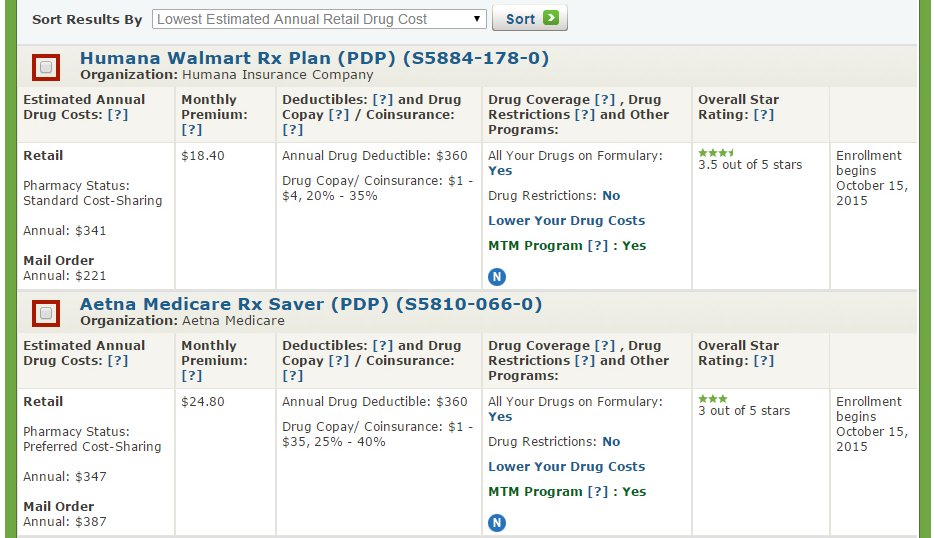
PDP1-0019NOTE By default, the prescription drug plans are sorted from the lowest to highest estimated annual retail drug cost. In the Plan Results window, click View All to see all the plans.

Understanding the Plan Results Window

After you access the Plan Results window, you are ready to evaluate and compare prescription drug plans and decide which plan is best for you.

There are different variables to take into consideration when choosing a PDP. Here are some of the more important ones:

  • Are drugs on the formulary?
  • Drug restrictions
  • Estimated annual drug costs
  • Annual drug deductible
  • Monthly premium
  • Overall star rating of the company

Are Drugs on the Formulary?

If a drug is not on the PDP formulary, that means that the plan does not offer coverage for that specific drug, and you should continue looking at other plans.

Drug Restrictions

If there are drug restrictions, the plan may have certain coverage restrictions (including quantity limits, prior authorization, etc.) on a prescription drug. Although your prescription may have limitations, these limits may not necessarily adversely affect you, and the plan may still meet your needs. For example, if you take 30 pills a month and the plan will cover a maximum of 60 per month, that would not impact you, and the plan is still worth considering.

Estimated Annual Costs

This is an estimate of the average amount you might expect to pay each year for your prescription drug coverage. This estimate includes the following costs:

  • Monthly premiums
  • Annual deductible
  • Drug copayments/coinsurance
  • Drug costs not covered by prescription drug insurance

If you entered your drugs into the Medicare Plan Finder, then this estimate includes the cost of those drugs.

IMPORTANT If your prescriptions are covered by the plan’s formulary and there are no major drug restrictions on the plan, this is the critical piece of information you need to determine which plan you select because it factors in all your premiums, deductibles, co-payments, and miscellaneous drug costs for the entire year. I don’t really factor in the various co-payments of each prescription; the estimated annual costs tell you approximately how much you will spend during the entire year.

Compare the estimated total annual pharmacy and mail order costs between the different plans to determine which plan offers you the best deal for the entire year!

PDP1-0019xNOTE In the previous example, the total retail annual costs for Humana are approximately $341 compared to $221 for the mail order costs. For Aetna, the total retail costs are approximately $347 compared to $387 for the mail order costs. Therefore, in this example, the most cost-effective option is to purchase the Humana PDP and use their mail order service.

If you selected “I don’t take any drugs,” then this amount includes only the cost of the monthly premiums that you would pay for the plan and it does not include any drug costs. If you selected “I don’t want to add drugs now,” then this estimate includes the average drug costs for people with Medicare and may differ depending on your age and health status.

Annual Drug Deductible

Some plans have no annual deductible and others have a maximum annual deductible up to $360 per year. Again, use the estimated annual costs to determine the value of the plan, not just the deductibles, the co-payments, etc.

Monthly Premium

The lowest monthly premium (and deductible) does not necessarily mean that you will be saving the most money. Again, compare the estimated annual drug cost to determine which plan is the most cost effective.

Overall Star Rating of the Company

For plans covering drug services, the overall score for quality of those services covers many different topics that fall into four categories:

  • Drug plan customer service: Includes how well the plan handles member appeals.
  • Member complaints and changes in the drug plan’s performance: Includes how often Medicare found problems with the plan and how often members had problems with the plan. Includes how much the plan’s performance has improved (if at all) over time.
  • Member experience with plan’s drug services: Includes ratings of member satisfaction with the plan.
  • Drug safety and accuracy of drug pricing: Includes how accurate the plan’s pricing information is and how often members with certain medical conditions are prescribed drugs in a way that is safer and clinically recommended for their condition.

If the plan has a low star rating, I would not recommend signing up for it.

Drilling Down a Little Deeper on the Medicare.gov Website

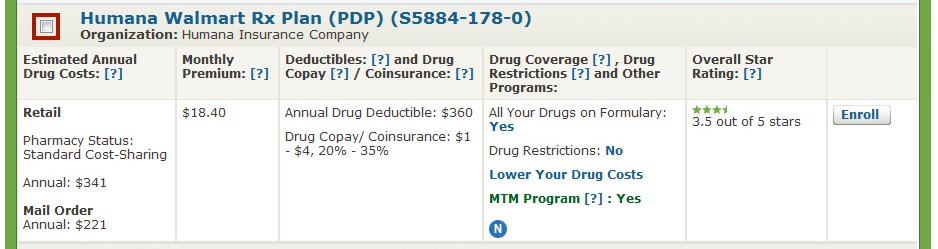
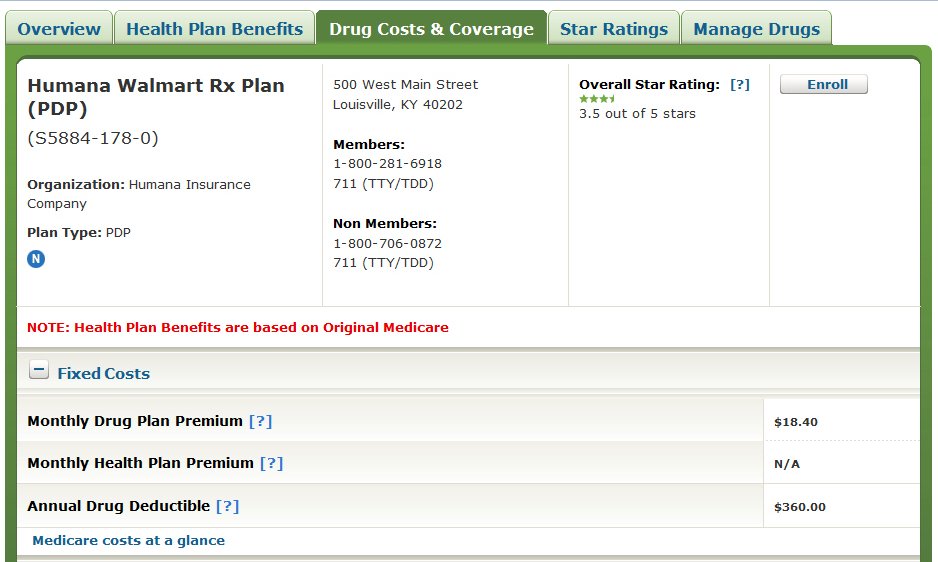
To get more information about a specific plan, click on the name of the plan, which is a hypertext link. In the following example, click Humana Walmart Rx Plan (PDP).

Medigap2-0002a

After you click the name of the plan, a window, similar to the following, displays.

Medigap2-0003a

The previous window shows the phone numbers, for members and non-members.

NOTE  If you have questions about the plan or wish to enroll, you would call the phone number for non-members. For more information, see “Signing Up for a PDP Plan” below.

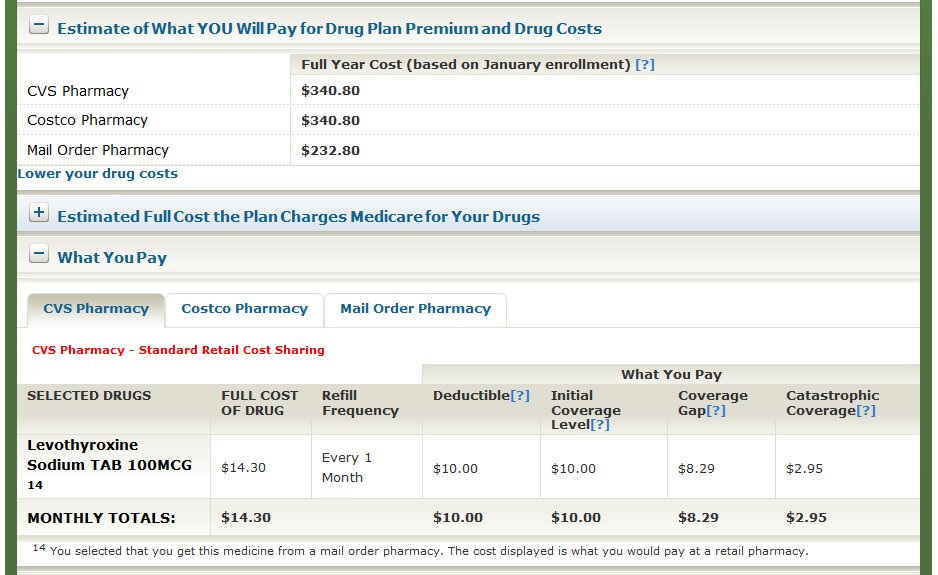
Medigap2-0006a

The previous window shows the estimated monthly totals for prescriptions at CVS Pharmacy.

Medigap2-0007a

The previous window shows the estimated monthly cost (premium and deductible) for prescriptions at CVS Pharmacy.

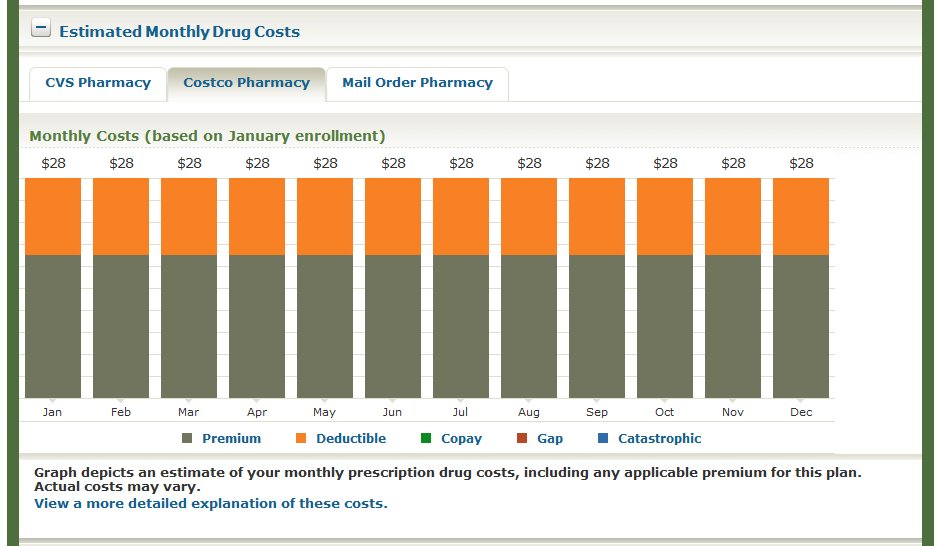
Medigap2-0008a

The previous window shows the estimated monthly cost (premium and deductible) for prescriptions at Costco Pharmacy.

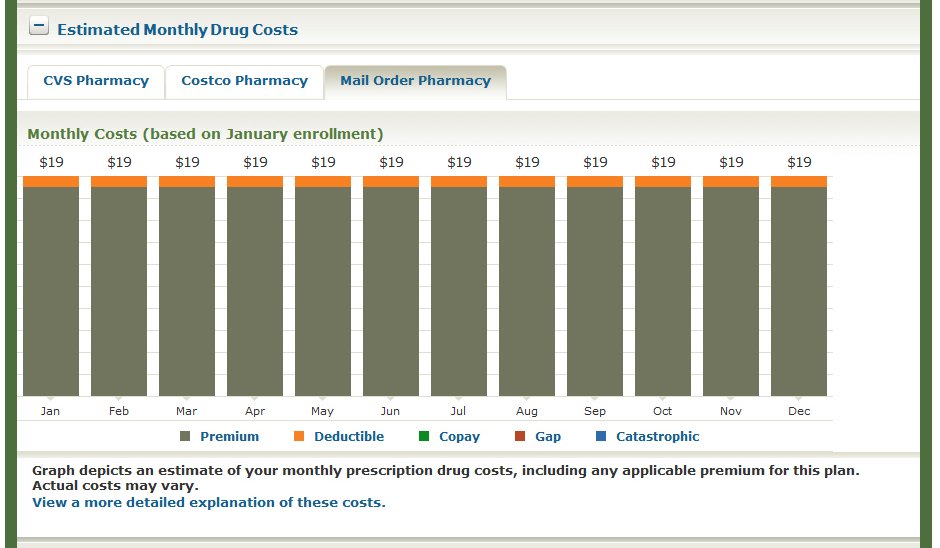
Medigap2-0009a

The previous window shows the estimated monthly cost (premium and deductible) for prescriptions through a mail order pharmacy.

Medigap2-0010a

The previous window shows drug coverage information, such as formulary status and Tier information, for the various prescriptions you entered on the Medicare.gov website.

Signing Up for a PDP Plan

After you have evaluated and compared several prescription drug plans, you are ready to sign up for a PDP on your own.

Follow these steps to sign up for a prescription drug plan:

1.)  From the Your Plan Details window, click on the hypertext name of the plan you are interested in. In the following example, click Humana Walmart Rx Plan (PDP).

Medigap2-0002a

After you click the name of the plan you are interested in, a window, similar to the following, displays.

Medigap2-0003a

2.) Call the toll-free number for non-members, and speak to a representative of the company.

IMPORTANT  If you have questions about the plan or wish to enroll, you would call the phone number for non-members. When you decide to enroll, call the plan and verify that your prescriptions are covered by the plan and that the estimated annual retail pharmacy or mail order drug costs are accurate. You want to make sure that you are interpreting and understanding the information correctly from the Medicare.gov website.

Conclusion

After you go to the Medicare.gov website and play around with it a little, you will find that signing up for a prescription drug plan is really quite easy.

NOTE  If you are having trouble signing up for a prescription drug plan or if you ever have Medicare questions or need help understanding information on the Medicare.gov website, call 1-800-MEDICARE. They are open 24 x 7, and most of the representatives are very helpful.

My primary specialty is Medicare Supplement insurance, but if you have any questions or comments, please feel free to contact me at RonLewisInsurance@yahoo.com.