Why You May Be Better Off Choosing Your Own Medicare Prescription Drug Plan (Part D)

If you’ve ever tried to compare Medicare Prescription Drug Plans (PDPs), also known as Medicare Part D, you know how confusing it can be. There are dozens of options, and each plan has its own list of covered drugs (called a formulary), preferred pharmacies, and cost structure. What looks like a small difference in co-pays or premiums can easily add up to hundreds of dollars over the course of a year.

Why Most Agents No Longer Sell Prescription Drug Plans

You might assume that a licensed insurance agent can help you find the best plan, and in the past, many could. However, today’s system makes that much more difficult. Because of how Medicare’s certification and contracting rules work, most independent agents are not certified with every drug plan available in your area. They can only recommend or enroll you in a limited number of specific plans they are contracted with and certified to sell.

If another company offers a plan with lower co-pays or better coverage for your medications, your agent may not even be allowed to discuss it with you. Why? Because they don’t get paid for selling plans they’re not certified or contracted to represent. Even if they know a different plan would save you money, compliance rules and commission structures prevent them from showing it to you.

The Hidden Time and Cost Burden on Agents

Before an agent can help anyone with a PDP or a Medicare Advantage (MA) plan, they must complete extensive training and certification every year. This starts with the AHIP certification exam, which takes many agents 10–20 hours of study time to complete. The AHIP exam covers topics such as Medicare compliance, plan rules, CMS marketing guidelines, etc.

But that’s only the beginning. Agents must also spend time studying and taking individual certification exams for EVERY insurance company whose plans they want to sell. Each carrier’s certification process is different. Some require several hours of training, testing, and annual renewal. Altogether, a well-rounded agent could easily spend 50+ hours each year just keeping up with certifications before they can even begin helping clients.

Then there are the CMS compliance rules, which now require all sales calls related to PDPs and MA plans to be recorded and stored securely for 10 years! The added administrative burden and potential liability make it even less practical for agents to offer these plans, especially since commissions for prescription plans are typically under $100 per year per client. Many agents have simply decided that it’s not worth the time and effort.

How You Can Shop and Enroll in a Drug Plan On Your Own

Fortunately, Medicare makes it easy for you to shop around on your own and sign up for a prescription drug plan at www.Medicare.gov by using the exact same tool that agents use.

This past year, I put together a short video that explains how to shop for and sign up for a Medicare prescription drug plan using the Medicare Plan Finder tool. It’s actually very easy, and there aren’t any significant changes since last year. Please click here to watch the video.

The Medicare Plan Finder is available 24/7 and it is updated every fall with the latest plan information. It allows you to make an informed decision without pressure or bias, and without worrying whether your agent is certified to sell a particular plan.

Review Your Coverage Each Fall

Even if you’re happy with your current PDP, it’s important to review your coverage each year during the Annual Election Period (AEP), which goes from October 15th through December 7th each year. PDPs are annual contracts, and drug prices, plan premiums, and pharmacy networks can change every year. What’s good this year may not be so good next year.

It only takes about 15 to 20 minutes to shop around and review your PDP options, and it could save you literally hundreds of dollars and ensure you have the right coverage for your specific prescriptions.

The Bottom Line

Most Medicare agents are honest, hardworking professionals who want to help their clients, but the system is stacked against them when it comes to prescription drug plans. Between certification costs, compliance rules, and low commissions, many agents have chosen to focus on Medicare Supplements, Medicare Advantage plans, or other types of insurance products instead.

By learning how to shop for your own prescription drug coverage at Medicare.gov, you can take control of your health care costs, stay informed, and make sure you’re always getting the best prescription drug plan every year.

About the Author

As an independent Medicare Supplement insurance specialist, I work with all the major carriers throughout California, Nevada, and several other states. I shop around for my clients every year during their 60-day annual open enrollment period under the California Birthday Rule to help them save money on their Medicare Supplement premiums. Many of my clients have saved hundreds, even thousands of dollars on the same exact plan and coverage! Please click here to see what my clients have to say about my services.

There is no charge for my services as I’m compensated by the insurance carriers, not my clients. My goal is to help you find the lowest premiums and provide the best personal service possible—year after year. Unlike many agents, I won’t disappear after you sign up!

If you enjoyed this blog and found it helpful, please leave your comments, questions, or feedback below and feel free to share this article with your friends!

Thank you!

Ron Lewis
Ron@RonLewisInsurance.com
www.MedigapShopper.com
(760) 525-5769 – Cell
(866) 718-1600 – Toll-free

How the California Birthday Rule Can Save You Hundreds on Your Medigap Plan — Every Year

Introduction

If you’re a Medicare Supplement (Medigap) policyholder living in California, there’s a little-known benefit that could save you hundreds (or even thousands) of dollars a year and many people don’t even know that it exists. It’s called the California Birthday Rule, and it gives you the right to switch your Medigap plan every year around your birthday, REGARDLESS OF YOUR HEALTH!

IMPORTANT: You can change your Medicare Supplement any time of the year, but if you do it around your birthday, it’s a lot easier because you don’t have to answer any health questions, there’s no medical underwriting, and YOU CAN’T BE TURNED DOWN FOR COVERAGE!

Medigap Plans Are Standardized

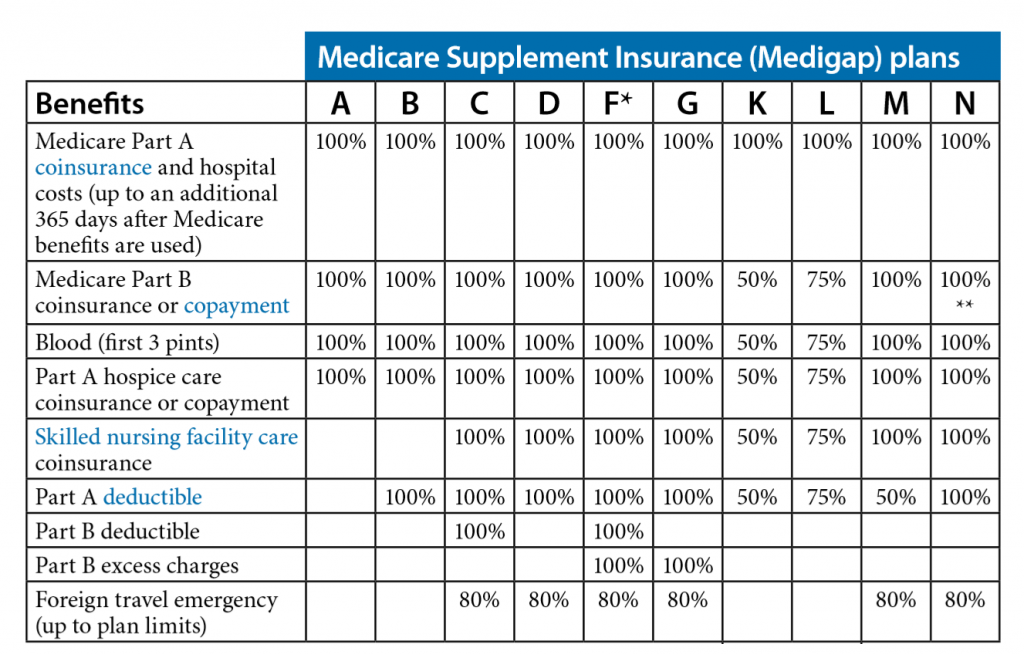
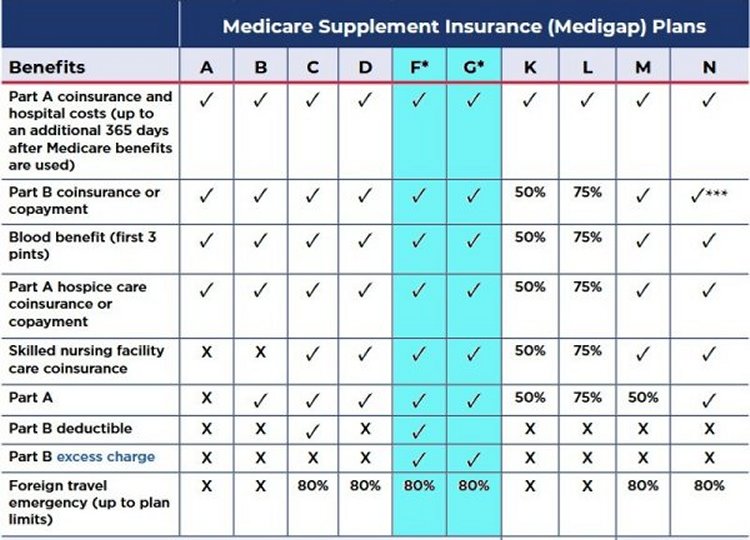
Nationwide, there are 10 standardized Medicare Supplement lettered plans to choose from, Plan A through Plan N. When I say “standardized,” that means that the coverage and benefits for every lettered plan are exactly the same regardless of what insurance carrier you sign up with. In other words, Plan G is Plan G, Plan N is Plan N, etc., regardless of what insurance carrier you are with. So it’s much easier to compare plans since every plan is exactly the same no matter which insurance carrier offers it.

NOTE: Technically, there are actually 12 standardized Medigap plans to choose from because there are high-deductible versions of Plan F and Plan G. In 2025, you will pay a $2,870 deductible before your coverage for either of these plans would begin.

As you can see, the only difference between Plan F and Plan G is the Medicare Part B deductible.

Which Medigap Plan is Best?

For those who are turning 65 or starting Medicare today, the best and most comprehensive Medigap plan is Plan G, which pays for everything except for the Medicare Part B deductible. The current annual Part B deductible (in 2025) is $257. That amount can change from year to year, but historically, it hasn’t changed by much.

Medicare Access and CHIP Reauthorization Act of 2015

Due to the Medicare Access and CHIP Reauthorization Act of 2015 (MACRA), Medigap Plan C and Plan F were discontinued for new Medicare beneficiaries starting on January 1st, 2020. This legislation eliminated the availability of Medigap plans that cover the Medicare Part B deductible for individuals who became eligible for Medicare on or after that date. However, Plan C and Plan F are still available for people who were eligible for Medicare before 2020 or who already have one of those plans. They just aren’t available for those individuals that turned 65 or started Medicare on or after January 1st, 2020.

Let’s look at a common example of how switching under the Birthday Rule can save you money.

Why Plan G is More Popular Than Plan F

If you have a Plan F Medicare Supplement, you’re probably paying more than you need to. It’s usually much cheaper and more cost effective to switch to Plan G because both plans are identical in coverage except for the Medicare Part B deductible, which is $257 in 2025. Plan F covers that small deductible, while Plan G does not. That is the only difference between the two plans, yet the premiums for Plan F are usually significantly higher.

Even though Plan F covers that $257, it often costs $400–$1,000 more per year in premiums than Plan G, so in most cases, you’d save money by paying the lower monthly premium for Plan G and just covering that $257 deductible yourself.

IMPORTANT: If you can save more than $257 per year by switching from Plan F to Plan G, then Plan G is cheaper and more cost effective.

For example, if your Plan F premium is $250 per month and you can get Plan G for $200 per month, that’s a gross savings of $50 per month or $600 per year. If you pay the $257 on your own, your net savings will still be $343 per year ($600 – $257 = $343)! The Medicare Part B deductible is payable only one time per calendar year, so after you pay that small deductible, there is absolutely no difference between Plan F and Plan G for the remainder of the year!

NOTE: If you have Plan F and you switch to Plan G, if you’ve already met your $257 Part B deductible, you won’t pay it again until the following year since that small deductible is payable only one time per calendar year.

What Is the California Birthday Rule?

The California Birthday Rule is a special California state law that allows active Medigap policyholders in California to switch to a new Medigap plan with “equal or fewer” benefits every year around their birthday without medical underwriting during a 60-days following their birthday.

NOTE: In California, most carriers accept applications from 30 days before your birthday up to 60 days after your birthday, a 91-day window to switch Medigap plans without medical underwriting.

Most states don’t have a birthday rule, and if you develop a serious health condition, you could be stuck with your current health insurer and Medigap plan. But thanks to the California Birthday Rule, you have a guaranteed open enrollment period every year to shop around and save money on your premiums without worrying about being stuck or declined.

What Does Equal or Fewer Mean?

Again, under the birthday rule, you can switch to any Medigap plan that offers “equal or fewer” benefits than your current plan. In other words, you can switch from your current Medigap plan to any other Medigap plan that offers benefits that are the same or less comprehensive than what you currently have.

For example:

  • You cannot upgrade to a plan with more benefits (such as Plan N to Plan G).
  • You can switch to a plan with the same level of benefits (such as Plan G to another Plan G with a different carrier).
  • You can downgrade to a plan with fewer benefits (such as Plan F to Plan G, Plan G to Plan N, etc.).

This rule exists to prevent people from waiting until they are sick to “upgrade” to more generous coverage. However, it does give you freedom to shop around for lower prices on the same or lesser coverage without worrying about health questions or being declined.

Examples of “Equal or Fewer”

  • If you have Plan F, you can switch to Plan F with a different insurance carrier or to Plan G, Plan N, etc.
  • If you have Plan G, you can switch to Plan G with another insurance carrier or to Plan N, etc.
  • If you have Plan N, you can switch to Plan N with a different insurance carrier or to Plan A, etc.

Even if you’re not sure whether your current plan is the best deal, you can always switch to the same plan with a different insurance carrier during your birthday rule window, often saving hundreds and sometimes thousands of dollars per year without changing any of your benefits.

What States Have a Medigap Birthday Rule?

Today, more states are slowly adding their own birthday rules. Here is a current list of states that have a Medicare birthday rule:

  • California
  • Illinois
  • Idaho
  • Kentucky
  • Louisiana
  • Maryland
  • Nevada
  • Oklahoma
  • Oregon
  • Utah
  • Virginia
  • Wyoming

States with Year-Round Guaranteed Issue or Open Enrollment Rights

These states don’t have a Medicare birthday rule, but they offer year-round guaranteed issue or open enrollment periods without underwriting:

  • Connecticut
  • Maine
  • Missouri
  • New York
  • Washington

Do Most People Use the Birthday Rule?

Surprisingly, no! Many people don’t know this rule exists and they stay on overpriced Medigap plans for years thinking they’re stuck because of health issues, etc. If you take advantage of the birthday rule each year, you can keep your premiums under control and avoid being overcharged.

Rates Vary Significantly Between Insurance Carriers

As mentioned before, Medigap plans are “standardized” meaning that Plan G is Plan G, Plan N is Plan N, etc. The coverage and benefits for every Plan G, etc. are exactly the same regardless of what insurance carrier you are with. However, the rates between insurance carriers are not standardized. Every insurance carrier charges their own rates.

For example, right now in the 92024 zip code (San Diego), the Plan G rates for a 70 year old single female range from $217.78 to $319.79 per month! That’s a difference of $102.01 per month or $1,224.12 per year for the same identical plan and coverage!

NOTE: Several years ago, one of my clients, a husband and wife, moved to San Diego from Los Angeles. They were paying $809.00 per month for Plan G with United American, and I got them Plan G with Mutual of Omaha for $367.01 per month, which was a savings of $441.99 per month or $5,303.88 per year for the save identical plan and coverage! Rates are based primarily on age and zip code, and they are constantly changing. It‘s critically important to shop around every year!

How to Apply and Save Money!

To take advantage of the California birthday rule, you must do the following:

  • Live in California
  • Have an active Medigap plan
  • Switch to a Medigap plan with “equal or fewer” benefits
  • Apply during the 30 days before up to 60 days after your birthday
  • Email me at Ron@RonLewisInsurance.com or call me at 760.525.5769 (cell) or 866.718.1600 (toll-free) for a free quote or to switch plans

It only takes a few minutes to apply and there is never a charge for my service!

Conclusion

If you currently have a Medigap plan, you can change your plan every year around your birthday, REGARDLESS OF YOUR HEALTH! If you apply during your annual 60-day open enrollment period under the California Birthday Rule, YOU CANNOT BE TURNED DOWN FOR COVERAGE!

As an independent insurance agent specializing in Medicare Supplements, I work with all the major insurance carriers, not just one. (A “captive” insurance agent can only represent one insurance carrier.) I will do the shopping for you and find you the best rates, not just this year, but I shop around for all my clients every year around their birthday! The monthly premiums are exactly the same whether you let me do the shopping for you to save you money on your premiums or if you contact an insurance carrier directly! Please visit Client Testimonials to read what some of my clients have to say about me.

Call, text, or email me today, and I’ll help you review your options in just a few minutes with no pressure or obligation. Let me help you save hundreds, or even thousands of dollars, on the exact same Medigap plan you already have. Won’t that be a nice birthday present?

If you liked this blog and found it informative, please click the “Like” button, and please send me your questions, comments, or feedback! And please feel free to share this article with your friends!

Thank you!

Ron Lewis
Ron@RonLewisInsurance.com
www.MedigapShopper.com
(760) 525-5769 – Cell
(866) 718-1600 – Toll-free

2019 Medicare Deductibles, Coinsurance, and Out-Of-Pocket Limits

The new 2019 Medicare deductibles, coinsurance, and out-of-pocket limits were recently released, and they go into effect on January 1st, 2019.

January 2019

Medicare Part A (Hospital Insurance)

  • Part A Deductible: This deductible is increasing $24 to $1,364 per benefit period.
  • Part A Coinsurance: Inpatient Hospital Care (Days 61-90). Increasing $6 to $341 per day.
  • Lifetime Reserve Coinsurance: Inpatient Hospital Care (Days 91-150). Increasing $12 to $682 per day.
  • Skilled Nursing Facility (SNF) Coinsurance: (Days 21 through 100) Increasing $3 to $170.50 per day.

NOTE: A benefit period begins on the first day you receive service as an inpatient in a hospital and ends after you have been out of the hospital and not received skilled care in any other facility for 60 days in a row. This is not an annual deductible; there can be multiple benefit periods (up to six) in a calendar year!

Medicare Part B (Medical Insurance)

  • Part B Annual Deductible: Increasing $2 to $185 per year.

NOTE: For those of you with a Plan G Medicare Supplement (also known as Medigap because it picks up the gap in coverage not covered by Medicare), Plan G is identical to Plan F with the exception of the Part B deductible. Once this deductible has been met, Plan F and Plan G are exactly the same. If you are saving more than $185 per year on your premiums by switching from Plan F to Plan G, then Plan G ends up costing less than Plan F.

Medicare Supplement Plan-Specific Deductibles and Out-of-Pocket  Limits

  • High Deductible Plan F Annual Deductible: Increasing $60 to $2,300 per calendar year.
  • Plan K Annual Out-of-Pocket Limit: Increasing $320 to $5,560 per calendar year.
  • Plan L Annual Out-of-Pocket Limit: Increasing $160 to $2,780 per calendar year.

Part D Prescription Drug Plans

The new 2019 Part D deductible is $415 once a year.

How Do These Changes Affect My Medicare Supplement?

If you have a Medicare Supplement, your benefits are automatically adjusted every year to cover the new deductibles, co-payments, and coinsurance amounts in 2019.

Do You Have a Medicare Supplement Plan?

If you have a Medicare Supplement plan, contact me for a free quote! As an independent insurance agent, I work with all the major insurance carriers, and more than likely, I can save you hundreds of dollars on your Medicare Supplement premiums for the same exact plan and coverage!

If you have any questions or comments, please let me know!

Thanks!

Ron Lewis

Ron@RonLewisInsurance.com
www.MedigapExpress.com

Why You Should Replace Your Medicare Advantage Plan with a Medicare Supplement

The Annual Enrollment Period (AEP), which is from October 15th through December 7th each year, is almost here!

If you currently have a Medicare Advantage (MA) plan, you should switch back to Original Medicare and get a Medicare Supplement plan instead!

IMPORTANT: If you have a Medicare Supplement plan (aka “Medigap” because it picks up the “gap” in Medicare coverage) the AEP does not apply to you unless you want to enroll in or change your Prescription Drug Plan (PDP).

Why Medicare Supplement Plans Are Better

With Original Medicare (Part A and Part B) and a Medicare Supplement, you have much more freedom of choice and lower costs than you do with an MA plan!

NOTE: Medicare Part A is hospital insurance and Part B is medical insurance.

Which Plan Gives You the Most Freedom?

With an MA plan, you are locked into the plan’s network of doctors, specialists, hospitals, and care facilities. If you want to see a specialist, you often have to see your preferred care provider first, who acts as a gatekeeper, before you can see a specialist within your network. If you want to see a specialist or doctor that is outside of your network, good luck! That will cost you a lot more in out-of-pocket (OOP) costs.

gatekeeper_

With a Medicare Supplement plan, you can go to ANY doctor, specialist, hospital, or care facility in the US as long as they accept Medicare!

For example, the MD Anderson Cancer Treatment Center in Texas accepts Medicare and therefore, they accept ALL Medicare Supplement plans. They don’t, however, accept most MA plans!

Which Plan Has Lower Out-Of-Pocket Costs?

With an MA plan, your OOP costs can be as high as $6,700 per calendar year and even higher if you go to doctors and/or care facilities that are outside of your network! With a Plan F or Plan G Medicare Supplement (the two best Medigap plans), the most you would normally pay in OOP costs in a calendar year is either $0 with Plan F or $183 with
Plan G!

out of pocket costs

NOTE: The $183 is the Medicare Part B (Medical) deductible, which is $183 per calendar year in 2017. That amount can change from year to year, but historically, it has always been very stable.

Maximum Out-Of-Pocket Costs for MA Plans in San Diego

The following data was obtained from the Medicare.gov website and shows the current OOP costs for MA plans in the 92009 zip code in San Diego. These costs currently range from $3,300 to $6,700 per calendar year!

If you go out-of-network with your MA plan, your OOP costs will be even higher!

Current (in-network) Maximum OOP Costs for MA Plans in the 92009 Zip Code:

  • AARP MedicareComplete SecureHorizons Essential (HMO) – $4,900
  • AARP MedicareComplete SecureHorizons Plan 4 (HMO) – $3,400
  • AARP MedicareComplete SecureHorizons Premier (HMO) – $4,300
  • AARP MedicareComplete SecureHorizons Value (HMO) – $5,300
  • Aetna Medicare Choice Plan (PPO) – $6,000
  • Aetna Medicare Select Plan (HMO) – $3,400
  • Anthem MediBlue Coordination Plus (HMO) – $6,700
  • Anthem MediBlue Plus (HMO) – $3,400
  • Blue Shield 65 Plus (HMO) – $3,400
  • Brand New Day Classic Care Drug Savings (HMO) – $3,400
  • Brand New Day Classic Choice for Medi-Medi (HMO) – $6,700
  • Care1st AdvantageOptimum Plan (HMO) – $3,400
  • Coordinated Choice Plan (HMO) – $6,700
  • Health Net Healthy Heart (HMO) – $3,400
  • Health Net Seniority Plus Sapphire (HMO) – $6,700
  • Health Net Seniority Plus Sapphire Premier (HMO) – $6,700
  • Humana Gold Plus H5619-016 (HMO) – $4,900
  • Humana Value Plus H5619-037 (HMO) – $6,700
  • Kaiser Permanente Senior Advantage San Diego (HMO) – $4,900
  • Scripps Classic offered by SCAN Health Plan (HMO) – $3,400
  • Scripps Plus offered by SCAN Health Plan (HMO) – $6,700
  • Scripps Signature offered by SCAN Health Plan (HMO) – $4,000
  • Sharp Direct Advantage Gold Card (HMO) – $3,400
  • Sharp Direct Advantage Platinum Card (HMO) – $3,300
  • Sharp SecureHorizons Plan by UnitedHealthcare (HMO) – $3,400

In contrast, in a calendar year, your maximum OOP costs are either $0 with a Plan F Medicare Supplement or $183 with a Plan G Medicare Supplement!

Is Your MA Plan’s Maximum OOP Costs Really No More Than $6,700 Per Year?

If you stay within your MA plan’s network, your maximum OOP costs are not supposed to be more than $6,700 per calendar year. However, if you go outside of the plan’s network, your OOP costs can be significantly higher than that!

Suppose that you get really sick and need expensive treatment such as Chemotherapy, etc. in the second half of the year. You could end up paying up to $6,700 (or whatever your plan’s maximum OOP cost is) by the end of the calendar year and guess what? Your OOP maximum zeros out in January, and it starts all over again!

If you are still receiving expensive medical care in the beginning of the year, you could potentially end up paying your maximum OOP cost two different times in a
12-month period! For example, if your maximum OOP cost is $6,700, your total OOP cost in a 12-month period, not a calendar year, could be more than $13,400!

Which Plan Has Lower Co-Payments?

If you have an MA plan, you will make a co-payment almost every time you go to the doctor, see a specialist, a physical therapist, etc. With most Medicare Supplement plans, there are no co-payments for doctor’s visits, etc.

Co Payment

How Difficult is it to Switch From an MA Plan to Original Medicare and a Medicare Supplement Plan?

That depends if you are in a Special Enrollment Period (SEP).

Special Enrollment Period

If you currently have an MA plan, and you are in a SEP, you can switch to Original Medicare and to any six of the 10 “standardized” Medicare Supplement plans any time of the year, REGARDLESS of your health.

The six “guaranteed issue” Medicare Supplement plans are plans A, B, C, F, K, and L. In other words, if you are in a SEP, you are guaranteed the right to get a Plan F Medicare Supplement, but not a Plan G supplement, etc.

NOTE: You could apply for Plan G, but you would be medically underwritten, and you could be turned down for certain medical conditions.

The 10 Standardized Medicare Supplement Plans

Nationwide, there are 10 “standardized” Medicare Supplement plans to choose from (Plans A through N). The term “standardized” means that the benefits and coverage for every Plan F, Plan G, etc. is exactly the same with every insurance carrier. Unlike MA plans, which are not standardized, it’s much easier to compare “apples with apples” with Medicare Supplement plans.

Medicare Supplement rates are not standardized. They vary significantly between insurance carriers. For that reason, it’s very important to shop around every year!

2017-Medicare-Supplement-Chart

NOTE: In the preceding chart, notice that the only difference between Plan F and Plan G is the $183 per calendar year Part B deductible.

SEP Situations

Here are some SEP situations that would guarantee you the right to switch back to Original Medicare and a Medicare Supplement plan:

  • The plan is leaving the Medicare program or stops service in your area.
  • You move out of the plan’s service area.
  • You leave the plan because the company has not followed certain rules or has misled you.
  • You decide to switch to Original Medicare within the first year of joining an MA plan when first eligible for Medicare Part A at age 65.

If you are in one of these situations, you cannot be turned down for Medicare Supplement insurance coverage, regardless of your health!

If You Are Not In a Special Enrollment Period

If you are not in a SEP, you will have to wait until the AEP (between October 15th and December 7th) to switch back to Original Medicare (Part A and Part B) on January 1st of the following year.

Although you can switch back to Original Medicare, there is no guarantee that you will be able to get a Medicare Supplement plan because you will be medically underwritten, and you must be in relatively good health to qualify for a Medicare Supplement plan.

If You Have Serious Health Conditions, You May Not Be Able to Get a Medicare Supplement Plan!

If you are not in a SEP and you are coming off of an MA plan during the AEP, you would normally have to meet minimum underwriting requirements to qualify for a Medicare Supplement plan, and you could be turned down for coverage.

If you live in California and you have serious health issues, more than likely, I can still get you a Medicare Supplement without having to answer any medical questions on the application! Call me for more details!

The Pros and Cons of MA Plans and Medicare Supplement Plans

Is there really an advantage to having a Medicare Advantage plan? Let’s take a look at the pros and cons of each, and you can decide for yourself.

Pros-and-Cons-of-Alternative-Lending

MA Plan Advantages

Here are some benefits of having an MA plan:

  1. MA premiums can be very low, and some plans have no monthly premiums at all.
  2. Some MA plans include Medicare prescription drug coverage (Part D).
  3. Maximum OOP costs are “limited.” Plans vary, but in 2017, the most you can pay in OOP costs is $6,700 per calendar year. (I wouldn’t really call this a “benefit” since $6,700 is a lot of money! With a Plan F Medicare Supplement, you won’t pay any OOP costs!)
  4. Some MA plans offer additional benefits such as vision, hearing, dental, and other health and wellness programs. (Note that some Medicare Supplement plans also offer additional benefits such as free gym memberships, vision, and hearing aid benefits.)

Medicare Supplement Plan Advantages

Here are some benefits of having a Medicare Supplement plan:

  1. You have much more FREEDOM of choice with a Medicare Supplement than you do with an MA plan because you can go to ANY doctor, hospital, specialist, or care facility in the United States as long as they accept Medicare. (You can’t do that with an MA plan.)
  2. You have much for financial stability with a Medicare Supplement than an MA plan because there are no unexpected spikes in costs and OOP expenses for co-payments, hospitalizations, surgeries, chemotherapy, etc.
  3. With a Plan F or Plan G Medicare Supplement, other than your premiums, your maximum OOP costs in a calendar year will be either $0 (Plan F) or $183 (Plan G) per calendar year in 2017. With an MA plan, your maximum OOP costs can be as high as $6,700 per calendar year!
  4. Chemotherapy is very expensive. With an MA plan, you have to pay the entire 20% Medicare Part B co-payment for chemotherapy, which can cost thousands of dollars. With a Plan F or Plan G Medicare Supplement, the most you will pay for Chemotherapy is either $0 (Plan F) or $183 (Plan G)!
  5. You are not limited to a specific geographic region or a restrictive network of doctors, hospitals, specialists, care facilities, etc. like you are with an MA plan. With most MA plans, you must use their providers or you may pay more or all of the costs if you go out of their network.
  6. With a Medicare Supplement, you can go directly to the specialist of your choice, ANYWHERE in the United States, as long as they accept Medicare. With most MA plans, you must go through your primary care doctor first (the “gatekeeper”) before you can see a specialist within your network.
  7. There are no HMO or PPO plans or networks with Medicare Supplements. If you have an MA plan and you go to a doctor, other health care provider, facility, or supplier that doesn’t belong to the plan’s network for non‑emergency or non-urgent care services, your services may not be covered, or your costs could be higher.
  8. If you want to go to a renowned treatment center such as the MD Anderson Cancer Treatment Center in Texas, you can do so with any Medicare Supplement, as long as they accept Medicare. You can’t do that with most MA plans.
  9. If you move to another part of the country, you can keep your Medicare Supplement, but you cannot keep your MA plan if you move out of your network.
  10. There are only 10 “standardized” Medicare Supplement plans to choose from, (Plan A through Plan N). Since Medicare Supplements are standardized, the coverage and benefits for every Plan F, Plan G, etc. is exactly the same with every insurance carrier, so it’s much easier to shop around and compare “apples with apples.” MA plans are not standardized, and the co-payments, deductibles, out of pocket costs, etc. vary significantly between MA plans, and they change every year making them unnecessarily complicated and confusing.
  11. Your Medicare Supplement plan cannot be cancelled as long as you pay your premiums. MA plans are annual contracts, and they can be cancelled or benefits changed at the end of each calendar year.
  12. There are no provider networks with Medicare Supplements. With MA plans, providers can join or leave a plan’s provider network anytime during the year meaning that you could have to start shopping around for a new doctor while simultaneously undergoing Chemotherapy or other specialized medical treatments.
  13. There is no AEP for Medicare Supplements, and you don’t have to shop around every year and make sure that your coverage, co-payments, co-insurance, deductibles, and benefits haven’t changed since the previous year. If there are any Medicare changes from one calendar year to the next, your Medicare Supplement will automatically pay the difference.
  14. You can travel around the US for as long as you want (or even move to a different geographic location), and your Medicare Supplement cannot be cancelled for leaving your “service area.” With most MA plans, if you travel outside of the MA plan’s service area for more than six months, you could be disenrolled from the plan.
  15. With most Medicare Supplements, there are no co-payments when you go to the doctor. With most MA plans, you have to pay co-payments when you go to the doctor.
  16. With Medicare Supplements, pre-certification is not required for surgeries, etc. as long as the procedure is “medically necessary.” With most MA plans, pre-certification is required for surgeries or before getting expensive treatments.
  17. You can switch Medicare Supplement plans or insurance carriers any time of the year as long as you meet minimum health and underwriting requirements. With an MA plan, you can only join or leave an MA plan during the AEP. Otherwise, you are locked into your plan for the entire calendar year, except for certain circumstances, such as moving out of your plan’s service area, etc.)

As you can see, you are much better off with a Medicare Supplement plan than you are with a Medicare Advantage plan!

Conclusion

If you currently have a Medicare Advantage (MA) plan, you have given up your Original Medicare rights that you have worked so hard for, and you are compromising your freedom to go to the best doctors, hospitals, specialists, neurosurgeons, care facilities, etc. in the United States.

I would strongly urge you to switch back to Original Medicare and get a Medicare Supplement plan during the upcoming AEP, between October 15th and December 7th)! Contact me TODAY for more information or a free quote!

As an independent insurance agent specializing in Medicare Supplements, I work with ALL of the major insurance carriers, not one particular company. I will shop around for you, every year, and save you money on your Medicare Supplement insurance!

If you live in California and you have a serious medical condition, more than likely, I can still get you a Medicare Supplement at a competitive price without answering any of the health questions on the application!

I hope that you have found this article to be helpful and informative. Please feel free to forward this article to anyone who may be interested.

Your comments and feedback are appreciated! If you have any questions, please contact me… I’m always happy to help!

Thank you!

Ron Lewis
www.MedigapExpress.com
Ron@RonLewisInsurance.com
866.718.1600 (Toll-free)

Medicare Supplements – Why Pay Wholesale When You Can Pay Retail?

Yes, you read the title correctly. When it comes to Medicare Supplement plans, which are also known as Medigap plans because they pay for the “gaps” in coverage that are not paid for by Medicare, some of my clients prefer to pay retail instead of wholesale! That’s right, “Why pay less when you can pay more?”

retail

Most people that I meet are very happy to save a lot of money on their insurance premiums, but there are always some that really don’t seem to care. Or maybe they are skeptical because it just “seems too good to be true,” which I can totally understand.

A Tale of Two Cities, I Mean Two Clients…

I was working with two different clients yesterday, Client “A” and Client “B.”

two clients

Client “A”

Client “A” has Plan F with Blue Shield of CA, and his monthly premium is $279 per month. I shopped around for him and found several other insurance carriers that are offering Plan F at much lower rates. The lowest rate that I found for him is $179.33 per month. That is a savings of $99.67 per month or $1,196.04 per year for the same identical plan and coverage!

Many people who have Plan F have been switching to Plan G because both plans are identical except there is no deductible with Plan F, and there is a small $166 (Part B) deductible with Plan G. That is the only difference between the two plans!

However, Plan G is usually much more cost effective (cheaper) because the rates are lower. So even if you pay the $166 deductible, in most cases, you still end up spending much less money with Plan G than Plan F.

In addition to getting the current Plan F rates for Client “A,” I also provided him with the current Plan G rates for comparison. If he switched from Plan F to Plan G, he would have saved even more money! The best Plan G rate is $156.70 per month. That would be a gross savings of $122.30 per month or $1,467.60 per year! If he spent the $166 deductible, his net savings would still be $1,301.60 per year! In this particular case, Client “A” would have saved even more money by switching from Plan F to Plan G.

Inexplicably, Client “A” decided to keep his current plan for another year!

Client “B”

Client “B” also has Plan F with Blue Shield of CA, and her rate is $219 per month. I shopped around for her and, like Client “A,” I found several other insurance carriers that are also offering Plan F at much lower rates. The lowest rate that I found for Client “B” is $170.99 per month. That is a savings of $48.01 per month or $576.12 per year for the same identical Medicare Supplement plan and coverage!

Client “B” also had the option to switch from Plan F to Plan G, and again, she would have saved even more money on her premiums by doing so. Her current Plan F rate is $219 per month, and the best Plan G rate for her is $147.19 per month. That would be a gross savings of $71.23 per month or $854.76 per year! If she spent the entire $166 deductible, her net savings per year would still be $688.76 per year!

Just like Client “A,” Client “B” also decided to keep her current plan for another year!

Some Common Misconceptions

It’s very baffling to me when I can literally save someone hundreds and even thousands of dollars a year on their premiums for the same exact plan and coverage, and for whatever reason they are not interested in doing so.

If my auto and homeowner’s insurance agent told me he could save me $100 a month on my premiums, I would be thrilled to be able to save that much money. I guess that some people just aren’t as happy about saving money as I am!

Save-Money

Misconception #1 – By Switching Medigap Plans, I Won’t Be Able to Go to the Same Doctors

Some people are reluctant to change Medigap plans because they are afraid that they won’t be able to continue seeing the same doctors. This is a misconception because you can go to ANY doctor or hospital in the US with your Medicare Supplement as long as the doctor or hospital accepts Medicare. If your doctor accepts your current Medicare Supplement plan, then they have to accept ANY Medigap plan or insurance carrier that you have, PERIOD.

Misconception #2 – The Rates Are Too Good to Be True

If the new rates are significantly lower than the current plan, some people think it’s either too good to be true or a huge rate increase is soon to follow. This is also a misconception because most of the carriers that I work with lock in their rates for the first 12 months, so there wouldn’t be any unexpected rate increases.

Misconception #3 – My Coverage Will Not Be the Same

Another common misconception is that the coverage will not be the same, even if someone is switching from Plan F to Plan F or Plan G to Plan G, etc. There are 10 “standardized” plans to choose from, Plan A through Plan N. This means that the coverage for every standardized plan is exactly the same with every insurance carrier. So if someone has Plan F with Blue Shield and they want to switch to Plan F with Mutual of Omaha, etc., the coverage is exactly the same. Plan F is Plan F is Plan F…Period!

One of the other reasons people don’t want to switch their Medicare Supplement plan is because they fear change. “Everything has been going great so far. Even though the rates are cheaper and the coverage is the same, why take a chance by going with a different carrier?”

If you decide to switch carriers, the transition is seamless. Your coverage with the first insurance carrier will end at the end of the month, and the new coverage begins on the 1st of the following month. There are no forms or paperwork to fill out. When you go to the doctor after your new coverage begins, they will make a copy of your new Medicare Supplement card, and after that, everything will be the same as before.

The California Birthday Rule

In California, there is a law called the California Birthday Rule. If you have a Medicare Supplement, you are lucky to live in California for more reasons than just the beautiful weather and the great beaches!

happy-birthday

This law guarantees you the right to switch insurance carriers, EVERY YEAR, within 30 days of your birthday (before or after) REGARDLESS OF YOUR HEALTH and without answering any health questions on the application! This is known as your annual open enrollment period. If another insurance carrier is offering the same plan that you currently have, or if they are offering another plan that has fewer benefits, you are guaranteed the right to switch carriers every year if you want to, and you cannot be turned down due to health reasons.

For example, if you have Plan F and another carrier is offering Plan F for a lower rate, you are guaranteed the right to switch to the other carrier every year around your birthday, without answering any health questions on the application. Likewise, you are guaranteed the right to switch to a plan with fewer benefits as well. So if you have Plan F, which has the most comprehensive coverage, you could switch to Plan G if you want to because Plan G has fewer benefits than Plan F.

NOTE: Under the California Birthday Rule, if you have Plan F, you can switch to any other plan, but if you have any other plan, you cannot use the California Birthday Rule to switch to Plan F because it has more benefits than any other plan.

You can actually switch insurance carriers or plans any time of the year, but if you do so at any time other than during the 30 days before or after your birthday, you will have to answer the health questions on the application, you will be medically underwritten, and you could be turned down for coverage due to medical reasons. If you have any serious health conditions, you should apply during the 30 days before your birthday!

In most other states, there isn’t a birthday rule. That means that once you sign up, if you later develop any serious health issues, you would have to meet minimum health and underwriting requirements if you wanted to change your Medicare Supplement plan or your insurance carrier. If your insurance rates increased significantly, you could be stuck paying very high premiums for many years! In California, that would never happen because you can always change your insurance every year around your birthday, regardless of your health!

Rates Vary Significantly Between Insurance Carriers For the Same Identical Plans and Coverage

In California, rates are based on “attained age,” which means that your rates are based on your current age, and they usually go up in price every year as you get older. As mentioned before, there are 10 “standardized” Medicare Supplement plans to choose from, Plan A through Plan N. When I say “standardized,” that means that the coverage for Plan F, Plan G, etc. is exactly the same no matter which insurance carrier that you are with.

Although the coverage is exactly the same with every insurance carrier, the rates (prices) vary significantly between insurance carriers!

dollars

For example, in the 92056 zip code the Plan F rates for a 72 year old man range in price from $164.06 to $278.86 per month! That is a difference of $1,377.60 per year for the same exact plan and coverage! In other words, some 72 year old individuals in the 92056 zip code are paying $164.06 per month for their Plan F coverage while others are paying $278.86 per month for their Plan F coverage!

Examples of How I Recently Saved Clients Money By Switching From Plan F to Plan F

Here are some examples of how I took advantage of the California Birthday Rule and saved my clients a lot of money on their annual premiums by switching them from Plan F with one carrier to Plan F with a different carrier:

  • $142.08
  • $257.64
  • $334.08
  • $338.64
  • $349.68
  • $432.84
  • $498.24
  • $501.78
  • $501.78
  • $516.96
  • $536.76
  • $879.84
  • $1,003.56

Examples of How I Recently Saved Clients Money By Switching From Plan F to Plan G

Here are some other examples of how I took advantage of the California Birthday Rule and saved my clients a lot in their annual premiums by switching them from Plan F with one carrier to Plan G with a different carrier:

  • $203.12
  • $278.96
  • $349.16
  • $425.48
  • $462.68
  • $600.00

Although it’s not the norm, the most I have ever saved one of my clients, a married couple, was over $5,300 per year just by switching from Plan G with one insurance carrier to Plan G with a different insurance carrier! As you can see, it’s really important to shop around and compare rates!

Sometimes I Feel Like “I Get No Respect!”

Once in a while, however, I feel like Rodney Dangerfield because “I get no respect!” Most of my clients are 65 or over and many are retired and on fixed incomes. The majority are very receptive to saving money on their insurance premiums, but once in a while, I have to practically beg people to let me save them hundreds and even thousands of dollars a year on their premiums, and quite honestly, that drives me crazy!

Rodney_Dangerfield2

For whatever reasons, some people, like Client “A” and Client “B,” are apparently not so budget conscious. I was very excited and happy to tell them how much money I could save them, and their response was basically “Let me think about it!”

Think about it? Really? What is there to think about! It seems to me that it’s pretty much a no-brainer. I can hear them now. “Do I want to save $1,200 per year on my premiums for the same exact plan and coverage? Hmm, this is really a tough one. What am I going to do with an extra $100 a month? This might complicate my taxes! Eh, who needs this kind of stress and aggravation!”

stress

I don’t want any of my clients to feel stressed or aggravated! If you’re one of those individuals that prefer to pay wholesale instead of retail, instead of the other way around, please don’t hesitate to contact me if you have any questions or if I can help in any way. If you’d like me to, I’m happy to do the shopping for you, EVERY YEAR, to save you money on your Medicare Supplement insurance!

NOTE: Although this article focuses primarily on Medigap plans in California, I am licensed and work with Medicare Supplement insurance plans outside of California as well. If you need premium rates for other states, I am happy to provide you with that information as well.

If you or someone that you know would like a free quote, please let me know. If you know anyone that might enjoy reading this blog, please feel free to forward it on! And please feel free to send me any of your questions, comments, and feedback!

Thank you,

Ron Lewis

Major Medicare Supplement Rate Discrepancies Between Insurance Carriers!

Do you know that Medicare Supplement (MediGap) rates vary significantly between insurance carriers for the same identical plan and coverage? In the US, there are 10 “standardized” Medicare Supplement plans to choose from, plans A through N.

medigap

NOTE: The plans are labeled A, B, C, D, F, G, K, L, M and N to signify the plan differences. (Plans E, H, I and J are no longer available.)

The word “standardized” means that the coverage for Plan F, Plan G, etc. is exactly the same no matter what insurance carrier you have. For example, the coverage for Plan F is exactly the same with Mutual of Omaha, UnitedHealthcare, Blue Shield of CA, Aetna, Cigna, Anthem Blue Cross,  etc.

Although the coverage is exactly the same between insurance carriers for the standardized plans, the PREMIUMS ARE NOT THE SAME! In fact, most people are paying hundreds of dollars per year more for their insurance premiums than they should be!

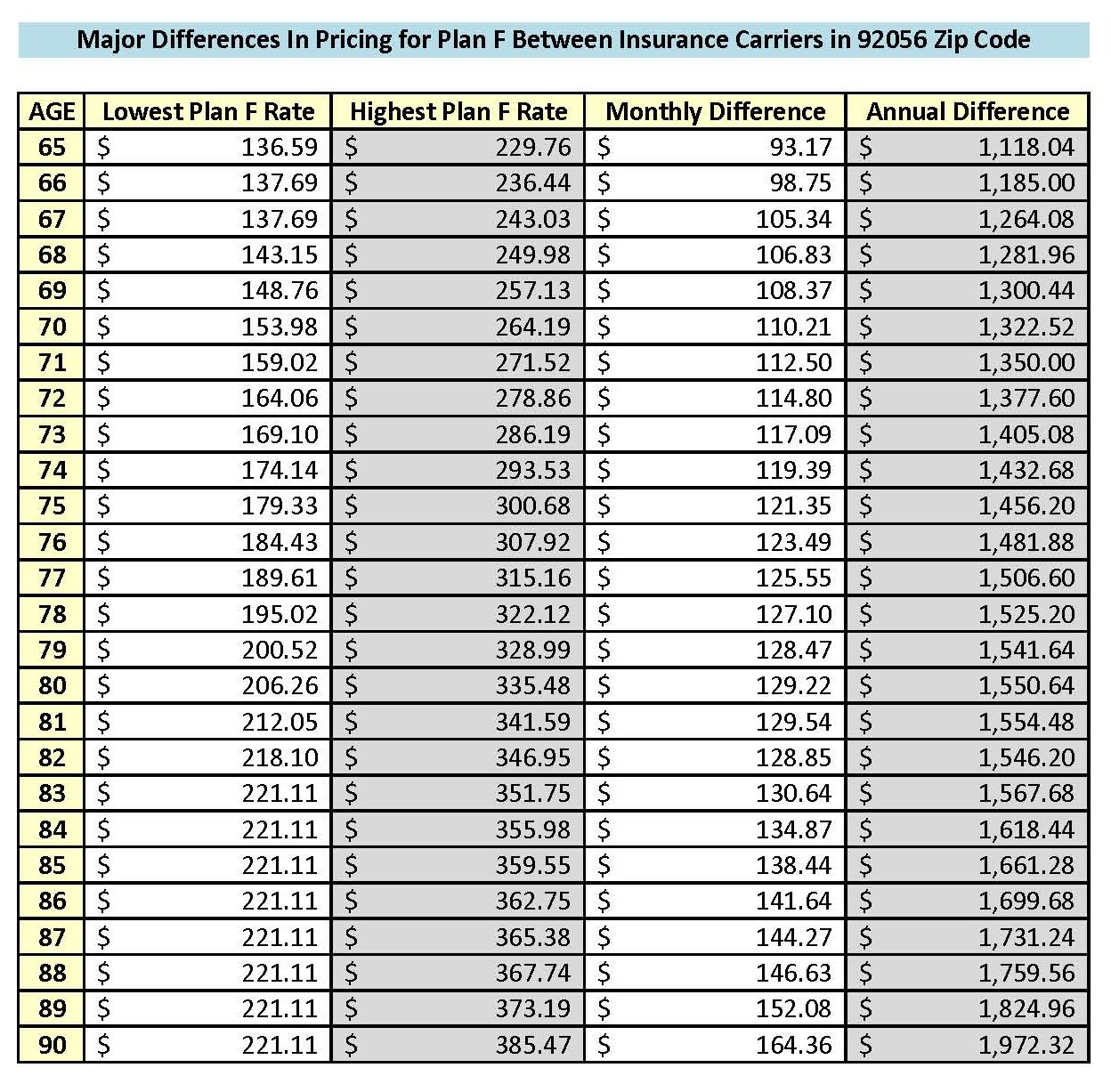
For example, the Plan F premiums for a 70 year old living in the 92056 zip code in San Diego range in price from $153.98 per month to $264.19 per month. That’s a difference of $110.21 per month or $1,322.52 per year for the same identical plan and coverage! On the following rate sheet, you can see the different Plan F rates for 18 different insurance carriers in the 92056 zip code. Obviously, some carriers are more competitively priced than others!

Mary Jones Plan F Rates_Page_1

Mary Jones Plan F Rates_Page_2

As you can see, in the 92056 zip code, the Plan F rates for a 70 year old range in price from $153.98 per month to $264.19 per month! Again, that’s a difference of $110.21 per month or $1,322.52 per year for the same exact plan and coverage!

It’s Important to Shop Around Every Year!

The Medicare Supplement market is constantly changing, and so are the premiums. If you have a Medicare Supplement and you haven’t shopped around during the last year, there’s a good chance that you’re paying hundreds of dollars a year more for your insurance than you should be! Many people that I meet haven’t shopped around at all since they first signed up for Medicare! Many of these individuals haven’t heard from their insurance agent since then as well!

This past year, two of my clients (a husband and wife) had Plan G, and they were paying $809 per month for both of them, approximately $404.50 each! I shopped around for them and found them Plan G with a different carrier, Mutual of Omaha, and their total monthly premium is now $367.01 per month! That’s a savings of $441.99 per month or $5,303.88 per year! While this is not the norm, I can usually save most of my clients from $300 to $600 per year each on their Medicare Supplement insurance premiums and often more.

What is the Price Range for Plan F Medicare Supplement Rates?

In the following chart, I have taken the lowest and highest Plan F premiums for ages 65 through 90 in the 92056 zip code. As you can see, the monthly and annual differences are significant for every age group.

2 Lowest Plan F vs Highest Plan F

Is There An Open Enrollment Period for Medicare Supplement Plans?

No. Unlike Medicare Advantage (MA) plans, which have an annual open enrollment period from October 15th through December 7th every year, you can shop around and apply for Medicare Supplement plans all year long.

NOTE: There is a six month-open enrollment period for Medicare Supplements when you first sign up for Medicare Part B.

Do I Need to Be In Good Health to Get a New Medicare Supplement Plan?

Unless you are in a Special Enrollment Period (SEP), if you already have a Medicare Supplement, you need to be in relatively good health to apply for a new Medicare Supplement with a different carrier. However, if you have a Medicare Supplement and you apply during the 30 days before or after your birthday, you don’t have to answer any health questions on the application, and you cannot be turned down due to health reasons if you apply for the same plan or another plan with fewer benefits. For more details, please see the California Birthday Rule section below.

Heart

What Happens If I Am Not In Good Health? Can I Still Apply For a New Medicare Supplement Plan?

Yes, absolutely! Because of the California Birthday Rule, if you already have a Medicare Supplement and you have serious health issues, YOU CANNOT BE TURNED DOWN FOR COVERAGE if you apply during the 30 days before or after your birthday.

California Birthday Rule

In California, there is a law called the California Birthday Rule. This law guarantees you the right to apply for a new Medicare Supplement plan EVERY YEAR, as long as you apply during the 30 days following your birthday. This is also known as the annual 30-day open enrollment period.

NOTE: Although the California Birthday Rules specifies that you can apply, REGARDLESS OF YOUR HEALTH, during the 30 days following your birthday without being turned down for coverage, several insurance carriers will let you apply during the 30 days BEFORE or AFTER your birthday!

This is more advantageous for you because the premiums with these carriers are based on your current age when you apply, and your rates will be lower if you apply during the 30 days prior to your birthday. With these carriers, your new rates are also guaranteed and locked in for the first 12 months of your policy, so there won’t be any unexpected rate increases.

NOTE: Not all insurance carriers lock your rates for the first 12 months.

If you want to take advantage of the California Birthday Rule and apply during the 30 days before or after your birthday,  YOU CANNOT BE TURNED DOWN FOR COVERAGE as long as you apply for the same plan that you currently have OR if you apply for a different plan that has fewer benefits. For example, if you have Plan F (the most comprehensive plan) and you want to apply for Plan F with another carrier to save money on your premiums, or if you have Plan F and you want to apply with Plan G, etc.

NOTE: If you apply under the California Birthday Rule, there are no preexisting waiting periods for prior health conditions.

If you are in relatively good health, you can apply for a new Medicare Supplement plan any time of the year. If you have serious health issues, you should take advantage of the California Birthday Rule and apply for coverage during the 30 days before your birthday to save money on your premiums.

Consider Plan G to Save More Money On Your Premiums

Besides shopping around every year to make sure that you aren’t paying too much for your premiums, if you currently have Plan F, you should consider Plan G. Why? Because Plan G is identical to Plan F in EVERY way except you would pay a small $166 Part B (Medical) deductible one time per calendar year. That is the only difference between the two plans!

NOTE: I have an Obamacare Bronze plan, and my individual medical deductible is only $6,000 per year! I would gladly pay $166 per year for my medical deductible!

In other words, the most you would pay for any out-of-pocket expense with Plan G in any calendar year is $166. However, in most cases, you will save significantly more than $166 per year on your premiums, which usually makes Plan G a better value and more cost effective.

NOTE: The Part B (Medical) deductible is subject to change each year, but historically, it has remained stable.

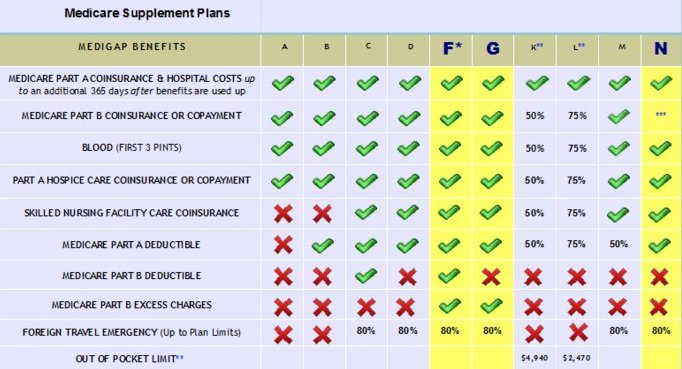
To see the difference in coverage between Plan F and Plan G, please see the following chart:

Medigap Chart Plans F and G

As you can see, when you compare Plan F and Plan G, everything is exactly the same except for the $166 Part B deductible. Plan F has no deductible, and Plan G is basically Plan F with a small, $166 deductible.

Price Differences Between Plan F and Plan G

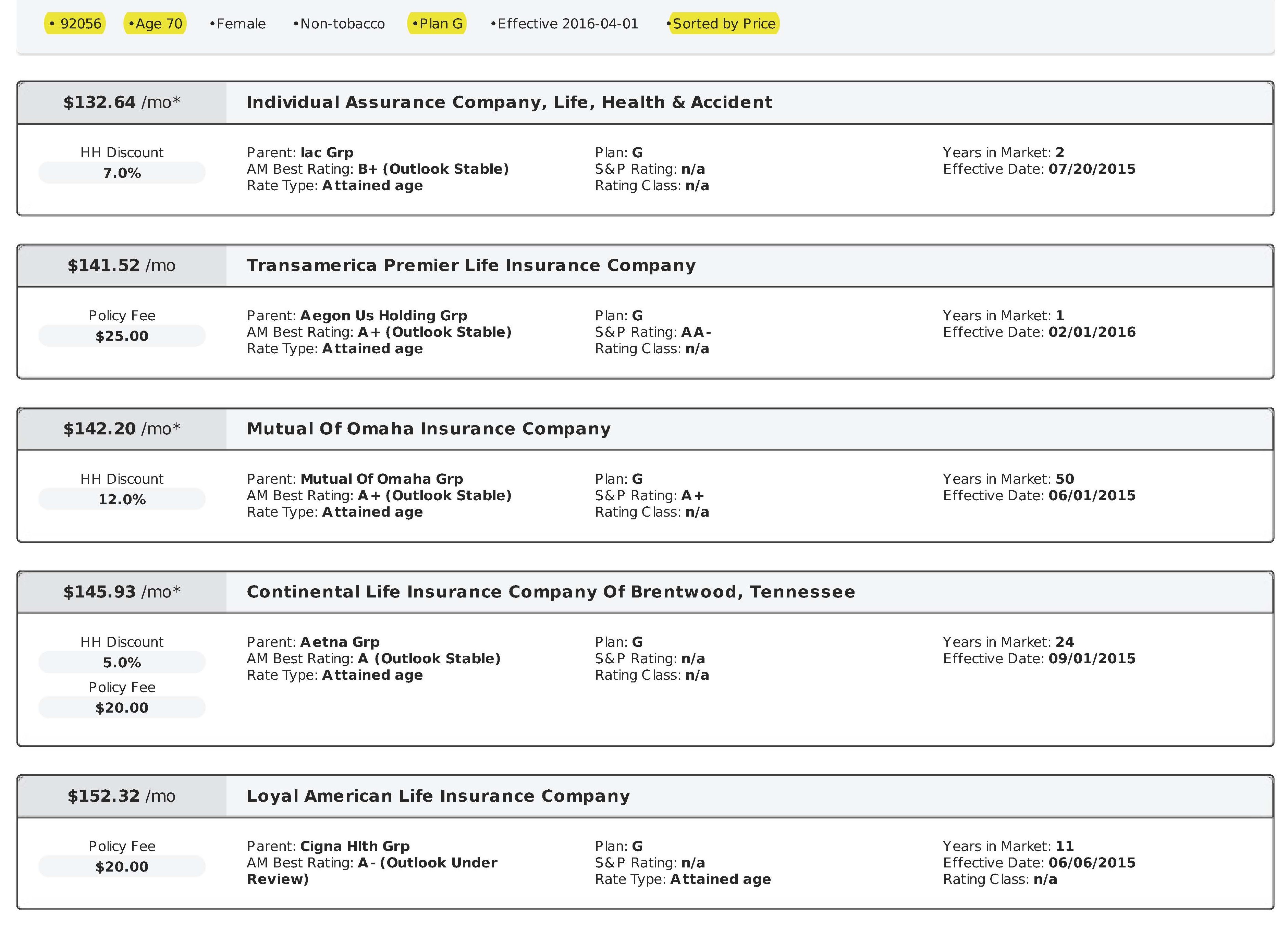
Although the two plans are almost identical in coverage, the rates for Plan G are usually significantly less than the Plan F rates. For a 70 year old in the 92056 zip code, the Plan F rates (above) range in price from $153.98 per month to $264.19 per month. The Plan G rates (below) range in price from $132.64 per month to $152.32 per month!

Plan F or Plan G

Plan G Rates Age 70

As you can see, the Plan G rates are significantly less than the Plan F rates for almost the same identical coverage.

Conclusion

The rates vary significantly from one insurance carrier to the next for the same identical plan and coverage. I recommend that you take advantage of the California Birthday Rule and shop around, every year, to make sure that you aren’t paying too much for your insurance. I would also suggest that you check out Plan G as another way to save a lot of money on your insurance premiums.

If you have any questions, or if you would like a free, no obligation quote, please don’t hesitate to let me know! I’m always happy to help!

Ron Lewis OHCC AD

Also, your feedback and comments are appreciated!

Thanks!

Ron Lewis
Ron@RonLewisInsurance.com
(760) 525-5769 – Cell
(866) 718-1600 – Toll-free

How to Use the Medicare.gov Website to Purchase a Prescription Drug Plan

The Medicare open enrollment period just started, and it goes from October 15th through December 7th. During this period, you can choose a Prescription Drug Plan (PDP) that will begin on January 1st, 2016. Many people are confused because they don’t know how to shop around for a PDP. You don’t have to be an “expert” or a rocket scientist to purchase your own PDP. The purpose of this blog is to help you save money on your insurance premiums and find a PDP that is right for you.

IMPORTANT If you decide not to join a Medicare drug plan when you’re first eligible, and you don’t have other creditable prescription drug coverage, and you don’t get Extra Help, you’ll likely pay a late enrollment penalty if you join a plan later.

Medicare SimplifiedAccessing the Medicare.gov Website

If you have access to a computer and the Internet, shopping around for a PDP is really quite easy. If you’re ready to begin, follow these steps:

1.)  Navigate to the Medicare.gov website.

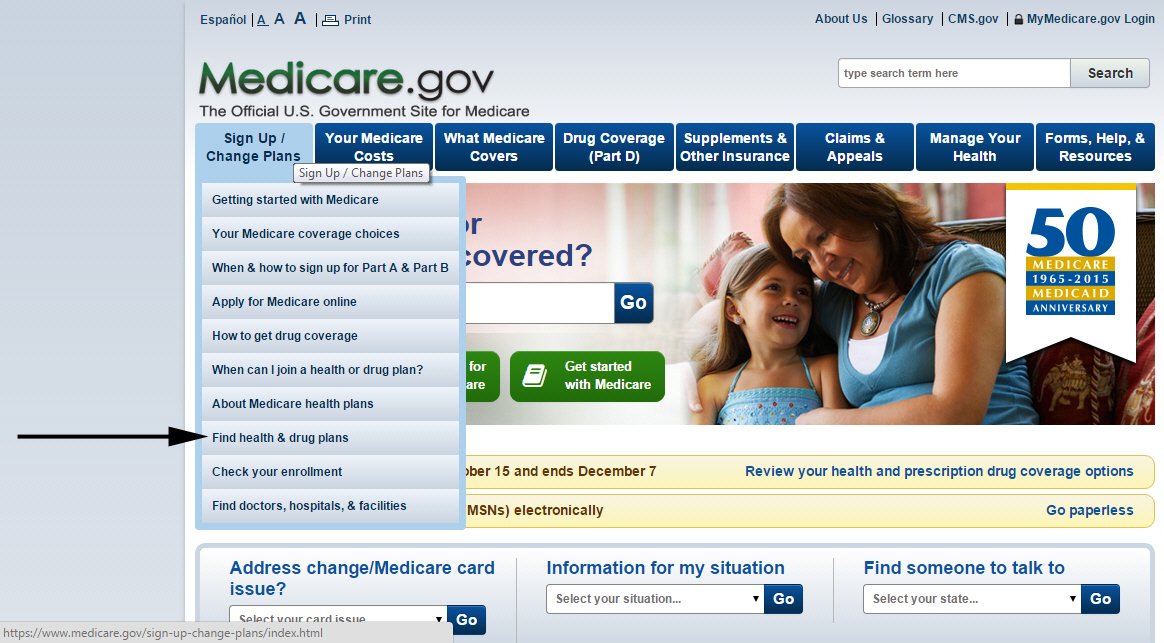
PDP1-0003x2.)  Under the blue tab at the top left-side of page that says Sign Up/Change Plans, click Find health & drug plans.

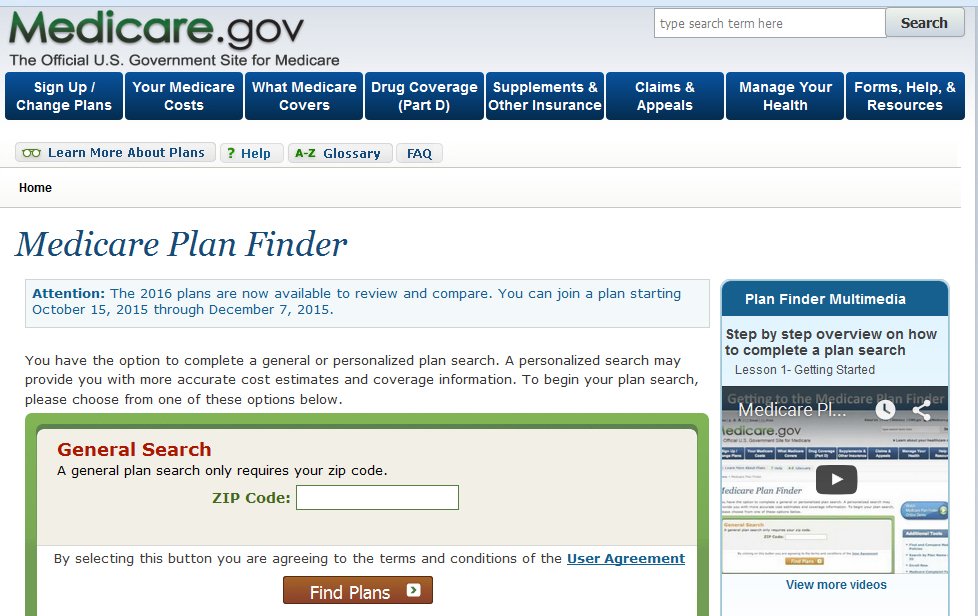
PDP1-0004xThe Medicare Plan Finder page displays.

PDP3-0001x3.)  In the General Search section, enter your zip code and click Find Plans. The Step 1 of 4 page displays.

NOTE If a survey window displays, close it and continue.

PDP1-0007x4.)  In the first section, select Original Medicare, and in the second section, select I don’t get any Extra Help. After that, click Continue to Plan Results. The Step 2 of 4 window displays.

NOTE You can choose other options that are more appropriate for your situation.

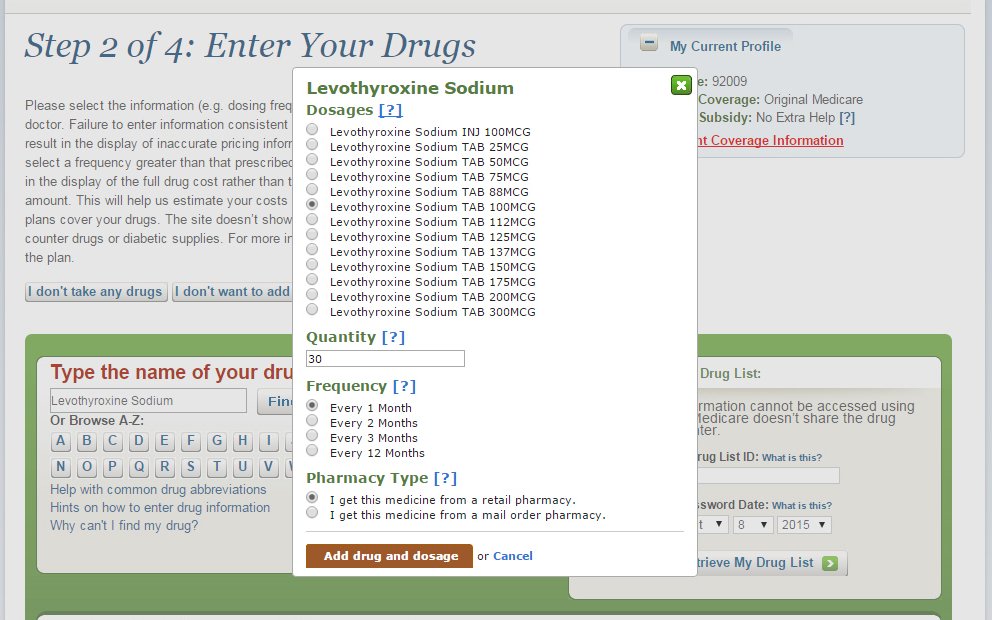
PDP1-0009x5.)  Enter your prescriptions in the text box and choose the appropriate dosages for each. A window, similar to the following, displays.

PDP1-0010x6.)  After you select the appropriate prescription dose, click Add drug and dosage.

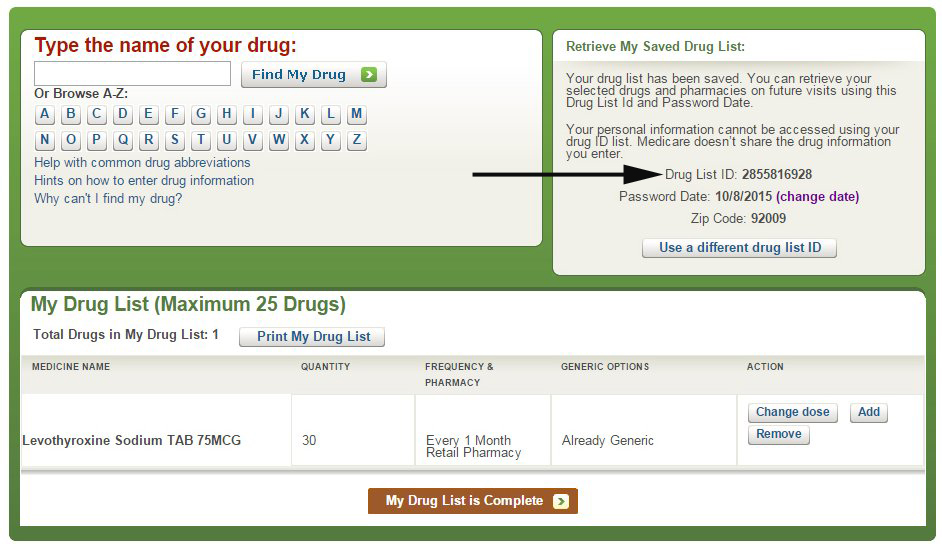
NOTE: Continue adding your prescriptions until your prescription drug list is complete. You can add up to 25 prescriptions, and you can see your list in the lower part of the window. You can also choose “mail order pharmacy” to have your prescriptions mailed to you. In some instances, it is more cost effective to do that. If you select “mail order pharmacy,” information for both retail pharmacies and mail order options will display.

7.)  Write down the Drug List ID number AND the Password Date on a separate piece of paper.

NOTE The prescriptions, dosages, etc. that you entered are saved, and you can enter this number and the date later on to retrieve your prescription information instead of reentering it again.

Medigap PDP Window2x8.)  Click My Drug List is Complete when your drug list is complete. The Step 3 of 4 window displays.

PDP1-0014x9.)  Click Add Pharmacy to add up to two pharmacies, and then click Continue to Plan Results. The Step 4 of 4 window displays.

NOTE You can click the drop-down menu at the top of the page to select from more pharmacies near your zip code.

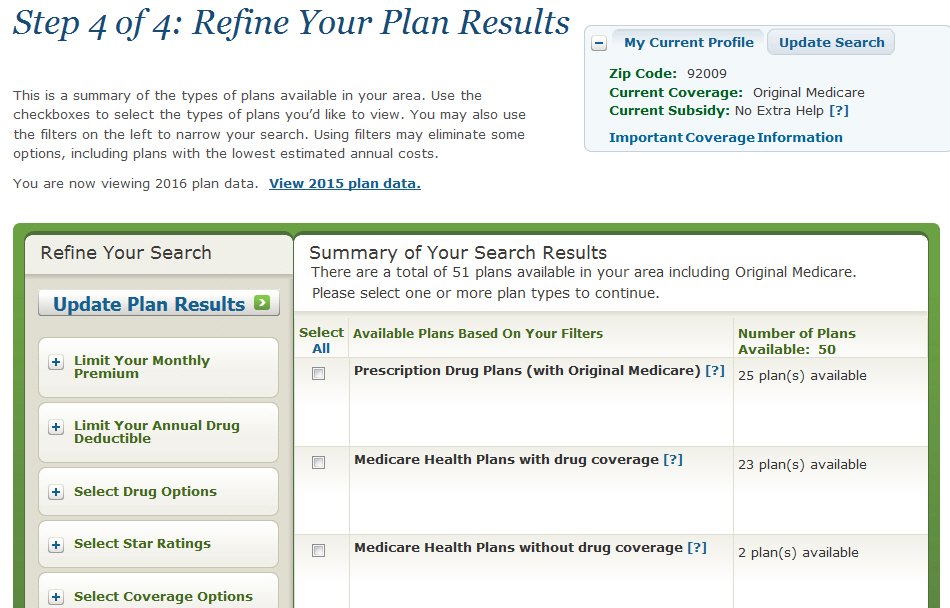
PDP3-0002x10.)  Click the check box next to Prescription Drug Plans (with Original Medicare), and then click Continue to Plan Results. The Your Plan Results window displays.

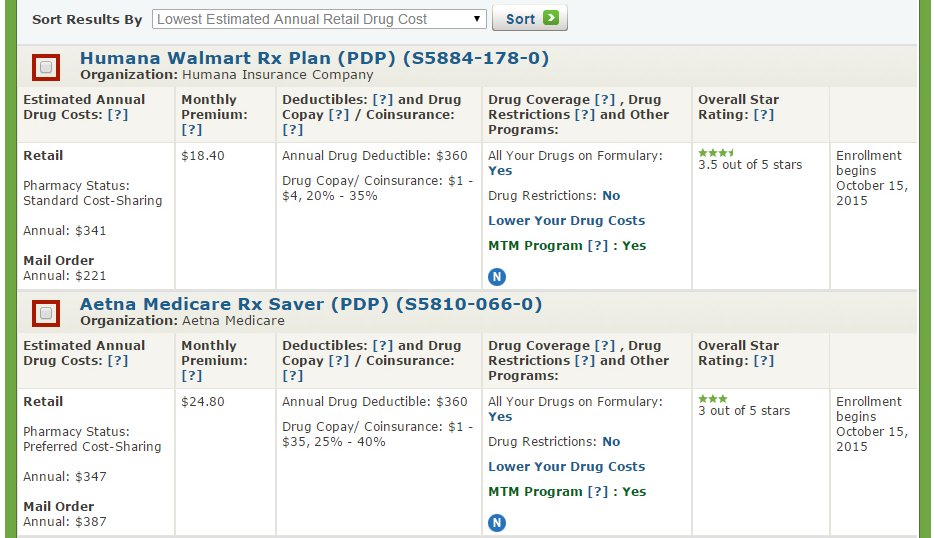
PDP1-0019NOTE By default, the prescription drug plans are sorted from the lowest to highest estimated annual retail drug cost. In the Plan Results window, click View All to see all the plans.

Understanding the Plan Results Window

After you access the Plan Results window, you are ready to evaluate and compare prescription drug plans and decide which plan is best for you.

There are different variables to take into consideration when choosing a PDP. Here are some of the more important ones:

  • Are drugs on the formulary?
  • Drug restrictions
  • Estimated annual drug costs
  • Annual drug deductible
  • Monthly premium
  • Overall star rating of the company

Are Drugs on the Formulary?

If a drug is not on the PDP formulary, that means that the plan does not offer coverage for that specific drug, and you should continue looking at other plans.

Drug Restrictions

If there are drug restrictions, the plan may have certain coverage restrictions (including quantity limits, prior authorization, etc.) on a prescription drug. Although your prescription may have limitations, these limits may not necessarily adversely affect you, and the plan may still meet your needs. For example, if you take 30 pills a month and the plan will cover a maximum of 60 per month, that would not impact you, and the plan is still worth considering.

Estimated Annual Costs

This is an estimate of the average amount you might expect to pay each year for your prescription drug coverage. This estimate includes the following costs:

  • Monthly premiums
  • Annual deductible
  • Drug copayments/coinsurance
  • Drug costs not covered by prescription drug insurance

If you entered your drugs into the Medicare Plan Finder, then this estimate includes the cost of those drugs.

IMPORTANT If your prescriptions are covered by the plan’s formulary and there are no major drug restrictions on the plan, this is the critical piece of information you need to determine which plan you select because it factors in all your premiums, deductibles, co-payments, and miscellaneous drug costs for the entire year. I don’t really factor in the various co-payments of each prescription; the estimated annual costs tell you approximately how much you will spend during the entire year.

Compare the estimated total annual pharmacy and mail order costs between the different plans to determine which plan offers you the best deal for the entire year!

PDP1-0019xNOTE In the previous example, the total retail annual costs for Humana are approximately $341 compared to $221 for the mail order costs. For Aetna, the total retail costs are approximately $347 compared to $387 for the mail order costs. Therefore, in this example, the most cost-effective option is to purchase the Humana PDP and use their mail order service.

If you selected “I don’t take any drugs,” then this amount includes only the cost of the monthly premiums that you would pay for the plan and it does not include any drug costs. If you selected “I don’t want to add drugs now,” then this estimate includes the average drug costs for people with Medicare and may differ depending on your age and health status.

Annual Drug Deductible

Some plans have no annual deductible and others have a maximum annual deductible up to $360 per year. Again, use the estimated annual costs to determine the value of the plan, not just the deductibles, the co-payments, etc.

Monthly Premium

The lowest monthly premium (and deductible) does not necessarily mean that you will be saving the most money. Again, compare the estimated annual drug cost to determine which plan is the most cost effective.

Overall Star Rating of the Company

For plans covering drug services, the overall score for quality of those services covers many different topics that fall into four categories:

  • Drug plan customer service: Includes how well the plan handles member appeals.
  • Member complaints and changes in the drug plan’s performance: Includes how often Medicare found problems with the plan and how often members had problems with the plan. Includes how much the plan’s performance has improved (if at all) over time.
  • Member experience with plan’s drug services: Includes ratings of member satisfaction with the plan.
  • Drug safety and accuracy of drug pricing: Includes how accurate the plan’s pricing information is and how often members with certain medical conditions are prescribed drugs in a way that is safer and clinically recommended for their condition.

If the plan has a low star rating, I would not recommend signing up for it.

Drilling Down a Little Deeper on the Medicare.gov Website

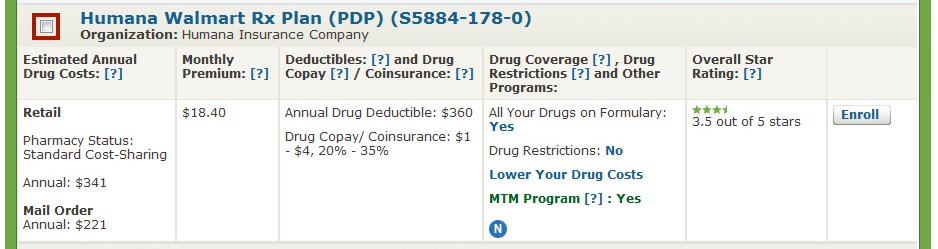
To get more information about a specific plan, click on the name of the plan, which is a hypertext link. In the following example, click Humana Walmart Rx Plan (PDP).

Medigap2-0002a

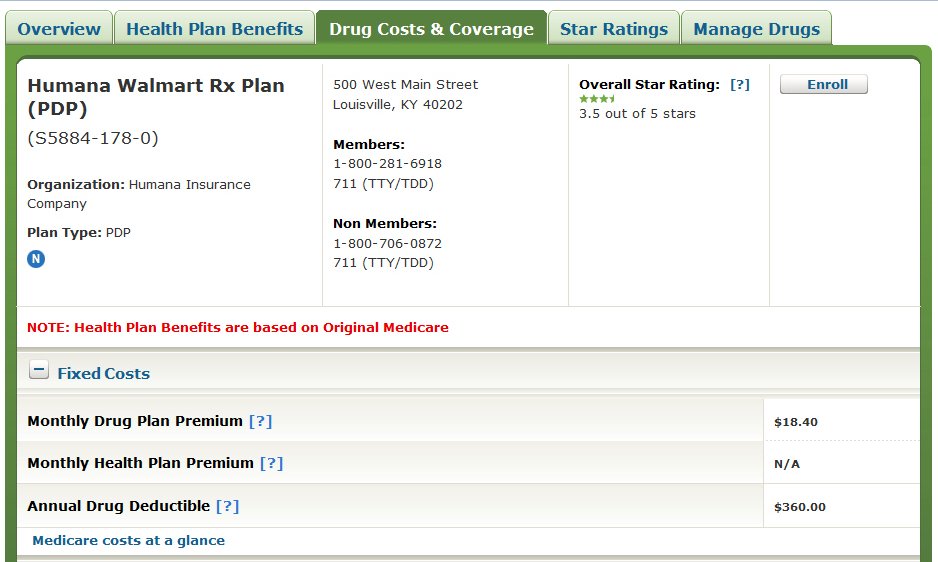
After you click the name of the plan, a window, similar to the following, displays.

Medigap2-0003a

The previous window shows the phone numbers, for members and non-members.

NOTE  If you have questions about the plan or wish to enroll, you would call the phone number for non-members. For more information, see “Signing Up for a PDP Plan” below.

Medigap2-0006a

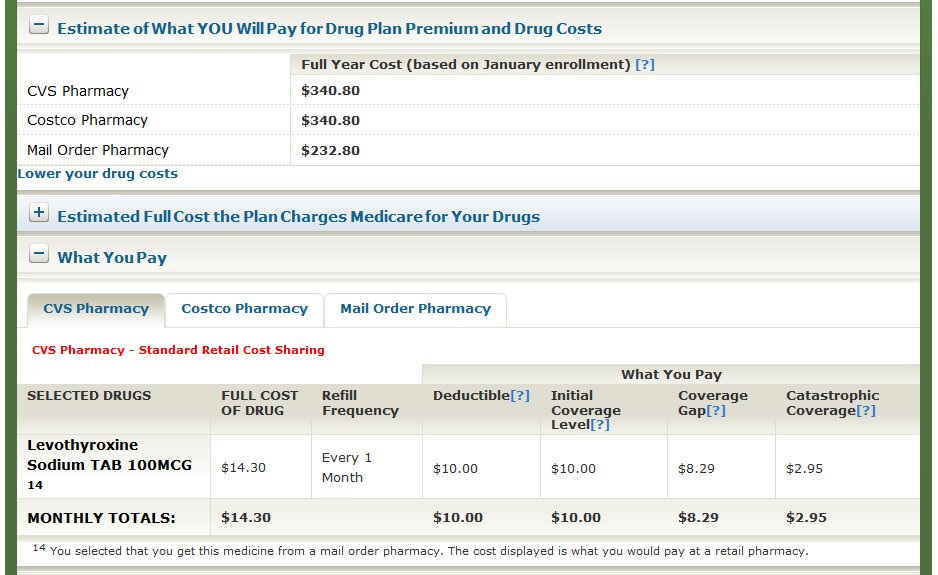
The previous window shows the estimated monthly totals for prescriptions at CVS Pharmacy.

Medigap2-0007a

The previous window shows the estimated monthly cost (premium and deductible) for prescriptions at CVS Pharmacy.

Medigap2-0008a

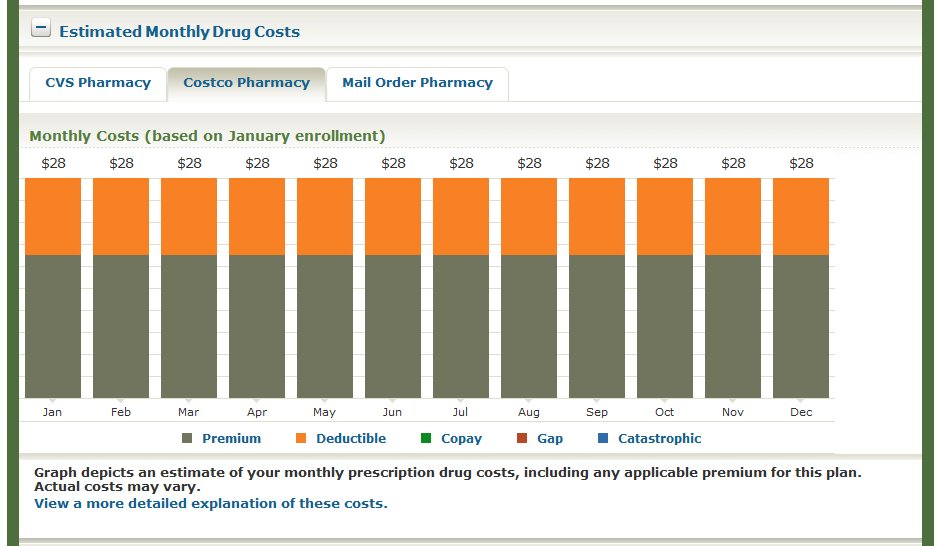
The previous window shows the estimated monthly cost (premium and deductible) for prescriptions at Costco Pharmacy.

Medigap2-0009a

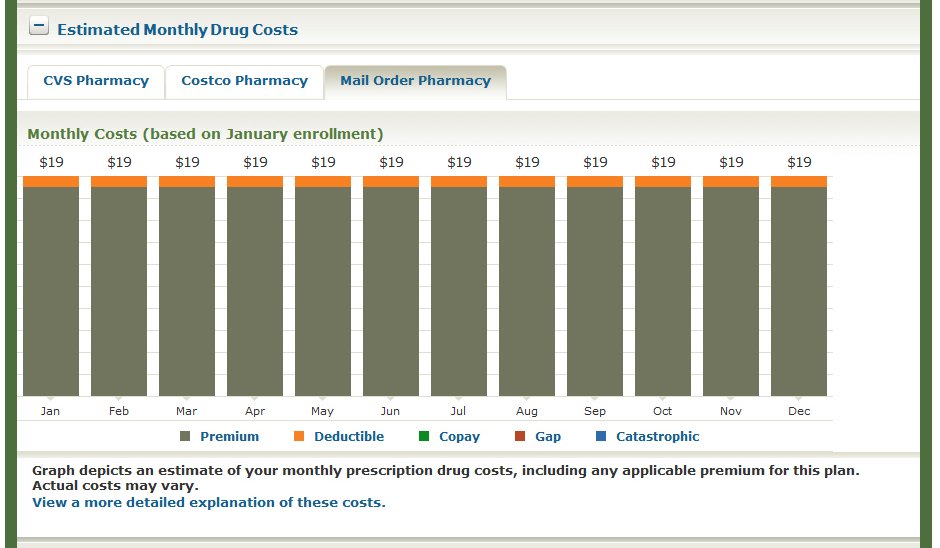
The previous window shows the estimated monthly cost (premium and deductible) for prescriptions through a mail order pharmacy.

Medigap2-0010a

The previous window shows drug coverage information, such as formulary status and Tier information, for the various prescriptions you entered on the Medicare.gov website.

Signing Up for a PDP Plan

After you have evaluated and compared several prescription drug plans, you are ready to sign up for a PDP on your own.

Follow these steps to sign up for a prescription drug plan:

1.)  From the Your Plan Details window, click on the hypertext name of the plan you are interested in. In the following example, click Humana Walmart Rx Plan (PDP).

Medigap2-0002a

After you click the name of the plan you are interested in, a window, similar to the following, displays.

Medigap2-0003a

2.) Call the toll-free number for non-members, and speak to a representative of the company.

IMPORTANT  If you have questions about the plan or wish to enroll, you would call the phone number for non-members. When you decide to enroll, call the plan and verify that your prescriptions are covered by the plan and that the estimated annual retail pharmacy or mail order drug costs are accurate. You want to make sure that you are interpreting and understanding the information correctly from the Medicare.gov website.

Conclusion

After you go to the Medicare.gov website and play around with it a little, you will find that signing up for a prescription drug plan is really quite easy.

NOTE  If you are having trouble signing up for a prescription drug plan or if you ever have Medicare questions or need help understanding information on the Medicare.gov website, call 1-800-MEDICARE. They are open 24 x 7, and most of the representatives are very helpful.

My primary specialty is Medicare Supplement insurance, but if you have any questions or comments, please feel free to contact me at RonLewisInsurance@yahoo.com.